One Small, Happy Story

Here comes the sun, too doo doo doo. Here comes the sun.

So, every Monday late morning I collect Elisabeth from school and take her up the road for her swimming lesson, and today I happened to sit beside one of the dads and we started chatting, and he told me about how he and his partner adopted their little son. Born very early and weighing only 1,6kgs this newborn baby boy was found abandoned in a township and taken to the nearest hospital. Because he was so premature he suffered from cerebral palsy and the verdict was that he would never walk. While many people would balk at the idea of adopting a physically handicapped child, this couple readily took the teeny-tiny baby home and he became the light of their lives and the centre of their universe.

Now he lives in a beautiful house with two extremely devoted parents, speaks Dutch and English and goes to Europe once a year on holiday, and – what’s more – he walks just fine. He is so robust and healthy-looking you would never guess he was once hanging onto life by a thread. It’s hard to imagine what his life would have been like if he had not been adopted but, like his dad says, he probably wouldn’t have walked. And there’s not really any point to this story other than that it’s an example of how liberal and awesome our constitution in South Africa is – that a gay couple is allowed to adopt and love a child. And, it’s testimony to the kind of good, selfless people there are among us. And this one small, happy story has made me feel good about the world all day.

How Tori Amos Saved My life

I discovered Tori Amos in my early twenties at the end of a terrible relationship with a lovely man. There is no time Tori makes more sense than when you’re twenty-something, blindsided with grief and reeling in shock and despair. I maintain that this kind of emotional pain you only live through once. Twice would kill you. After that, you get a bit wiser and a bit more resilient. It’s a survival thing. The song was her first hit, Crucify, and I went and bought the CD and drank all day and all night with whoever would sit beside me while I waited for the hurting to stop or, at least, subside. Her lyrics were like balm to my blown apart heart. She put words to the emotions that raged through me, and she spoke the unspeakable. Eventually, after a few years, the pain lessened and went away but my relationship with Tori grew, and in many ways her music has been the soundtrack to my life.

‘Hey Jupiter’ (‘No-one’s picking up the phone…’) for the times I’d sit in the semi darkness with the ring tone in my ear knowing, very well, he wouldn’t be home now, and even if he was, that there was nothing, really to say. ‘Putting the Damage On’ for the first time he took his new girlfriend away on holiday (‘You’re off to the mountain/I guess her skinny legs could use sun…’), and I’m bent double with the hideousness of how he’s moved on and is doing pretty well without me and my histrionics while I pine and lament and wish, with all my heart, that it was me sitting in the front seat of his car with a bottle of Jack between my bare feet and the days ahead wide open and the sky full of summer.

There was just something so arrestingly honest about this woman’s music. It was Girl with a capital ‘G’, and she had been all the places I had been, and she made it okay to be angry and feel sad and confused and fucked up. Like ‘Precious Things: ‘He said you’re really an ugly girl/but I like the way you play/and I died, but I thanked him. Can you believe that?’ The way I would go to school hoping to see The Boy, hoping he would like me enough to say hello that day, and the rejection and misery I suffered when he didn’t. Or the feeling of despair, being schooled in a Calvinist institution during the height of apartheid where any type of free thinking was literally beaten out of you, and her having the audacity to announce, ‘Father says bow your head/like the Good Book says/Well, I think the Good Book is missing some pages.’ Well, bloody well, so did I.

And suddenly it was okay to be a raisin girl and to have different thoughts and to ask questions and not take all you were being told at face value. And there was something very unshackling about that. I don’t think it’s going too far to say that the feminist ethos of a lot of her lyrics played a part in forming the person I was to become. Her message resonated more strongly for me than, I think, anything I had ever heard, musically or otherwise. To this day I probably know every lyric to every song, and writing this I have to admit it sounds kinda sad, but it’s the truth. I’ve talked about how we are conduits of truth for one another, and she was that for me. I had nobody in my life at that time to guide me, a clever, headstrong, emotionally messed up young woman with no conception of how to be in a world that felt foreign and hostile and more than a little bizarre.

When I finally made it out of that small town and found like-minded people in the musty lecture halls of the best university in the universe and was introduced to a world of thought where people said no and spoke up and women were strong and fearless I found new ways of thinking and expressing myself and it was a kind of heaven. And still, to this day, Tori has a way of summing stuff up and making everything feel okay. When, 10 years ago, I had the anti-marriage to end anti-marriages in our beautiful, turn-of-the-century apartment in Sweden surrounded by 20 friends in jeans and our baby daughter, Sophie, looking on, it was ‘A Sorta Fairytale’. Like life is. Try as we may, it’s only ever ‘sorta.’ And I always have at least one of her CDs in my car so that, amidst the madness of adulthood and parenting and all that goes with it, her songs are there to remind me of who I really am.

I felt disappointed and a little betrayed when I saw what she’d done to her beautiful face, and I realized that, in spite of her music, she’s not that okay with who she is, after all. But then, like I always say, we teach what we need to learn. Tori is a stunningly talented musician and lyricist, but she’s still a human being and fallible and probably as confused as the rest of us. And maybe that’s why she does ‘real’ so well. And it doesn’t take away from what she gave me when I needed it most. And for that – giving me the voice I never knew I had – I will be eternally grateful.

Who’s Afraid of the Big, Black Township? Khayelitsha For Beginners.

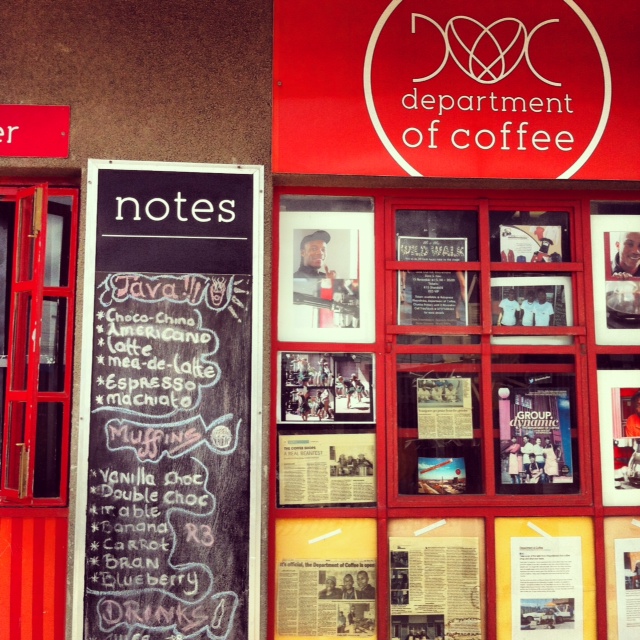
One of the best damn coffees in town.

So, shortly after writing my Ubuntu piece (and how synchronicity works) I met an old friend, Pippa, for lunch who has been working in Khayelitsha for the past 8 years. She talked about how white South Africans (myself included) have no idea of what this place on our doorstep actually is about, or what happens there, and offered to take me in with her one day for some much-needed enlightenment, and today was that day. And it didn’t take me long to realise what a one-dimensional view most of us have of this sprawling suburb, seeing only the rows of shacks which line the n2.

This hospital could be anywhere in Europe.
The new Khayelitsha hospital is so fancy it could be anywhere in Europe.

In truth, Khayelitsha is home to nearly a million people, and while it certainly has its quota of informal dwellings, the suburb itself is divided into suburbs, some every bit as middle class as Kenilworth. It has schools, a mall, a gym, a large college and a brand new, modern hospital. It also has spaza shops, hairdressing salons, panel-beaters and cash stores, and even on an arb Wednesday morning there were women braaing meat, washing clothes, walking babies, chatting to their buddies. There is a cool, laid-back vibrancy about this place and ja, it’s shabby and ja, the soil is of such poor quality very few trees manage to grow, but it has industry, an energy and a sense of community that made me wonder who the poor people in this country really are.

Pre-R's learning a dance for their upcoming graduation ceremony.
Grade R’s learning a dance for their upcoming graduation ceremony.

And I’m not romanticising poverty. The reason why Pippa is there is because she started a project called ‘Home From Home’ (www.homefromhome.org.za) which provides housing to children who have been rescued from circumstances of physical and/or sexual abuse or who, for whatever reason, have lost their parents and their homes. ‘Home From Home’ has 32 houses with six children and a surrogate mother in each. We visited some of these houses which, while they are modest and everything in them is second-hand, are homely, safe spaces which provide these kids with stability, family life, nourishing food, warm beds and place to call home. And the surrogate moms work hard and the kids don’t have a lot but, despite their circumstances, they are happy and thriving and have great hope and plans for their future, and it’s a beautiful thing to see.

Surrogate mom, Beaulah, with her assistant, Sandile
Surrogate mom, Beaulah (on the right), with her assistant, Sandile

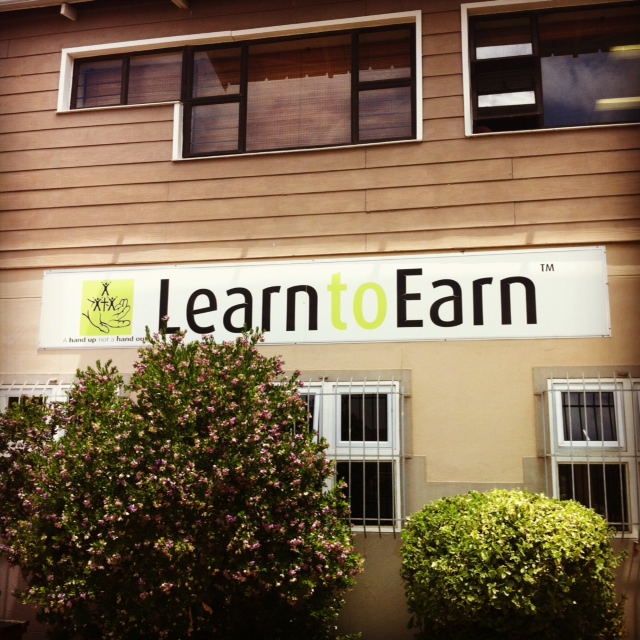
We also visited a very cool place called ‘Learn to Earn’ which teaches its students a variety of skills such as sewing, baking, carpentry and office management which makes them employable and empowers them to start small businesses and support themselves. And the people running this place are so dedicated and passionate it’s humbling to witness. And I thought to myself as I talked to staff how careful we must be of dehumanising these ‘off limits’ zones. Just go visiting on a Friday which is braai day (of course) and when a hard working week ends with a much-deserved cold beer; where Saturday is for kuiering, shopping and getting your hair done, and Sunday the enormous church with its very (very) long service is filled to capacity with singing, dancing worshippers. The ‘other’ is much less other than we imagine.

Where adults of all ages are able to learn a trade.

And sure, it’s sad – there’s a ten-year-old little boy who keeps running away in search of his parents who are missing somewhere in the Eastern Cape and obviously don’t give a hoot about their child but, being little, he still tries to find them. And some of the tiny ones whose faces lit up when we entered the room and gave us huge smiles and waves and thumbs-up ‘sharp-sharp’s – it’s heartbreaking imagining anyone abandoning these gorgeous little creatures. But it’s not depressing, it’s uplifting and encouraging seeing the amazing work being done there. ‘Home From Home’ hires a clever, dedicated young social worker who makes herself completely accessible to these kids and helps them transition and process some of the stuff they’ve had to deal with.

And what a huge wake up call and reminder that we must damn well stop whining already. We live incredible lives in an incredible place and we need to stop blaming and pointing fingers; it’s time to pull up our sleeves and, like Gandhi said, be the change we want to see. It’s not that hard – there are so many opportunities available for reaching out and changing things. Today was proof of that.

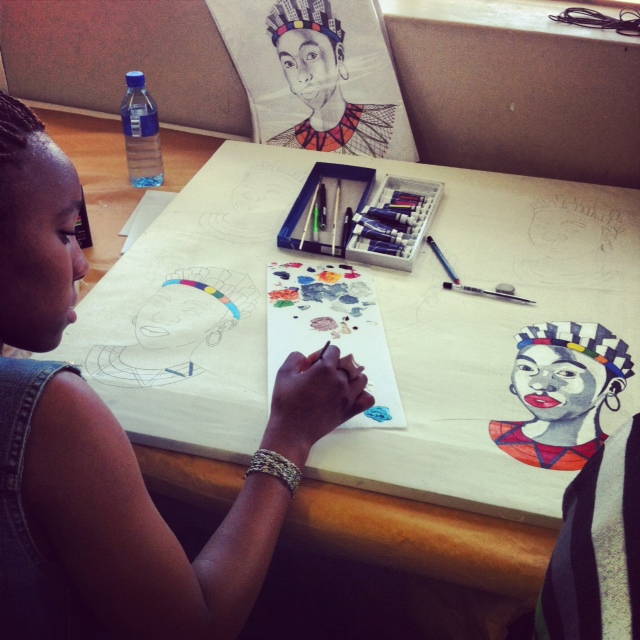
A talented graphic art student at 'Learn to Earn.'
A talented graphic art student at ‘Learn to Earn.’

Pippa told us how often she gets warned by white South Africans that she shouldn’t go into Khayelitsha; that it’s not safe for a woman. And these are sentiments a lot of us have been led to believe (I think it was that Amy Biehl story nobody can get over) but, in reality, it’s just a place like any other. Everybody we encountered was friendly and approachable. I left my leather jacket in the car when we went inside homes, and I didn’t feel frightened or wary for a second. We stopped at a coffee shop which did fabulous muffins and a latte that would put Vida E to shame. Nearby an old woman running a stall was dancing away to some music that only she could hear. The wind blew, and a young woman held onto her skirt. We drank our coffees and headed back towards the mountain, and it was a day which gave a lot of food for thought.

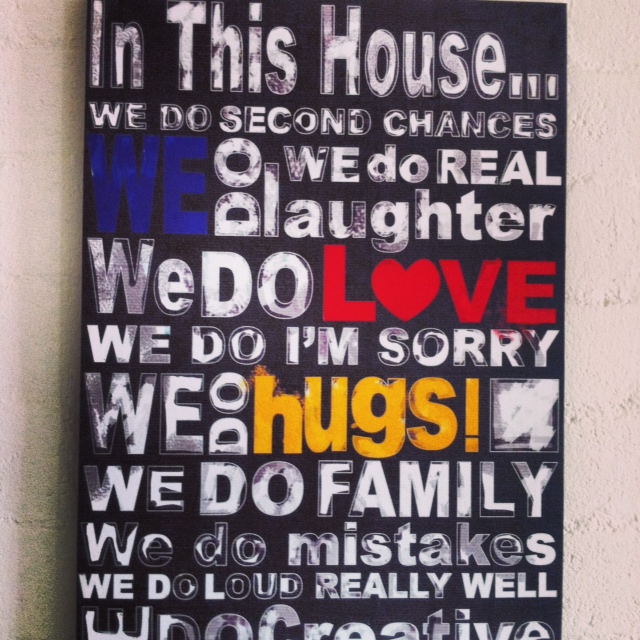
The ethos of Home From Home.
The ethos of ‘Home From Home’.

Internet Trolls and Sifting Through the Vomit

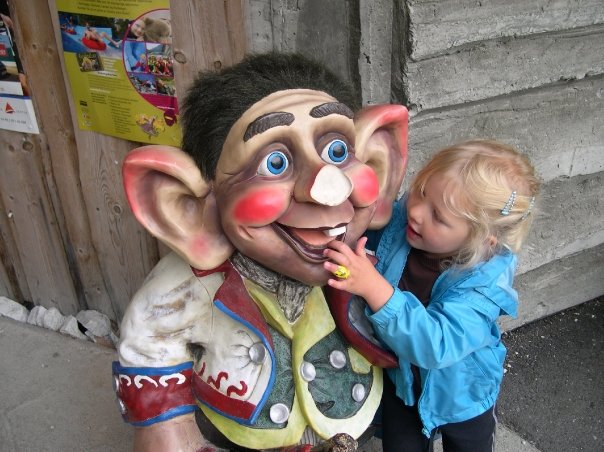
What I’ve discovered over the past three months since I started Disco Pants is that there are two kinds of people who comment on your blog – there are the interesting, engaged and reasonable folk who, while they might not agree with you, have valid points to make and you’d have them around for dinner tomorrow for a fun discussion. And then there are those who are so cross about their lives they can barely believe the horror of their own existence, and for them, the internet has provided a very handy tool for unleashing all the anger they’ve been storing since they were seven and had to sit in the naughty corner even though it was their brother who set fire to the cat. And I know the common parlance for these sorts is internet trolls, but I rather think trolls is too nice a word for them. I mean, trolls are kind of cute. Take this guy for instance – I’d give him a cuddle and a cup of tea any day.

A huggable troll in Norway.

I think we have to find a new word – one that properly describes their poofiness, and for me Tokoloshe is that word. They are no longer internet trolls, they are internet Tokoloshes who come out of their hokkies in the middle of the night to scare the living daylights out of the normal people who forgot to put their metaphorical beds on bricks. Tokoloshes are freaking scary, man. Pepper Spray aint gonna cut it – you need some strong muti to save yourself from these things. And you’d be surprised at how many shapes and sizes they come in. Some of them are school teachers living in Australia (yep – bet you didn’t know Australia has Tokoloshes too), some are rich, young black men living in the UK (Tokoloshes alive and well in Marble Arch, people) and some are made of pap – the spineless kind who scream at you from behind the safety of their computer screens but are too cowardly to leave their names, and run away when you call them on their hexing.

Personally, I'd kak myself if this guy appeared in my room in the dead of night.
One of my readers.
Or him, for that matter. And this proves that Tokoloshes come in all shapes and sizes.
And another one, proving that Tokoloshes come in all shapes and sizes.

Tokoloshe made of pap

At first I used to think I had to engage with everyone who commented on my blog, but then a friend shared a useful analogy. She said, why catch everyone’s vomit? Because a lot of them are just vomiting. Sometimes they’re not even talking about the blog because I can tell they haven’t really read it. They just want to shout at somebody because, I suppose, they’re unhappy with their lives or they got a traffic fine that day or a bird pooped on the their shoe. And engaging with these mad invectives is a bit like sifting through the vomit looking for an intact Endearment. Why do it? There are loads of lovely people for whom my writing resonates, and it’s a joy reading what they have to say, and having them share their stuff with me. The others? Not worth the effort. So, now I have an assistant (a-hem) who reads my comments for me and simply trashes the crazies so that I can get on with the business of doing what I genuinely love.

And it’s a weird thing when people say (like one chick did yesterday) I HATE YOUR WRITING! STOP WRITING! I WISH WORDPRESS WOULD CLOSE YOUR BLOG DOWN! Because I just want to know why they’re reading it if it displeases them so much. There is SO much other stuff they could be reading instead, and I urge them, with all my heart, to step away from my blog. I don’t assume to appeal to everyone. Honestly, I don’t even think about my audience when I’m writing. I write what has meaning for me. I write about what moves me, and what is, ultimately, my personal truth, and it makes me happy to know that some of the things I say make sense to some people. But if these musings feel indulgent or vacuous or annoying, by all means MOVE ON.

After viciously attacking me, being contemptuous of my viewpoint and saying ‘what do you expect, anyway, of a blog called DISCO PANTS?!’ this same guy went on to comment 43 times. Why, with tears in my eyes? GO AWAY! Unfortunately, the nature of the internet is that there’s no way you can block these nasty, small-minded people, but you can blacklist them by marking them as spam which means they can’t comment anymore, thank god, and I’ve had to do that with a few. Oh, and then there’s this woman who calls herself doctor something or other (pretentious, much?) who doesn’t write anything of value, but leaves these half-threatening one-liners about how everyone HATES my blog which is going viral in a NOT GOOD WAY. And you think, god, Tokoloshe chick, what the hell happened to you in your life that you got so mean? You must go talk to someone man, it can’t be good for you, all this venom.

A new writer friend who contacted me because of my blog and with whom I enjoyed the most wonderful winey lunch yesterday said something terribly clever, and it was this: there are no new stories, but sometimes people will only resonate with it the way you tell it. What wise words. Nothing I say is new, but for whatever reason, people relate to it, or parts of it. And in this way we are conduits of truth for one other. When I am stuck or confused or pondering over something, a friend or an acquaintance will miraculously show up (in real life or on facebook) and answer the question for me, and I’m always amazed at how this type of synchronicity happens if you take the time to notice it.
So, to the many, many lovely individuals who take time out of their day to read this blog, and then write me sweet comments and e-mails or just offer their insights and stories – thank you! You make my day so sunshiny. And to all the internet Tokoloshes, I will now quote the fabulous Jack Parow (who’s also apparently had some trouble with these sad little people): HOSH TOKOLOSH, WAT SOEK JY IN MY BOS?!

South Africa Explained in One Short Video Clip

So, this morning I found myself tripping over my words and racking my brain trying to answer the probing, insightful questions posed to me by a friend who lives in Denmark in response to my story about white people and Ubuntu. She is British, has a Jamaican mom and a Scottish dad, and is married to an African American, and understandably struggles to understand this place I live in and blog about. I used words like culture and tradition and segregation and poverty, but none of them managed to encapsulate the layers of living that happen here – the energy or the feeling or the zeitgeist, if you will.

And it struck me what an immensely complicated place this is to encapsulate in words – how many levels of experience, ways of being and how much diversity there actually is, and while you can theorise and explain our sad, fractured history, none of these descriptions really do the country justice. Because, while it sounds hideous in black and white (and it was every part of that), somehow we rise above it. Then, as synchronicity works, my friend Faldelah sent me a video on Facebook, and once I had recovered from doing the ugly cry I thought, yes. This is it. This is South Africa in a nutshell, and the reason why so many of us can never, ever leave. Only watch this clip if (unlike me) you’re wearing waterproof mascara.

http://www.flixxy.com/shopping-centre-flash-mob-south-africa.htm

On Stupid White People and Ubuntu

So, last night at the Spur (two burgers for the price of one, and all) my husband and I are in the middle of an enthralling married people conversation about what screens to put up on the sides of our new deck when a good-looking young black guy in an expensive shirt comes over and sits down at our table. We look up in surprise and say hello and he says hello back. ‘How are you doing?’ I ask him. He says, ‘I’ve seen better days.’ I think (being a stupid white South African with no conception of Ubuntu) ‘oh no – here it comes. He lost his job and his wallet was stolen and he just needs R20 to get home. Or worse – he ordered the full size portion of ribs and now he wants us to pay.’ I wait. He says, ‘my friends are late.’ I say (with no small measure of relief), ‘ja, that’s Capetonians for you.’ He laughs, takes out his new Samsung and checks his facebook updates, while we self-consciously resume our conversation until it’s time to go.

And it was one of those weird South African moments which illustrate how little understanding we have of one another’s cultures and ways. For we whiteys, joining someone else’s table would be unthinkable unless it was preceded by an explanation: ‘my friends are late and there aren’t any empty tables. Would you mind if I joined you for a while?’ Clearly, for him, such an explanation was unnecessary. Of course he can join us. He is a human being and we are human beings. And I was mortified with shame at having assumed what I did. But that’s how little we ‘get’ each other. And it reminded me of an incident a few years back when our nanny and cleaner (yes, the now infamous Nosipho) invited us to attend her birthday party on a Sunday afternoon in Khayelitsha. While we white folk know very well where Khayelitsha is because we drive past it en route to the winelands (irony intended) I honestly couldn’t think of one single white person who had ever been there.

So, I asked around: ‘have you ever been to Khayelitsha, and is it okay for four blonde chicks to go visiting a friend on a Sunday?’ The resounding response from white people was no, and don’t be mad, while black people ummed and aahed and said it’s probably okay if you know where you’re going, but don’t get lost. Don’t get lost? I get lost in the city bowl. Anyhow. I knew that it meant the world to Nosipho that we showed up on her special day and that she had already told all her buddies we’d be coming, so on that given Sunday I piled myself, my mom and my two little girls into our Toyota Tazz and off we went. You can imagine what we looked like with our deer-in-the-headlight eyes crawling along narrow, dusty roads with not a street sign in sight behind groups of (what I imagined to be) tsotsis who turned around slowly and watched us as we passed. In my mind we were already newspaper headlines when we pulled up at a Spaza shop and phoned Nosipho to come rescue us.

We were actually closer than we thought, and her grandson appeared and showed us the way to her house. It was already full to capacity with friends and neighbours, some of whom had come to see the crazy madams for themselves. It was an extraordinary afternoon, and one I will never forget. As Nosipho was a hardened feminist and had less than no time for the men of the world, the house was filled with women of all ages, dressed to the nines for the party of the year. Not being Xhosa speakers, we were handicapped and could only contribute so much to the conversations, but we were received with grace, respect and wholehearted acceptance as we joined the table and partook of a feast of fried chicken and stewed meat and salads and drinks followed by every dessert imaginable.

And the women sang, song after song, their voices rising up in perfect harmony – proud women, poor women who had seen heartache and suffering beyond our wildest imaginings. They sang their pain, their tragedies and their hope while we sat there, stupefied, trying to fight back our tears. Being Women’s Day, the 9th of August, that place we found ourselves on a sunny Sunday afternoon somewhere in a South African township couldn’t have been more fitting. And another thing that amazed us was the gifts. Some of these women hadn’t worked for a long time and relied on the handouts of neighbours for their survival, yet the generosity of what they gave to Nosipho – Woolworths vouchers worth R500, expensive towels and linen, imported beauty products – made us feel ashamed of the relative cheapness of what we, the rich ones, had bought for her.

And then, as the afternoon started to wind down, we were taken on a tour of the neighbourhood. Her friends wanted to show us the homes of which they were so proud. There must have been thirty people, at least, forming a procession up the road being followed by children, curious hangers-on and stray dogs. And then, once we had seen the houses of her guests, we started on the other houses. Nosipho didn’t even knock, just marched straight in, followed by her entourage. People were cooking, watching soccer, taking a nap, and they all got up, said their greetings and offered us something to drink or eat. Nobody seemed annoyed or put out in the slightest. And I thought to myself, imagine this in Clifton or Camps Bay – a troop of people letting themselves into other people’s homes and being received warmly and offered tea.

It was an amazing day and it taught me a thing or two and I wish we did stuff like that more – moved out of our comfort zones and tried to understand the different people who make up this country. Because until we do we’re going to be stuck and never move on from the past. As we drove home towards Table Mountain with the sun in our eyes I felt nothing but gratitude for that experience, and for the gift of being a South African and the opportunities for growth and learning that this astonishing country presents. If only we would be better at taking them.

The Big Fat Lie of the High Fat Diet

Around six months ago a very highly regarded professor of nutrition from a very highly regarded Cape Town institute came by our place of work to deliver a quite astonishing message. And what he said to the hundred-plus women (mostly young) was that pretty much everything we have ever been taught about food, dieting and weight loss was garbage. All those salads, all those dry crackers and all that low-calorie everything? Throw it in the bin and start all over because (cue: drum roll) fat was the new skinny. Yes, folks, you heard right – FAT was the new SKINNY.

While this wasn’t entirely news to some of us chronic dieters who had the Atkins/Dukan/whatever-that-other-guy’s-name-was T-shirt in a crumpled heap at the bottom of our cupboards, somehow hearing it told again by this passionate, inspiring man whose family history of diabetes was eradicated by replacing all carbs with fats brought the theory to life again in a new and novel way. And what’s more – not only did he assure us that replacing our cos lettuce lunch with crispy bacon would melt away those unwanted kilos, he also said that, contrary to what we had long been led to believe, exercise is not the way to go. Because why? It makes you hungry and then you eat more. That’s what he said.

Now, when you tell a bunch of weight-conscious women that the answer to their lifelong battle with muffin tops lies in skipping the gym and lolling about on the couch with a bowl of lamb chops fried in butter, you can practically hear the chorus of angels singing their symphony of hallelujas. It’s a beautiful sound. We stared at each other in incredulity and shock. Where had this man been all our lives? How was it possible we had gotten it so wrong? Because, as the theory goes, it is not, in fact, fat that makes us fat, it is carbs and the way our body converts them to sugar. It’s not the T-bone steak that’s the baddie, it’s the spud you eat with it; it’s not the brie cheese we need to get rid of, but the ciabatta it melts over. That old calorie-in, calorie-out thing we’d been honouring since time immemorial? Not so, friends. Not so at all. Because, contrary to age-old wisdom, all calories are not, in fact, created equal.

So, armed with this incredible, breakthrough advice, we all hastened to the nearest supermarket where, instead of our normal, sad selection of All Bran Flakes and fat-free cottage cheese, we joyfully filled our baskets with all the things we’d been denying ourselves – blocks of Irish butter (grass fed cattle, you see); full fat Greek yoghurt; salmon-flavoured cream cheese; thick, fatty hunks of meat. Oh, in the space of 45 minutes the world had become a marvelous place. And off we went to be happy and get skinny.

At first, it was quite mind-blowing eating all that stuff – Greek yoghurt tasted very, very creamy, and while fat is deliciousness itself, it’s still pretty fatty when you’ve spent the last twenty years of your life avoiding it like it’s poison. But, I soldiered on, adding butter to my already buttery scrambled egg, buying the streakiest streaky bacon and even making myself what was apparently the number one breakfast of choice, ‘bullet proof coffee’ (a mixture of melted butter – really – coconut oil and coffee). It tasted oily and odd, but hey, getting skinny can’t be all fun. And at least I was having pork rind for lunch.

Except I wasn’t really getting skinny like I expected. In fact, my skinny jeans were feeling rather tight around the thigh. But never mind, I told myself – it just hadn’t kicked in yet. Let me have a few more helpings of deep-fried chicken to get my weight loss on its way. Okay, not really, but the man said eat until you’re full, so I did. After three weeks, I noticed my face was looking rather moony so I thought it might be time to weigh myself – just to make sure it was actually working. Honestly, I wasn’t that surprised to learn I had not lost a jot but, in fact, gained a hefty 4kgs. Which was really rather a bummer because eating that way is fabulous.

So I gave the yoghurt and the cream cheese to my kids, sadly fished out my lycra pants and took myself off to the gym. I went back onto salad and being hungry until the weight slowly and painfully came off. And here’s the thing: I’m not saying this way of eating won’t work for everybody. I’m sure the diet worked brilliantly for the dude in question whose health improved radically and blood sugar went back to normal. But it didn’t work for me, and it didn’t work for a number of my friends who ended up fatter than they’d ever been. And mad as snakes as a result. And we all followed it exactly like he said.

Which leads me to believe that this one-size-fits-all solution to eating right isn’t all it’s cut out to be. I mean, for fifty years, after countless studies and huge amounts of money being spent on telling us how and what to eat, we were still taught that a diet of mostly carbs was the way to go. And now we have to shirk them entirely. How is that possible? How unreliable were the studies that were conducted? Or, was there something more sinister going on? I get that this diet about-turn is probably a move in the right direction, and we do eat too many refined carbohydrates and that probably is the reason why people are obese, but telling people to replace with carbs with limitless amounts of fat isn’t the answer either.

An announcement came out a few days ago that Sweden is the first country in the world which will officially be changing the old ‘healthy eating’ pyramid from high carbs to low carbs and high fat, and I’m not sure it’s the wisest move. By all means replace your morning muffin with a boiled egg, up the good oils and skip the French fries, but that’s not (ask me) how people tend to interpret eating plans. We’re silly and greedy and given half the chance we’ll start adding cream cheese to our tea. Fat people the world over are testimony to the fact that moderation is not our strongest point. We like to not exercise, and we like to eat a lot of tasty food.

I’m not a nutritionist, but I’m a lifelong dieter who’s read every book and study going and who’s been researching and writing articles on food and eating for fifteen years, and what I understand after trying countless fad diets in an attempt to fool my genes is that there are no shortcuts or tricks or schemes. Wanna be thin? Take in fewer calories and get into that spinning class. It’s immensely, mind-numbingly boring, but it’s the conclusion I’ve had no choice but to reach. And it just doesn’t make sense, this high fat thing. That old saying about when something seems too good to be true it more than likely is? It doesn’t sound right to me that eating a bunch of animal fat can be good for you. When, in evolutionary terms, did we ever eat that way? We know the cave dudes had a diet which consisted predominantly of lean protein and whatever greens and fruits they could scavenge.

So my question is this: if the researchers got it so wrong for so many years, how are we to know they’re not getting it just as wrong now? I suspect the answer lies somewhere in the middle. Eating some carbs and eating some fats, but being moderate with both. As Sweden has started what will no doubt be a world wide trend it will be interesting to see what happens to global obesity rates. I, for one, will be surprised if they improve.
A Day in the Life of a South African Maid

“I wake up at 4:30am because Catherine and Stuart (not their real names) like me to serve them their tea in bed in the morning, and it takes a long time to get from Khayelitsha to Camps Bay. The first thing I do when I wake up is take a bath and get dressed. Then, I get my older children up, make them oats for breakfast and get them dressed. My son, who is 11, takes the baby, who is one-and-a-half to crèche by taxi in the morning. My other daughter helps me feed and dress her before she walks to school with her friend. I have to leave my house at 5:30am to make sure I am at work by 7:30am when they wake up. Sometimes there is traffic or strikes or the trains aren’t running properly, and I get late. I have been late twice already, and if I’m late a third time Catherine is going to give me a written warning.

When I get to work I change out of my clothes and into my uniform. The first thing I do is wash my hands, put the kettle on and get the tea tray ready. Once they have their tea and rusks in bed, I go and wake the boy. I look after two kids, a boy of three and girl who is six months. The baby will be with the night nurse. Then the night nurse goes home. I get the boy up and make him breakfast. He likes French toast and rooibos tea in the morning. He is a good boy. I give the baby porridge and dress her. Stuart goes to work and Catherine goes to the gym. While she is gone I make her bed, pick up her clothes and shoes from the floor (she is messy, that one) and put everything away. I put the baby on my back when I clean the house. Sometimes it’s hard because the boy wants me to play with him, but if the house isn’t tidy when Catherine comes home she gets cross. I am not allowed to put TV on for him because she wants me to only play with him. So that is difficult.

In the morning we go to the park. Catherine likes us to get out so that she can have some peace and quiet. I pack some food for the kids. There is a park close by, and we play there. I have a friend who goes to the same park, so we meet each other. Sometimes I worry about my girl. She doesn’t like the crèche, she misses me. She cries in the night and wants me. It’s a long day for her to be without her mother. I took her there when she was one month old because I had to go back to work. I couldn’t breastfeed her anymore. She was always sick and I think it is because I couldn’t breastfeed her. It is a long time for a baby to be without her mother, but I must work. My husband earns R3500 a month. It is not enough for us to live.

When we get home Catherine likes me to make her a salad. She won’t eat bread because she’s on a diet. Only fish and chicken every day, but she is too, too thin. Then I make lunch for the kids and we sit together in the garden and eat. In the afternoon when I put the boy down for his sleep I put the baby on my back so she can sleep and I do the ironing. Then I start with supper. I used to work in a restaurant so I know how to cook. Stuart wants to eat meat every night. I make steak or a stew or I cook chicken and vegetables. I bath the kids at 5pm. At 5:30pm I must leave to catch my bus, but sometimes Catherine asks me to iron the dress she wants to wear if she is going out. Then I get home very late. It takes me two hours to get home. My kids are already home. I leave the key with the neighbour and they let themselves into the house and do their homework. My son fetches the baby at crèche after he finishes school. I cook supper and I am very tired.

My husband comes home at 7 o clock. At the end of the month the money is finished. Then we only eat pap and vegetables. Together we earn R7000, but most of that is for school fees and food and transport. Transport is very expensive, I must give my son R20 a day and my bus costs R150 per week. My husband works on a Saturday too, so Sundays we are all together. We go to church in the morning and then we eat meat for lunch. We only eat meat on a Sunday. I am lucky for my job, and my husband is lucky. There are lots of people who are not working. Then I try to do everything right. I tidy the cupboards and I wash the curtains. Catherine gives me old toys and clothes. We are also lucky that we have our own house, but in the winter the roof leaks and the kids get sick because it is always wet. There is water on the floor and our shoes and clothes are wet. It is very cold in our house in the winter. I am looking for an old washing machine because it is difficult washing all the clothes by hand. When I get home from work I wash. It is difficult to make the clothes get dry in the winter.

I have good kids, but my girl struggles at school. Her teacher wants her to have extra lessons, but it costs money and we don’t have money. If my kids are sick it is a problem because if I don’t go to work Catherine gets very cross. If the baby has a fever she is not allowed to go to crèche. Then my son must stay home from school and take care of her. I am worried then because he is only a boy of 11. It is not so easy, no. I have a good job. They give me paid leave at Christmas, two weeks. My family is in the Eastern Cape. It is very expensive to take the whole family so every three years we take the bus to see my parents for Christmas. They are old now. I don’t know if I will see my parents again before they die.”

As told to me by Florence, 36.

Angry South African Expats

What I’ve come to realise, over the past few weeks, is that there can be no angrier, more unreasonable person on the planet than the South Africa expat who is told that the country has not gone up in flames (yet) and that we actually spend a lot of time camping, hiking, hanging out on the beach and drinking very nice, inexpensive wine on our expansive lawns in the sunshine while somebody else does the ironing. I think it is fair to say that a goaded bull with a punctured testicle being shown 42 red flags simultaneously could not be more enraged than the (ex) South African who sold up, spent all their money on relocating their family to Wellington before the Swart Gevaar put a torch to the entire country only to find that it’s not quite the utopia they imagined and that their life is actually kakker than before.

When I wrote On Moving Back to South Africa I really did it for myself. It was a way of coming to terms with my own feelings, and trying to make sense of this country I choose to call home. Never in my wildest imaginings did I think it would get over 40 000 views in the first few weeks, get posted and re-posted all over the world, appear on the official South African Homecoming Revolution website and that I would get inundated with comments, thoughts and opinions. And while most, by far, have been extremely positive and a few have politely but vehemently disagreed, there is a small contingency who were made so cross by my allegations that South Africa is still a rather nice place to live out ones days I could practically see the spittle flying from their mouths as they did Rumpelstiltskin dances of rage and shouted abuse at me from their couches in Queensland.

And it’s a curious thing, because if you’re really, really happy in your new home abroad and you’re really, really pleased to have left this cesspit of hell, why would you care enough to get so emotional? All that their comments told me (which were, unfortunately, verging on abusive so I had to trash them) is that they feel deeply conflicted about their decision to leave, and that my story of settling well and loving what this country has to offer seriously messes with their heads. And I can understand that – it must be a fuck up of note to have convinced yourself that we were on the verge of apocalypse and that leaving was the only sensible option only to come back in December and find that your friends are doing very nicely in their holiday houses in Onrus, rump steak costs next to nothing and Woolworths dips keep getting better.

I have friends who left for Canada a while back and come back every summer, and their confusion is tangible. Because it’s the same old place it ever was. Even with that mad bastard JZ in power. We still go for picnics on Clifton 4th; hang out on the café strip; drink bubbly and watch the sunset; swim in our pools; have lekker braais. The story they had to tell themselves (and keep telling themselves and everyone who’ll listen) about why they left the country they loved gets a bit frayed at the edges when their buddies invite them over for fresh kreef and the kids have a jol being outdoors all day and half the night and Spur sauce still tastes good on everything. I’m not saying this country doesn’t have serryass problems, but for now it’s the same old place and sheesh, you have a cool life.

And neither am I saying that some people don’t leave South Africa happily and settle well and never look back, but they aren’t the ones writing me cross letters. And I feel for them, I really do. For me, leaving South Africa permanently would break my heart. Maybe their hearts got a bit broken and the only way they know how to deal is by running the country down and calling those of us who still live here – or, god forbid, came back – names. A writer whose name I forget once said in a novel, ‘Africa is not easily forsaken by her children.’ I never forgot those words. For whatever reason, this country gets under your skin. It holds you in its grip, and I see a kind of emotional attachment I haven’t witnessed in any other place.

A journalist friend of mine went to Australia to interview South African expats, and many had had to undergo some kind of therapy in order to come to terms with leaving. You hear of South Africans going down on their bended knees and kissing the tarmac when they get off the plane. I did it myself when we moved back permanently. Maybe it’s because our country has suffered so much, and we have witnessed its turmoil and anguish and then danced in its (rather short-lived) victories. Or maybe it’s something else; an intangible, indefinable quality that inspires this deep love and reverence.

So, I say this to the expats who need to sound off and be haters in order to justify their choices: let us love our country if that is what makes sense to us. We don’t yell at you and accuse you of abandoning ship because you’re living in Maida Vale. We are happy that you have homes in London because now we have somewhere to stay when we go overseas with our tragic Rands. You made a choice to go, like we made a choice to stay. No amount of shouting is going to convince us that we’re deluded. We read the papers; we get it. You don’t have to point out crime stats to us. For better or for worse, we have made peace with our decision, as you are going to have to make peace with yours.

And the thing is this: you talk about not being ‘free’ in South Africa. I lived in Sweden for eight years and as I ventured out, day after day, under a low-hanging grey sky to take my children to school in a gloomy, high-rise building where everybody I encountered seemed chronically depressed, that is when I felt unfree. Where there were so many rules I was afraid to do anything; where the weather was so crap we spent our lives watching TV, and where everybody lives for the end of the year so that they can get the hell out and feel like they’re alive. Now, I feel alive every single day. And it’s freaking awesome. A moment of shameless sentimentality, but I love this so much. And, like old Thabs says, today it feels good to be an African.

On Not Being an Arsehole in the World

Last Friday evening I attended the launch of Ruby Wax’s new book, Sane New World. Ruby is a close friend of my neighbour, and I’ve spent a few evenings around a dinner table with her where her openness about her lifelong struggle with depression and anxiety impressed me. We human beings are not big on admitting when we’re in trouble. We’re so terrified of telling the people around us that we’re frightened and not coping that we soldier on until we find ourselves so far gone that the only option is medication. When celebs (who have a lot to lose) come out with their stuff, it really helps the rest of us be brave about our stuff, too.

Anyhow, one thing she said really stuck with me. Due to her own mental health issues, she took it upon herself to get a Masters degree in Mindfulness and Cognitive Psychology at Oxford University, and learn about the human brain and why we do the things we do. And one of the things she explained was that, when we face social rejection, the same area in our brain which responds to physical pain is activated. Which is why, when people are crap to us on social media, our hearts start pounding and our mouths go dry and we experience a surge of adrenalin. Our brains can’t distinguish between a troll on Twitter and a zombie wielding a chainsaw. The threat is perceived to be the same, so even when the snarky comment comes from a complete arb who has no meaning in your life, you practically poo in your pants.

And I was relieved to hear that I’m not alone. Because when I get a criticized on Facebook or my blog for something I’ve written (though it’s really only happened a very few times) it bothers me a lot. I mull over it for days, wondering if I was wrong or if I should have expressed myself differently. (I am actually far too thin-skinned to be this opinionated about stuff). When I see a new comment has come in, I hold my iPad at arm’s length and read it with one eye shut for fear it’s someone telling me I suck. It’s pathetic, but that’s how I am. I have a few friends whose comments I dread getting. Because, while they are nice enough people, they’re not that good at thinking through the things they say, and I regularly get stung by their words. And I guess this is why we still have wars – we have a hard time thinking beyond our own noses and appreciating that other people have different thoughts and different experiences from ours.

And this whole thing has been quite a challenge for me, because when you’re writing for magazines and newspapers, you know on some conceptual level that you have an audience, but barring the odd email you might get, your readers remain largely anonymous. When you’re blogging, on the other hand, your audience is right there, a click away. You get responses immediately, and you have to deal with them. Lots of responses from lots of people living lives and in circumstances that are different from yours. And while most are really, really nice a few can be less so, and the knee-jerk reaction is to defend your position, and even be a tiny bit not nice back. Because their comment has hurt your feelings. But then you start a war.

So, what I’ve been doing instead is only being nice. I put my thoughts out there, and they get interpreted in different ways, but I elect not to defend my position or explain what I actually meant or point out things they might have misunderstood. It is not my job to convince them that my view is right. They are, after all, as ‘right’ as I am, they’ve just had different experiences. And an interesting thing happens when you consciously operate from a place of tolerance and acceptance (and it’s not always bloody easy): the fight goes away. There is no fight, just human beings sharing their thoughts and feelings.

Yet somehow we’re raised to believe we need to make ourselves heard and stand our ground and fight for our place in the world. And I’m not saying there is no reason to push back, ever, but we’re very quick to draw our guns and go onto the defensive. I have a few people in my life whose entire ethos revolves around their egos and pushing their opinions and being the ‘rightest’ in the world, and they’re tiring and make me wonder who they’re trying to convince. And the thing is, if you can take a step back and not engage you do yourself the biggest favour. Because when people are shouting and being bullies and mean to those around them, more often than not it comes from a place of sadness and confusion. Individuals who feel loved and affirmed don’t need to sound off all the time.

And what I’m learning in the biggest, biggest way is that what you put out you get back. Give that injured inner child of yours a hug, and make a decision to err on the side of niceness. It’s easy making fires and shouting the house down, but contrary to what we’ve been taught, what takes the most strength and the most courage is being kind to the people who might not have been kind to you. And when you do that – are large and gracious – it’s astonishing, the bounty and grace you attract. And I can only imagine that the opposite holds true – be angry and aggressive, and that’s what’s you’re going to experience.

So, forgive me for sounding like the Dalai fucking Lama, but this has been a major a-ha moment for me. There are a lot of people in a lot of pain, and this makes them do (and say) really weird things. And, like Ruby says, if we could learn to be mindful about this stuff instead of going into battle at the drop of a hat, we’d all suffer less in our lives. And that’s what we human beings have in common, really, isn’t it? The quest to be happy and to avoid pain. And I’ll get it wrong and probably be annoyed before I’m done posting this blog, but it’s a step in the right direction. If we all made a decision right now that, for the rest of the day, we’ll be nice to every single person who crosses our paths – even when we feel they’re buffoons from hell – our worlds would become easier to navigate. Because, really, every one of us is crazy and a bit lost and fighting some or other kind of battle. So let’s try and remember that before we throw our word grenades.