A few weeks ago I had the good fortune of hanging out with these two extremely glamorous 9-year-olds who sit next to each other at school. They skinny-dipped, assured me that boys are stupid and re-applied their red lipstick with a dedication that would impress Dita Von Teese. But there was something poignant for me as I half-listened to their chatter and the casual way they argued, made up, continued playing. It was so effortless and natural the way they interacted with one another, untainted by the heavy pall of South African history which hangs over my own dealings with people of colour – the way I am conscious of everything I say and do, and my tendency to overcompensate because of way I grew up as a child of apartheid.
And I wondered how long it could continue, this neutral space they inhabit with each other. Because surely it is just a matter of time (if she hasn’t already) that the child on the left will begin to notice that most of the children in her class and her teachers and their doctor and the lady on the billboard are light-skinned, while the security guard and the cleaner and the assistant teacher are dark, like her; that the people who drive the luxury cars look like the girl on the right, while the people in buses and taxis look like her mom and dad. And maybe she’ll start to wonder – like my Facebook friend’s adoptive black daughter did – whether people who look like she does can also own nice cars and live in big houses or whether that privilege is reserved for white people. Because that is certainly how it appears.
The little girl on the right comes from a dual-language household, English and Danish. So does the little girl on the left. Her home languages are English and isiXhosa. But you won’t find people commenting on the blonde child’s enunciation; it’s a given that she’ll speak ‘good English’. For the one on the left, however, she will regularly receive compliments on how ‘well’ she speaks – and the implication, of course, is ‘for a black child.’ The one on the left lives by the sea in a more affluent suburb than the one on the right. Yet, she’ll have people quizzing her on where she comes from; what her parents do, and whether it’s her ‘first time on the beach.’ She’ll be patronised, talked about as if she’s not there and have strangers randomly touching her hair. And it’s hard to imagine that the relentlessness of this othering is not already making an impact; making her question her identity, her belonging, her worth in a society which – if we are to be honest – values all things white and disparages all things black.
In our brief conversation she confessed that a (blonde, popular) little girl in her class had deliberately trampled on her hand and thrown her sandwiches on the floor because they were ‘disgusting.’ Maybe this wasn’t a racial thing, but… it probably was. While the child on the right will benefit from the complex tiers of white privilege, her darker friend will be forced to fight many battles and clear many (often invisible) obstacles if she is to succeed in life. And it is inevitable that at times this bright-eyed, smart and lovely little girl creature is going to be made to feel not good enough for the world. And it makes me feel weary and powerless and sad.
When her parents showed up to collect her she gave me a big hug and thanked me politely for inviting her to come and play. And I have to consider the fact that maybe I’m just as bad as the white people I criticise because I can’t help feeling overjoyed that my kids have dark-skinned friends. That they are my proof that I did okay as a parent and managed not to pollute my children with the crazy things I was taught to believe when I was young and impressionable. My wish is that, of the white people consistently saying stupid things to black people, the ones I’ve raised will not be among them. At this point in our crazy history, where so little has changed for so many, that’s probably all I can hope for.
Too hot to sleep, I got up in the middle of the night last night and went outside to try and cool down. The stars were unusually bright for where I live in the city, and as I drank in the gentle breeze and the familiar, comforting presence of Orion’s Belt and the Southern Cross I thought of a question my daughter had asked me a few days back. She said, ‘Mommy, if you’re lost somewhere can the stars guide you home?’ I replied, ‘yes, they can. Wherever you are in the world, if you look up at the sky the stars can point you to true north.’
And it’s a beautiful thought. I was also worrying that the #PennySparrow thing was going to slip through the cracks of our broken society, and in my head I was composing my letter to Jawitz. I needn’t have worried, nor underestimated the power of social media. At 5:45am I awoke to a storm of outrage, and the conversation that started a while back in response to racism in restaurants had been picked up again and was in full swing.
Reading the comments and tweets and contributing a few of my own I started to think about the fact that when you live in South Africa you are not allowed the luxury of political neutrality. Whatever you say and do comprises a statement. And the complicity inherent in saying and doing nothing when you were born white makes the loudest statement of all. Many people don’t like what I have to say, but they are strangers and their opinions don’t bother me overmuch.
But towards the end of 2015 I lost a friend over my political views and that hurt a lot. I spent many hours thinking about what had happened. I think that for her I posed a problem; created a kind of cognitive dissonance: she liked me personally, but she hated my politics. Her solution, in the email she sent me, was to continue our friendship on the proviso that we ‘agree to disagree.’ Presumably, that we pretend my blog doesn’t exist and she would try to distance the ‘me’ she liked from my thoughts and opinions.
In a way the whole thing turned out to be a bit of a gift because it forced me to think about what this blog actually means to me and the role it plays in my life. Can I be separate from it? Are my views and I different things? Can I be something other than what I think and write about? And the booming answer was ‘no.’ While I am irreverent sometimes, what I write in this space is the truest essence of who I am in this world. I don’t do this for money or fame or attention; I do it because I am compelled to. For me, there are few things that matter more than figuring out my truth and putting it into words. I guess, in a way, this blog is my ‘true north.’ The thing I am in my soul and what I was put on this planet to do.
One of the reasons I love being 40 and not 20 is because I fit myself so much better. Of course I still want to be liked, but I don’t worry as much that what I am is ‘wrong.’ Anyone who asks me to tone myself down and be less of who I am doesn’t belong on my journey, and neither should do they be on yours. I would like to thank all of you, my engaged, warm, supportive and amazingly loyal readers for walking this road with me. What I wish for myself and all of you in 2016 is that we become less compromising about locating and following our own personal ‘true north.’ Sometimes it’s about being still for a moment and gazing up at the night sky and thinking about the direction we’ve been traveling in and whether it’s really where we want to go. And if it’s not, perhaps considering the possibility of changing course. Happy new year to all of you. Here’s to finding our way home.
Countless times since starting this blog I have been accused of being privileged and clueless and white, and when I am told this about myself my only stance ever is to agree with my reader wholeheartedly. I am all of those things. In fact, I would venture to say that I am more privileged even than some people who read me imagine. Last week the hardest decision I was called upon to make was between the salmon and the tuna sashimi. Both looked delicious; it was a tough call.
I have also been told I write exclusively to and for white people, another statement which is 100% on the button. The thing is, I am a white person (if you don’t believe me there’s the flattering About pic my husband took of me one summer when all I’d eaten that month was air) and I suspect that if I were to try writing authoritatively about what it feels like being poor and black I’d ignite even more ire than I already do. So, mostly I stick to what I know which is where to get good sashimi, and sometimes I go out on a limb and try to learn something which is slightly out of bounds of your average white, privileged South African experience. Just sometimes. Other times, I sit on my deck and drink Pinot Noir.
But this particular time – maybe The Grand was full, I can’t remember – I thought it would be good to try Something Completely Different and go for lunch in Dunoon. Dunoon (for clueless white Pinot Noir -drinking people like me) is a township out Tableview way. A lot of people live there, but not many of them are white. In fact, I believe only two are and their names are Howie and Melissa. When you’re a middle class (white) person, living in Dunoon is not something you would really do. You would live in Kenilworth and try hard to slowly edge your way towards the Atlantic Seaboard. Sometimes you will only make it as far as Rondebosch East, but that’s okay, some of the best schools are in that area. So, me being me and the day being open, I thought it would be interesting to go and visit Howie who is a friend of a friend and ask him what it’s like living amongst all those black people.
So, off we went in our tinted-windowed SAAB with pepper spray close at hand and a taser gun in the cubby-hole and the cell phone number of the head of Sea Point police station on speed dial (not really, but the last thing is true. See, I’m white and connected). And when we got there we had some coffee and attended a short church service (Howie is a pastor) and then went to his house to braai, except the braai part didn’t happen due to circumstances beyond our control. But even though we managed to spend no longer than half an hour at Howie’s house, in that short time I managed to ask him a lot of questions and he told me how things roll in that neck of the woods. And it was an interesting conversation which made me question all kinds of things about the way I live, and his words stayed with me for a long time. This is what he said (in my words, because I didn’t have a recording device with me. I was worried it would get stolen).
1.Food Belongs to Anyone Who is Hungry
You know the hunk of cheese in your digs fridge with the Post It that says something along the lines of Touch This and Breathe Your Last Breath? Not so much of a Post It happens in Dunoon. What happens is that the guy who has money buys food and puts it in the fridge. This food is for anyone and everyone who is hungry. In the evening the person who worked that day and has some dosh cooks a single pot of meat and potatoes and vegetables. When it’s just about serving time people from the neighbourhood will drop by. Sometimes 10 people will come. One time there were 20. The food gets divided evenly amongst every human being. If that means the person who bought and cooked the food goes without, so be it. They will wait till the last guest has left and make themselves some porridge. Or not. It’s just the way it is.
2. Whoever Has the Money Pays the Rent
When Howie moved into the house he shares with three other guys he imagined rent would be divided equally each month. When it was explained to him that that’s not the way it works: if someone doesn’t have money the ones who do, pay, he was dismayed as he assumed it would be him coughing up extra each month. In reality, the opposite occurred. One month he simply forgot. Nobody reminded him, his housemates just assumed he was broke and covered the shortfall themselves. I remember when I was a student my housemate (who had plenty of money) split everything in half down to the last 20 cents. It’s a kak way to live.
3. This Loo is My Loo, This Loo is Your Loo
Since toilets are generally a scarcity in a township, you make yours available to whomever might need it. It’s 3am and your neighbour ate a bad smiley? You’ll know all about it. At any time of the day or night if the people in Howie’s road need a widdle they help themselves. So, the bedroom he shares with three other guys doesn’t have a door and everyone is woken up all night long? Welcome to the reality of poverty. Their bathroom doesn’t have plumbing either, by the way, so you make do with a bucket of water and a little cup for rinsing your hair. Long, hot showers to warm you up in winter? Maybe in your next life if you gather up some really good karma.
4. Space is a Luxury Commodity
Howie ‘only’ shares his modest bedroom with three other guys. They are lucky; they all have jobs. This means the lounge can be used as the lounge – a shared space to hang out, play the guitar, read or entertain guests. But many of these small houses host 10, even 20 people who occupy every square inch. Getting away from the noise and chaos is impossible. There is no privacy; no quiet corner to unwind and re-group. In order to be alone you have to leave, but where do you go? Howie is lucky, he has a car and when it all gets too much he takes himself to the beach, but most people don’t have cars, nor extra money to waste on a taxi fare out of the township. You just deal with it. It’s that, or living on the street. Not much of a choice, huh?
5. Ordinary Things Are Difficult
Think about this: everyone has to be out the house early in order to factor in the +-1,5 hours it takes to get into the city in buses and taxis and on foot to arrive at work on time. This means, in many households, competing with at least 10 people for the loo, for running water to wash and brush your teeth. It’s nothing short of a miracle that people who live like this arrive at their jobs, day after day, smelling nice and wearing clean clothes. The mind boggles at the organisational skills and determination this must require. Imagine trying to get a good night’s sleep so you can write your exam the next day when you’re sleeping on a floor next to nine other people. Imagine, in a wet Cape winter, trying to wash and dry your only suit so you look good at the next day’s job interview. Trying not to get sick and miss work when all your housemates are coughing and sneezing and everything in your house is wet and you haven’t eaten properly and you can’t open a window to let in fresh air because it’s too damn cold and you don’t have electricity or a heater. The middle classes in this country? We live like kings and queens. When we venture out of our front doors we mustn’t forget this simple truth.
So, that was one home in one township, and implying that that’s the way it works everywhere would be silly. But it is the way it works there and since everyone who lives in the area is poor, more than likely this way of living together is not unique. And when I narrated this story to my student who lives in Langa he thought it was weird that I thought it was weird. For him, it was normal. It made me think a little bit about how selfish I can be and how unthinkingly I accept the luxuries of life as my right. How I can have a cadenza when the loo in the en suite bathroom is blocked and I have to walk to the other side of house. How secretly annoyed I get when the person I’m sharing the sushi platter with helps himself to the last salmon rose. There is a lot to be learnt from putting oneself in unusual places. I highly recommend it. It helps a little bit to cure the stjoepids.
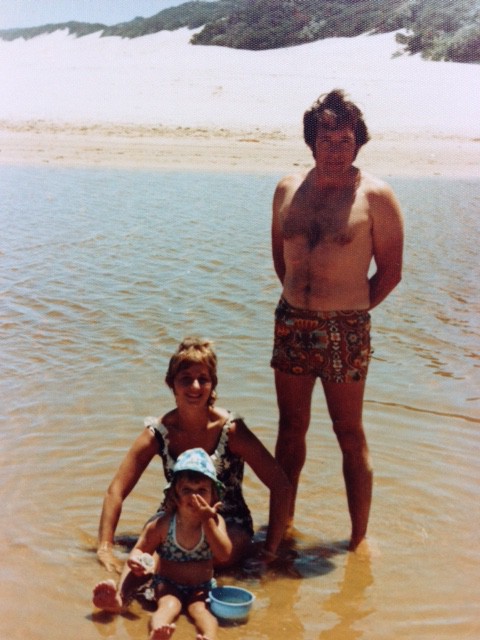
My mom and dad with me at Igoda, 15kms outside of East London, 1975.
During a wintry season in my parents’ nearly 50-year-old marriage, my dad took it upon himself to have an affair. As a man incapable of telling a lie, it was conducted very openly with a pony-tailed, bottle-blonde ‘friend’ of the family, and while I was protected from knowing the details of what was going on, my memory is of him coming home from work, showering and leaving again, and of his uneaten plate of dinner which my mother would leave, covered in foil, on the Formica kitchen counter. When I was both old and young enough to adopt an attitude of protective indignation, I was angry at what I perceived to be the spinelessness of my beautiful, green-eyed, flawless-skinned mother. Why did she allow this to happen? Why did she meekly, weakly stand by while he came and went as he pleased?
It took me being married myself to appreciate the courage and strength it must have taken her to watch her husband’s car reverse out the driveway and hold it together enough that her young daughter remained oblivious to her pain, even while the scent of his Old Spice lingered in the hallway. And also to understand enough about the frustration and quiet dismay which is the flip side of the image we’re presented about marriage not to presume to judge him. And what she did, which I understand now, was also extremely clever. She didn’t make a scene and throw his clothes out the front door or show up where they were, demanding justice. She simply waited it out. In typically pragmatic Capricorn-style, she understood – like most affairs – that this one would more than likely run its course, and that by creating a fuss she would only make his mistress more appealing.
So, she left his plate of supper ready for him when he got home and carried on as normal. She also told his entire (large) family, who have always adored her, exactly where he was and what he was up to when they phoned for him. They were horrified and furious, and froze him out one by one. It was due to her single-minded determination not to lose her husband, the love of her life, that he came back before long and their marriage resumed as if none of it had ever happened. But it could have gone a different way. She did what she needed to do to hold on in that moment, and ultimately she got what she wanted. And the reason all of this has been on my mind is because I had a dream a month or so ago, while on holiday in Sweden, that my husband was having an affair and I remember, even through the deep emotional pain, having a distinct dream-thought: if you want him you can have him, you just have to wait this out. And the immediate follow-up question: but, do I have what it takes to do that?
Do I possess the emotional wherewithal; the purpose of mind, the mettle to stand by and watch and wait? When I was younger I believed I was a one-strike-and-you’re-out kind of girl. Now, 15 years into my relationship, I see the world as a much greyer kind of place. I know what marriage is and what it can do. That, while it’s wonderful and fulfilling on all the levels they promise, it also has the propensity for a loneliness more vast than any amount of singledom can match. That sometimes it’s unkind and deeply disappointing. That there’ll be moments where you’ll reel at the horrified realisation of what you got yourself into and how impossibly difficult it will be to get yourself out. And this is the kind of marriage where friends say, ‘how do you guys manage to stay so happy?’ And we are, very. Not a day goes by where I’m not grateful that I chose him as my life partner because he’s so many kinds of amazing. But that is the nature of the beast.
And it’s why I think I’ve amended my position on affairs. I don’t know that I would leave. I’m not convinced, anymore, that these moments of desperate connection with another human being are not entirely understandable, given our deep desire to be heard and seen and how much gets in the way of married people doing that for each other. Would some relatively meaningless dalliance on his part be sufficient reason for me to break up our children’s home? To put us all through the mind-boggling suffering and turmoil that comes with divorce? Is my ego really that big?
I don’t know the answer and, mercifully, I’ve not been put in that position. While I don’t think I could be the wife who covers a plate of savoury mince with foil, tucks her young daughter in bed and then waits by the window for his headlights to swing into view (unfortunately for my husband I suspect I’m more the throwing-the-clothes, stalking, psycho kind), what I realise now is that my mom is made of some strong stuff and that, ultimately, we are not all that different. I’m grateful she made the choice she did, and I’m sure my dad is, too. 30 years later they are happier and more in love than they’ve ever been, and my sister and I enjoyed the privilege of growing up in an unbroken home. I hope, if this ship ever veers off course, that one of us will be brave enough to grab the wheel and hold on tight till we’ve steered ourselves back to safety.
Possibly the best (effing) sandwich I’ve ever had in my days – toasted ciabatta with crispy bacon, avo, melted brie and caramelized onions. It was from Motherland Coffee in St George’s Mall. I still think about it.
Before I sat down at my computer right now I made myself a sandwich. As in, put things between two slices of thick, fresh bread (real mayo, cheddar cheese, cucumber, tomato, rocket and a bit of chutney, if you want to know), and not flaxseed ‘bread’ or cauliflower ‘bread’ or ‘bread’ made from dried, ground psyllium husks (what the hell is that anyway?), but the kind we used to eat back in the day made from wheat and yeast. Pretty retro, huh? And while I actually sat down to work on something else entirely, the strangeness of sitting down to eat a real-life sandwich struck me enough that I changed my plan and started writing about that instead.
Because the thing is, three months ago this sandwich would have made me quake. I mean, it’s a carb, for the love of god, and everyone knows carbs are very, very bad. Very. And believing this to be true, I would have substituted the best part for, well, anything. More lettuce. Seeds. Those psyllium husks. Anything but eating the bread part of that meal because if I did I believed I’d basically be obese or dead or both within the week. But bacon was fine. Oh, chow down, sister. Bacon’s not a carb. Neither is chicken skin or steak or butter or coconut oil. All of these things? Hunky damn dory. But a slice of melba toast? Well, you might as well go in a dark room and mainline arsenic.
And I don’t know, in this age of information, how we human beings can still be so stupid. Okay, maybe stupid is harsh, but why we fall so enthusiastically, so uncritically for these fads and trends instead of just using our noggins and good, old-fashioned common sense. And I totally include myself in the idiocy because I have done every. One. Of. These. Diets. Looking, as I was, for the holy grail of eating – the key, the trick that would let me stop fighting with food and therefore myself. And I ate the eggs and forewent the toast (so yuck, right?) and turned down the banana in favour of the smoked sausage. I mean, does any part of turning down a banana make sense? Potassium. Fibre. Nature’s own pre-packaged snack food. Perfect. A lot perfect-er than that piece of processed meat.
Because actually sitting down to an entire sheep at one sitting is not okay just because you skipped the mash. Putting butter on your 500 gram T-bone isn’t fine because you had spinach instead of chips. It’s greedy and it’s stupid and it’s killing the planet. Do we even think about what it costs in energy terms to get that cow onto our plates? And putting that amount of fat and protein into our bodies just can’t be healthy. I refuse to believe it is. It’s one of those cases of if it sounds too good to be true, it more than likely is.
I’m not a dietician, but I write about food and think about food and eat food a lot. And, because it’s something that interests me, I read books about nutrition and talk to people who are dieticians and doctors and have made it their life work to help us be healthy and when I ask them what they think of Banting and LCHF the sensible ones shake their heads in collective despair. For sure, no question we were eating too much grain (thank you, marketing campaigns of the 90s). We don’t need all that wheat and rye and barley and the kak that gets added to it. But removing all carbs is extreme and counter-intuitive and, frankly, cray. There is no way a sandwich filled with avo and salad is worse for you than a three egg omelette with bacon and a half kilo of cheese. Or that the fat of the (probably hormone fed) steak is better for your body than a nutrition-packed sweet potato. It just doesn’t make sense.
The other day I was chatting to a restaurateur friend of many years – someone who runs a few of the most successful eateries in Cape Town, and who’s made a very good career out of feeding people. And we talked about trends and food fads and the future, he told me something that made so much sense. He said, on the way out are the days where people will sit down and gorge themselves on a huge piece of steak and this is because we are becoming more mindful of what meat really is and where it comes from. We want to know it’s from a reputable farm where the animals are treated humanely and not pumped full of drugs and rubbish. Quality is replacing quantity, and it’s about damn time.
Contrary to the greed that permeates our food culture now and has for some time, we human beings seem to slowly be gaining respect for the fact that an animal lost its life so we can have those pork chops for supper. And, what’s more, restaurant patrons of the future will be presented with a ‘Provenance Bible’ where they can see exactly where the food they are ordering was sourced – the meat, the fish, the eggs, the vegetables, the cheese. Transparency will become de rigueur and, with it, accountability and a growing interest in and awareness of what we are putting into our bodies.
And with that philosophy guiding us hopefully soon we’ll start to pare down; reduce our portions; order one plate of meat and share it amongst the table. In his words, we’ll go back to eating like our grandparents did – not endless sandwiches made from cheap government loaf, but a few slices of good bread baked with organic flour and natural ingredients, savoured and eaten in moderation. Fresh fruit and vegetables we’ve grown ourselves or bought at a market served raw or lightly seared. Fruit, nuts, home-made butter, organic olive oil. Happy food that our bodies recognise and know what to do with.
It’s okay to eat potatoes now and then. Few things in the universe are more delicious than a French fry. Just remember that they’re high in energy so don’t eat more than you’re going to expend. Have the odd plate of pasta. My god, it’s good for the soul. But mostly eat salad. Eat the stuff that comes in the best colours (not smarties). A little bit of meat now and again when you feel your body needs it. Because it’s not about how to get as much food down our throats as we can get away with and still look good in low-cut jeans. It’s about eating gently and living gently. And looking after ourselves and our environment. And saying no to factory farming – not supporting those mofos because it’s really not okay, the suffering that goes on there and that we all collectively condone.
So, having after immersed myself wholeheartedly in the madness of diets and weird eating trends for the past twenty years and having learnt many things from that experience, the ultimate conclusion I’ve come to is this: eat meat a little bit, but let it be special; a treat. Aim for a diet that’s simple and light on the body (and the soul). And when it comes to food (and life), practice mindfulness and humility. Stop all this radicalism and the weird, self-imposed rules like taking the freaking croutons out of the Caesar salad. They’re the best part. Banting gets it right-er because it’s about going back to basics, turning away from processed stuff and incorporating a bit of fat. But it’s too extreme. Cauliflower is not the truth and the light. There’s a middle road that I think we’ll get to when all this hype dies down. And what I’ve learnt from all of it is to eat the effing sandwich.
I know a restaurant is my kind of place when the waiter shows you to your table, hands you your menu and asks you if you’d like a tequila. A tequila? At dinner, washed down with chardonnay? Obviously. Despite the fact that it’s a veritable stone’s throw from my house and an establishment frequented by many of my friends, somehow I’d never made it to dinner at Café Manhattan in De Waterkant. Which I realise, now, has been a big oversight on my part because it’s the kind of place you walk into, weary to the bone and bored senseless with the monotony of parenting and you remember, with stunning clarity, that you’re actually an adult who very much likes adult conversation and also wearing a leather pant and throwing back the odd shooter. In that order.
Within five minutes I’d cheered up so much I was barely recognisable to myself, and the evening was a joyful series of hurrah moments as I remembered important things like: I love that Cape Town has a gay district, and that I live a few blocks away from it; I love going out on a Friday night to places where children aren’t allowed, and I love talking to my husband while being plied with cold white wine and admiring the stylish, beautifully groomed young men who frequent this sexy eatery. The music is funky, but not obtrusive; the lighting is low but not seedy, and the service is friendly and attentive without you ever feeling harassed. And the prices are really, really reasonable. In fact, the burgers (which are huge and amazing) are cheaper than the ones we have when we go to that other place which does allow children. You know where I mean.
Anyhow. I was in an American kind of mood, so to start I ordered the corn and Arborio sliders which come on a generous serving of tasty roast vegetables (v. yum indeed), and Per had the salt and pepper squid. Both were delicious. Then, I had a very hard time because I almost never order the chicken in restaurants – it feels like such a naff, fence-sitty thing to do, and anyway, chicken is lunch – but this one I couldn’t resist the sound of, being buttermilk-soaked, coated in Texan spices and deep-fried, Southern-style. The portion is so big (think KFC’s family bucket) even greedy guts me could only manage half. Only order this dish if you walked here from Kimberley. Then again, it would probably be very nice with mayo on government loaf the next day.
Per had a T-bone with two sauces since he was having commitment issues – chocolate chilli and chimichurri which is an Argentinian thing made of parsley, garlic, olive oil, oregano and vinegar and goes very nicely on beef and also on double-fried chips and onion rings and vegetables and your finger. (Personally, I would have gone for the triple cheese or the smokey chipotle, but I only get to boss him around so much before he tells me to settle down and face the front).
By the time we were done we were too full to speak, but had to try one of the fun milkshake flavours for dessert. He voted for chocolate brownie, but since I was writing the review that was vetoed immediately and we had the apple and cinnamon (you can also have peanut butter and marshmallow and lemon meringue – yum) and it was completely divine, served with a dollop of apple pie and two spoons. They also do fun and unusual-for-SA things like root beer floats, soft shell crab and pumpkin pie, but those delights I had to leave for another day. If it’s been a long time since you had a decent conversation with your partner or it’s been a stupid week at work or life is just unimpressing you hugely, comfort food in a cheerful setting goes a long way towards making the world bearable again. Pull in, order the fries and say yes to the tequila. You’ll walk out a new man.
Café Manhattan is on 74 Waterkant Street, De Waterkant. Call them 021 421 6666 or check out their website http://www.manhattan.co.za/. They’re open for breakfast, and have a special Steak Knife Tuesday for when the weekend got really fun. The pavement tables are also good for an after work cocktail or seven.
One of my favourite places in Sweden, Ribersborg kallbadhus.
If you want to get rid of body image-related fiemies in a quick way, a very good place to start is a Swedish sauna. And it’s one of the reasons, when I lived here, why I insisted on taking South African friends saunering – even when they would really rather have done just about anything else than walk around buck naked amongst foreign strangers. Because, let’s be honest, we grew up with some mightily messed up ideas about nudity and our bodies. When I was it school it was normal to go into the toilet cubicle to change for P.T. lest – God forbid – your peers got a glipse of your bits. Never mind the fact that we all had the same damn bits. It was also school policy to run random underwear checks (seriously, you couldn’t make this stuff up) to make sure the young women of the nasie had the requisite commitment to their country (or something) to wear the prescribed nylon broeks – in my high school these were maroon – which covered the tops of your thighs and went practically up to your navel. Because if you were voor-op-die-wa enough to wear Woolworths panties, for example, you were definitely on a slippery slope to moral decline, the kind which would end in an anarchy our country could ill afford.
So, we’d stand in a long line and someone (usually the P.T. teacher was given the unenviable task) would move down the line and lift our tunics to see which girls were committed members of the volk and which were contributing to South Africa’s moral decay. And amidst this Calvinist-inspired hysteria about the showing of skin, the only naked bodies we saw – aside from our parents whose privacy we regularly invaded – were the Scope girls with stars on their boobs and the odd, contraband porn movie from the seventies which was usually so grainy you could barely make out what anybody was doing. And it was from this deeply conservative upbringing that I arrived in Scandinavia and discovered the most interesting contradiction about this nation and ours. In South Africa, especially back in the day, it was quite acceptable to leave a party so drunk you had to walk with one eye closed, get in your car and drive home. It was also okay, at said party, to partake in any array of recreational drugs which – amongst certain friends, anyway – were used and exchanged freely. Sometimes it was as harmless as a joint, but I’ve been to a braai in deepest suburbia where caps of acid were offered on a saucer as if they were chips and dip until everyone was so high they stopped talking to each other and instead moved anxiously from room to room, in formation, like llamas.
But while this kind of heady licentiousness was kind of par for the course, don’t – whatever you do – take off your clothes. Because that’s bad. In Sweden, exactly the opposite norm prevails. While drinking even a little bit and driving is darkly frowned upon, and drugs are so bad they’re not even mentioned in polite company, you can feel free anytime to go starkers – and people do. Find yourself in town and suddenly the sun came out and you want to tan? Go for it! Discover you forgot to wear underwear that day? No problem! Nobody cares. And that’s the truth. And this is why the sauna experience is such an important reminder – especially for us women who manage to develop some very funny ideas about how we’re supposed to look – that bodies are just bodies, and while their shapes might differ, they are more alike than different. I remember the feeling of fear the first time my Swedish friend, Teresia, took me saunering, of having to strip down completely and walk across a sizeable changing room and into a sauna full of naked people. And then, when it got too hot, walking out with my bare bum facing everyone and strolling down a quay where, 50 metres away and in full view, naked men walked down their own quay and we all cooled off in the cold November sea before doing it all again.
And realising, with amazement, that I was the only one who felt uncomfortable. These women – old ones, young ones, bigger ones, smaller ones – were completely at ease with their physical selves. And nobody was perfect. Even the ones who were thin in clothes stripped down to reveal wobbly thighs, knock-knees and droopy boobs. But nobody cared. Nobody even looked. They chatted and laughed and sweated and swam and showered and lathered and bent down to pick up their water bottle without a moment’s self-consciousness. It was a beautiful thing to observe, and it changed the way I saw and felt about myself. Seeing these bodies in the cold light of day – zits on bums, stretched nipples, bony knees – reminded me that the perfection I demand of myself is unrealistic and unattainable, that nudity is not sexual, it’s just nude, and that there is a zone of self-acceptance you can enter if you choose. Not that I always get it right, but being amongst sisters who were that at ease with themselves meant that some of their togetherness rubbed off on me. I wanted to take the freedom I felt in that space and bottle it so that I could access it on days I felt iffy and like I didn’t quite make the grade. Instead, I will share some things I discovered which I think are important to know.
1. Most Women Have Outies…
Based on no scientific research whatsoever, I would say that less than 5% of women look like the ones in porn movies. So, please can we stop this insane trend towards standardising our fannies? There is no ‘right’ look. And, by the way, men don’t give a crap, they’re just happy to be allowed in.
2. …And Ordentlike Bushes
Ja, you get the odd landing strip but, for the most part, woman go au natural, true story. We’re bushy. A lot of us don’t even deal with the hair that creeps down the thighs. And while it’s not my best look, I think it’s fabulous that there are women who genuinely don’t care. So, while some of us walk around feeling slightly skaam about the fact that our lady topiary isn’t always as perfectly trimmed as it could be, it’s good to know that neither is anybody else’s. And anyway, who has the time?
3. At Some Point You Lose Your Pubes
The only Brazilians I encountered belonged to women in their sixties who didn’t really look like the type to be having crazy sex which led me to the assumption that the pubes went of their own free will. So, instead of waxing and shaving everything away, maybe we should enjoy the fact that we have hair down there. It means we’re not old. Yet.
4. Fannies are Not Beautiful (and that’s okay)
Neither are the bodies they’re attached to. Real bodies have bumps and stretch-marks; remove the Spanx and the Wonderbras and women have pot-bellies and hips and boobs that go south. Its okay. Life is not a freaking beauty pageant. And the people we try to emulate, the actresses and the models, are amongst the saddest, most messed up people alive. Let’s be strong and healthy and do fun, interesting things rather than worrying whether one labia minora might or might not be slightly longer than the other. It’s not what you’re going to think about on your death-bed which means it’s not important so don’t think about it now.
5. Fannies are like Feet
They differ from each other, but less than you’d expect. And when you see them a few inches away from your face they’re much less mysterious than we’re led to believe. They’re just a part of our bodies, and while they are used for sex it’s not like we have sex all the time. Mostly we just put them in undies and go do the grocery shopping. So let’s stop fixating, be happy we have one that works and get on with our lives.
So virtuous did I feel in the queue at Fruit and Veg City. TRY and find a samoosa.
Day 0
I feel blech. So awfully yuck. A kind of toxic, sluggish malaise has taken over me and I sleep too long and struggle to get out of bed in the mornings. Which is not me and tells me something is not quite right because I’m normally the energizer buddy. Though, I must admit, I haven’t been feeling energizer for a while. What I have found, as I’ve gotten older, is that there are certain foods my body really does not like, and wheat is the worst culprit. Within half an hour of eating that ciabatta I can feel my system regailing. It just makes me feel ill. And I have to face facts – that I was simply not designed to process grains. I don’t want to feel blech. I want to leap out of bed and feel amazing, and I know I can, and I know it’s about changing my diet. Which is not bad, but there is definitely too much toast and cheese going on. And coffee. And nachos. As I lie in bed, Enos under the belt for the huge sandwich I had at lunch followed by a steak pie for supper, I make a decision: starting the very next day, I’m going on a raw food detox. Just to see what happens.
Day 1
Since this has been a rapid decision I don’t have the right foods in the house, and breakfast has to be a small bowl of raw oats and sunflower seeds with apple juice. It’s been so long since I had anything as healthy as oats, I find the box crawling with small, brown goggas which I (not very painstakingly) pick out. I have my normal cup of filter coffer with milk and a quarter spoon of sugar because last time I did a detox the headache was so bad I couldn’t function. I SMS my raw food genie friend, Beatrice, and ask her if she has tips or tricks I should know about. She orders me to hot foot it to her shop, Raw and Roxy, where she hands me a cup of dark green, freshly pressed (not squeezed, there’s a difference) veggie juice which contains greens, the juice of two lemons and magical things things I can’t remember. It’s tart and delicious and tastes like it’s just what my body needs. This is followed by a thick, darkly red cleansing smoothie of sour cherries, berries, chia seeds, dates and about 100 other special ingredients to make me feel well again. When I get home I start to realize I feel odd – bouncy, sort of, and a bit hyper. I SMS Beatrice from the loo (where I’ve been three times in the last hour) and say it feels like the 90s and I’ve just had a line. I’m tempted to put on eighties music and have a shot of something, but I have to fetch the kids. She says she feels the same, having finished the leftovers of my various brews. I tell her her potions are powerful and that’s she’s the good witch of Woodstock.
Grapefruit is not ayoba, but it’s got great cleansing properties, so make a mulch with banana and apples and you won’t notice what you’re eating. Those red things are dried pomegranate, mostly for show.
Day 2
I wake up feeling awake. And, bizarrely, not wanting coffee. I’m a coffee fiend, and nobody must even look at me before I’m a half-cup in. I go with it and make myself a cup of hot water with lemon instead. I fear the headache, but decide to listen to my body. I’m amazed at the difference one day can make, but I think my detox process was accelerated somewhat by yesterday’s potent elixirs. I’m a bit mood-swingy, alternating between feeling light and energized and a bit edgy and irritable. For breakfast I make a mulch out of grapefruit, apples, a banana, linseeds I’ve soaked overnight and a tablespoon of chia seeds topped with gooseberries and dried pomegranate. By 11am I can feel a headache starting in my temples. I’m not really hungry, but at the same time I feel like want to eat. I make myself a small salad of cucumber, mint and lemon followed by a huge salad of spinach, cauliflower, grated carrot and a lemon-tahini dressing. I’m thirsty and drink glass after glass of filtered water. By 4pm there is a Tokoloshe perched behind me where I lie prostrate on the couch intermittently smashing my skull with a traditional weapon. I understand why people lose weight on this diet. It’s only day 2 and already I have lost the will to live, never mind rustle up another bowl of raw vegetables. I whatsapp my husband and demand to know why I’m doing this. He says he has no idea but suggests I have another glass of water and go for a walk. Clutching my head with my free hand I drive to the promenade where I hobble along the walkway, squinting and whining quietly to myself.
Day 3
By the time I got into bed last night I had the most severe headache I’ve ever experienced. Meningitis has nothing on this. On google I discovered it’s because caffeine restricts blood flow to the brain. Go off it and the blood flows like god intended, but the change can cause pain of monumental proportions. No wonder I’ve been forgetting everything for five years – I’ve had no blood to the brain. The sensation is of a throbbing whoosh above my eyes which a head massage with peppermint oil only seems to make worse. I mean, peppermint oil? Morphine would be more appropriate. Realizing I wouldn’t sleep a wink and that the following day was not one I would survive without sleep in desperation I took a single Panado (I know, I know) and managed to get some shut eye. This morning the headache is better, but there. Insanely I have agreed to have four children to play today whom I’ll have to drag around the shops to find a birthday gift for a friend, I have people coming to install a fence and a gate whose unprofessionalism has been a headache all on its own and then my cousin who’s going through a tough time arrives with her two boys for dinner and a sleepover. And I have two big jobs due by the end of the day. I stand at the kitchen counter weighing my options. A day of agony or more Panado or a weak cup of coffee to slow down the detox process to more manageable proportions. I go for C. Within 10 minutes I feel right as rain, and I realize that that innocuous-seeming coffee I throw back all day long is one serious mutha of a drug.
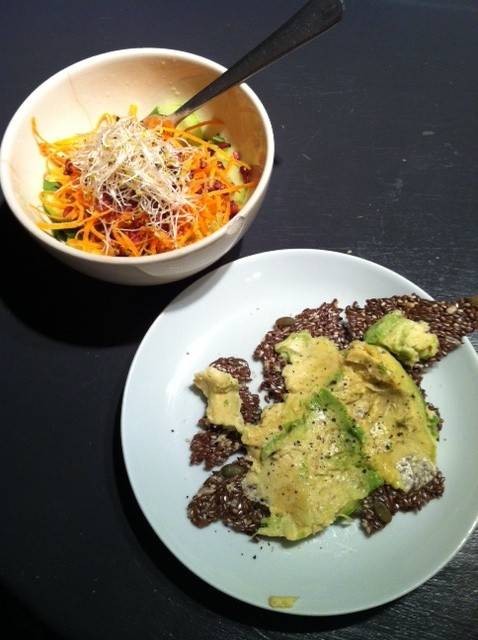
Salad with cucumber, mint, carrots and sprouts, and a linseed cracker with avo. Not horrible, as lunches go.
Day 4
The headache seems to have eased up which I’m relieved about. I’m also immensely relieved that my mom is having the kids for a sleepover because I’m not exactly in Mary Poppins mode. My mood is still swinging wildly as I vacillate between feeling happy and light and so immensely furious I could murder somebody with my bare hands. I sit through two hours of ballet Eisteddfod rehearsal watching the other moms swig away at XL polystyrene cups from Vida E, and it’s not like I crave the stuff, I’m quite smug about the morning’s hot lemon water and fruit mulch, but I would like to feel a bit normal. I tell myself to be patient and that this misery will pay off. On the way to drop the girls I stop at Atlas Trading in Bo Kaap and buy myself the detox and kidney teas Beatrice recommended. I have my first cup at my parents’. It contains buchu, and no words can describe its foulness. It’s like sipping rancid grass flavoured with urine. I’ve started to feel bad. Like you do when you’re coming down with flu – aches throughout my body and funny, shooting pains in my joints. I google detox symptoms, and apparently feeling like you’ve got flu is normal. So that must be it. I spend the rest of the afternoon under a blanky on the couch, sipping my vile teas and sort of enjoying how sick I feel. I read somewhere that the level of discomfort you experience during a detox is directly proportionate to your level of toxicity. Clearly – despite a regular wheatgrass shot and boot camp class – I was a human version of Chernobyl. Who knew?
Day 5
The flu symptoms have lessened, but I’m definitely not at the point where I moonwalk to the bathroom. It’s foggy on the sea front and the lighthouse siren has been sounding all night. I read the night before (yes, I’m reading a lot) that a brisk walk can help alleviate the symptoms, so I dress warmly and head to the promenade, considering a steamy, cleansing sauna at my gym afterwards. Ten minutes into the walk I’m so exhausted I have to turn back. A sprightly 75-year-old eyes me pityingly as I hobble back to my car and return to the sanctity of the couch, sauna plans long forgotten. Come lunchtime, the rain is pummeling down and I can’t face another plate of grated carrot. I need something warm and soothing. I google a recipe for detox soup with ginger, garlic and fresh turmeric, reckoning that the badness of cooking the veggies will be outweighed by the goodness of the ingredients. It’s delicious, and immensely comforting eating something hot. I go to bed at about 7:30pm aware that the geriatric from the promenade is probably dusting off her dancing shoes and getting ready to go on the razzle.
Raw ‘pizza’ with smoked olive paste, avo, fresh tomatoes and basil. Sooo tasty.
Day 6
Something quite astonishing (even through the pain) is the sense of clarity I am experiencing. It’s hard to describe, really, but it feels like the world has come closer, in a sense. Things seem more immediate – almost like there’s been a barrier between me and reality which has now melted away, and things have shifted into very (startlingly) clear focus. I don’t know how to explain it, and I’m the first one to pooh pooh all this talk of ‘toxins’ because, frankly, it’s immensely dull, but I suppose in the same way alcohol and drugs (like caffeine) alter our perception of things, maybe the nasty components of a so-so diet also fuzzy up our reality. In a very unscientifically proven way (then again, there are realms science can’t explain), I know I feel different, and it’s a good feeling and I want it to last. All the aches and pains have gone, and I’ve started to look forward to my morning lemon water and fruit. In five short days my taste buds have changed. Before, I couldn’t abide sweet things in the morning. Now, my plate of black grapes, chopped up naartjie with cinnamon and banana tastes completely delicious and I can’t wait to eat it. Go figure. There are a lot of salads happening, but you sexy them up with things like dried pomegranate, dried olives, good dates, fresh figs and, always, lashings of avo smashed up with lemon, cherry tomatoes and coriander. And I love that I can eat nuts and nut butter with wild abandon and not worry about the calories.
Day 7
So, this is the last designated day of my detox, only it’s not the last day at all because I like the way I feel too much. I’m light and clear in my head, I sleep well and wake up awake, I don’t crave coffee at any point in the day. I’ve learnt how easy it is to make my own linseed crackers (I like to add pumpkin seeds, sesame seeds, sunflower seeds and organic coconut flakes) which I pop in the toaster instead of bread and have with avo or peanut butter. Instead of milk from a cow my nighttime drink is warm almond milk with a few teaspoons of almond butter and a swirl of raw honey. I love that I can eat as much as I want of whatever I want and that I still feel light and energized and, despite eating more or less non-stop have lost 3kgs in a week. And the food all tastes delicious.
This is a hard diet to follow 100%. It’s difficult to socialise and stick to it and boring to explain what you’re doing because everyone thinks you’re mad. And I refuse to be the person who goes to someone’s home and won’t eat the food they’ve prepared for me with love. Anyway, I like my meat and I don’t store iron well or absorb the kind you get from supplements so I need the odd rib-eye (with chips, because not having the chips is wrong on every level). So, my conclusion is this: I will continue eating raw indefinitely because it makes my body (and therefore, me) really, really happy. And my skin has never looked so good – I think it’s the high level of healthy fats. It’s kind of plumped up and glowy. But I won’t do it 100%, I’ll aim for 80%, maybe slightly more. At dinner parties and in restaurants I’ll eat what I feel like and give in to cravings, listening to what my body tells me because I’m a lot more in touch with it now. I’ve learnt about some amazing foods I’d never heard of and that I really enjoy (chia seed porridge is the BERRIES), and I know now how to eat filling, satisfying meals that don’t contain any part of a grain. I never get that blech, toxic feeling, and I’m happy to be off the coffee. It’s been an interesting experiment, and it’s kind of changed my world.
Zulfa and our steak Gatsby (she assured me you don’t have to have the polony for it to be real).
A few nights back I started reading a Rayda Jacobs novel where she keeps referring to Gatsbys and I realised I’ve never eaten a Gatsby and it’s about time I did so I know what Rayda is talking about. So, I asked on Facebook where I can find the best Gatsby in Cape Town and some American friends of mine joined in the conversation and apparently in France it’s called an Americano and it’s made with burger patties instead of polony or steak or curry. But what was interesting was when I tried to explain how come I’ve never eaten this quintessentially Cape Town sandwich before, loving all things local as I do. And I kept starting and then deleting my comment because I didn’t know how to say it: that Gatsbys are coloured food and white people just don’t eat them. It’s funny trying to explain your country to foreigners and realising, anew, how mad it all sounds (how mad it all is).
But, that’s the gospel truth, isn’t it? They’re poor food; working class fair. We mlungus might go into a café that sells them, but we’ll buy a samoosa or a chicken pie and a can of diet coke. Not a Gatsby. And I started thinking about that and how, a while ago, I had to attend a conference in Bridgetown and we white people looked at each other in bemusement. There’s a Bridgetown in Cape Town? Who knew? Well, a lot of people, it turns out. The people who eat Gatsbys. Bridgetown is in Athlone, and while all the coloured people in the world will know where Camps Bay is even if they’ve never been there, the vast majority of white Capetonians will never go to Athlone. Unless they got drunk at Forries and made a wrong turn off Klipfontein Road and pooped themselves when they realised.
And it’s interesting how the apartness a lot of us grew up with is reflected in our food. Black people eat samp and pap; white people eat fish and salad. When I lived overseas people would ask me what South African cuisine was, and it’s an impossible question to answer unless you précis it with a summary of the socio-political history of our country. Because there is no ‘South Africa’ in the sense they were meaning. There are pockets of disparate people whose lives are vastly different in terms of what they can expect to achieve; the dreams they dare to aspire to, and the food they can afford to eat.
Strangely enough, the thing that helped me understand the Swedes I was living amongst was when I started cooking Swedish food. The food of a nation says a lot about their passions and preferences and who, quintessentially, they are. Northern Europeans might appear cold on the outside, but bite into a warm-from-the-oven saffron bun on a frigid December morning and you know, underneath their chilly façade, beats the warmest of hearts. And when we break bread with one another we also break through barriers. Which is, I think, one of the reasons I insist on serving chakalaka at braais. It’s my private little rebellion against the repressive norms of my apartheid childhood. (And also because it’s delicious).
And, I guess, what propels me to put my 68-year-old mother in a car and drive us to Miriam’s on Adderley Street on a Tuesday morning in search of the perfect Gatsby in lieu of our regular coffee. And I guess it’s about needing to step out of my own little pocket; trying not to be so precious and white all the time. And I don’t assume for a moment that ordering a chip roll will change the world; I just mean we must try and be mindful of where we come from and the assumptions we make, and that there are worlds of experiences out there and a wealth of lessons at our fingertips if we can remember to open our minds and our hearts to them. It’s like, if you take the courage to break through the boundaries of what you order for lunch, maybe some other boundaries will be broken down too in the process. I don’t know.
I invited my friend Zulfa along as she’d joined in the Facebook conversation and seemed to be a bit of a Gatsby expert, and every time I see her she reminds me of the time I went to visit her at her home in Athlone and, being the type who can’t find her way out of Cavendish square, naturally I got hopelessly lost. With a dead cell-phone and driving around aimlessly with two children in an area which (to my mind) could only be teeming with murderers and rapists, my anxiety increased about a hundred-fold when I realised I was being followed by a strange man in a car. Not only followed, but he was making hand gestures and seemingly trying to pull me over. While I tried my best to get away from him, my Toyota Tazz didn’t have enough power and for endless, excruciating minutes, I had to watch this man wave his arms as he threatened to bludgeon us all to death.
When, by some miracle, I finally found the right house, I was surprised to see the scary man from the car sitting at the kitchen table having a cup of tea. It was none other than Zulfa’s sweet, gentle giant husband, Moegamat, who’d ventured out in a quest to rescue what could only be the lost and hysterical blonde chick. Shame. This is how mad this country makes us. I still cringe when I see him. But, back to the Gatsby: It was bigger and spicier and more delicious than even greedy-guts, curry-loving me had expected. And while I tried to eat it with my hands – never mind one hand as is the Muslim way – within three bites I knew if I didn’t resort to my knife and fork it was going to become a soggy mess. The steak was tender and flavourful, the chips were crisp and spicy and the sautéed onion tied it all together perfectly. It might not be the healthiest of meals, but some food is soul food and, when eaten while laughing and sharing life stories with people you love it becomes some of the best medicine in the world.
Once upon a time, when I was in my early twenties, I thought I was a hippie and signed the lease on an old house set against the mountain in Muizenberg with a pokey lounge and a lemon tree and a windy view of the sea. I imagined myself wearing sarongs, taking early morning swims and spending my days writing and doing hippie-type things. In reality, I spent most of that year on the side of the M3 waiting for my rusty red Cortina station-wagon with its malfunctioning fan-belt to stop spewing steam long enough to get me to my job in the city as I battled rush hour traffic and was perpetually stressed out and chronically late for work. Reality didn’t quite live up to the fantasy, and the following year I moved back to a flat in more manageable Tamboerskloof.
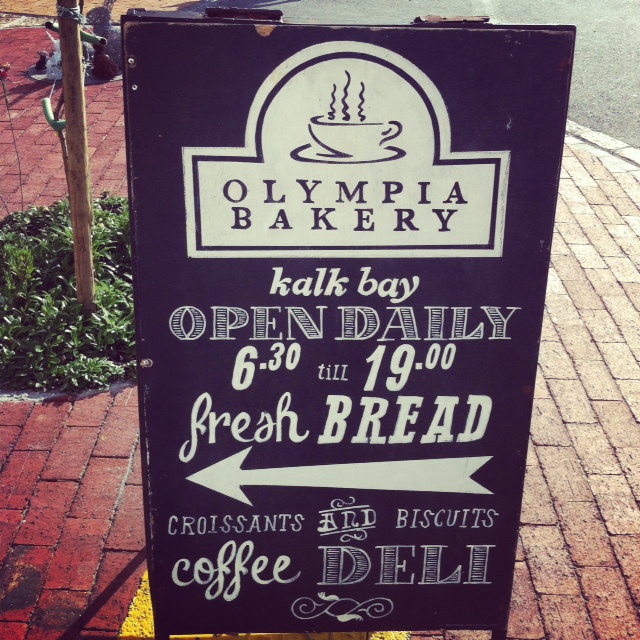
But I love that part of the world, and I always have. It’s so different from the rest of Cape Town and, despite its proximity to the city, Kalk Bay particularly has managed to retain a real fishing-villagey kind of feel. One of my favourite things about living on the that side of the mountain was breakfast on a Saturday morning at the Olympia Café, home of some of the best omelettes in the universe which, despite being enormous, they have the audacity to serve with fried bread. We took the grannies there for breakfast on Tuesday, and the omelette of the day was mushrooms, mozzarella, pepperdew, avo and pesto, and it was – as always – delicious.
What I hadn’t realised, as we strolled up the road afterwards, was how many fabulous new places have opened up in the last while, and we made mental notes to visit all of them in the upcoming months. It’s done itself up, that main road, and if you’re hungry you really are spoilt for choice. And the new cafes are funky and interesting and command a great view of the street and its passers-by, but despite all the newness and the fact that it was mid-morning on a week day, Olympia was still full, many of its patrons chatting away to the waiters, obviously locals who were better at doing hippie-type things than I was. Just make sure, when you go there, that you don’t have lunch plans because the meals are substantial enough to last you until dinner.
As we meandered along, we noticed throngs of old ladies in head-scarves emerging from the station and making their way to the quay, no doubt to enjoy an early fish and chips lunch. Being incurably curious, I accosted a small woman passing by and asked her what was going on. She told me that on a Tuesday pensioners get to take the train for free. ‘From where?’ I asked. ‘ From where we live,’ she answered, ‘Mitchell’s Plein.’ And while she didn’t exactly lower her eyes, when she said ‘Mitchell’s Plein’ something subtle but significant passed between us – a hint of embarrassment on her part, as she confessed to the white girl in expensive sunglasses that she is nothing but a poor coloured woman from the sticks; the vaguest hint of defiance in her tone as she (rightly) assumed I know less than nothing about what she’s lived through in her 70 years on earth, and that she’s answering me out of politeness and that’s where it ends. For me, it was the ever-present longing to take an eraser and just rub out the details of our past like we used to do in Standard 3 when we made a mistake with our HB pencils; make it that it never happened the way it did so that I could just talk to a human being on the street without all that stuff hanging over our heads all the time.
Because, of course, when she was my age, she would have had to take a special ‘non-Europeans’ train carriage and when she got to Kalk Bay she wouldn’t have been allowed to go to a ‘white’ restaurant for a calamari roll and a coke and have a swim in the sea to cool off on a hot, Indian Summer’s afternoon. While I could – and still can – pretty much do whatever I wanted. And I know it and she knows it and all we can do is try to relate to one another as normally as we can now on a crowded, sun-strewn pavement two decades later and hope, eventually, we’ll be able to move on. Or that the new generation is so different none of it will even matter anymore. I don’t know what the deal is with the free tickets, but I think it’s a great initiative. These ladies were chatting and kuiering like it was nobody’s business. Tempting as it might be, we mustn’t allow ourselves to forget the newness of these freedoms. As we were leaving the Olympia Café, we stuck up a conversation with one of the locals who was polishing off the day’s special, about 70 chippolatas served with scrambled egg and mushrooms, and she told us they’re open till 9 o clock at night, are licensed and that the dinner time fare is just as yummy as what they serve in the morning. I believe her. We’ll go back soon to see for ourselves.
I forgot I was supposed to take a pic and started eating. The fried bread is served with pepperdew and aubergine dip. Very cheeky indeed.











 The Disco Pants Blog