Enchanting Asara

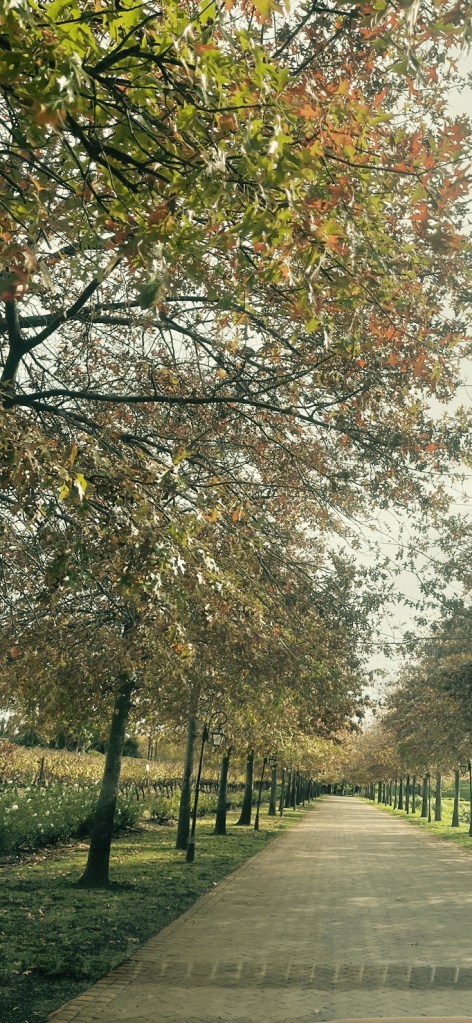
Such a pretty entrance. Also, the second you park someone comes out to greet you and carry your luggage.

When you walk in and they’re waiting with a warm towel to wipe your handies after the travails of your journey from the big city 40 mins away and also they hand you a glass of Shiraz (at 11am) you know you’re in the right place. Asara means hope and you do, indeed, feel more hopeful than you have in a while when they usher you into your suite with its comfy lounge, bathroom the size of a conference centre and balcony with pink mountain views and manicured lawns for days. Not to mention a glowing David Hockney-esque pool resplendent in cobalt blue which you share with a solitary Hadeda while the sun hunkers down for the night.
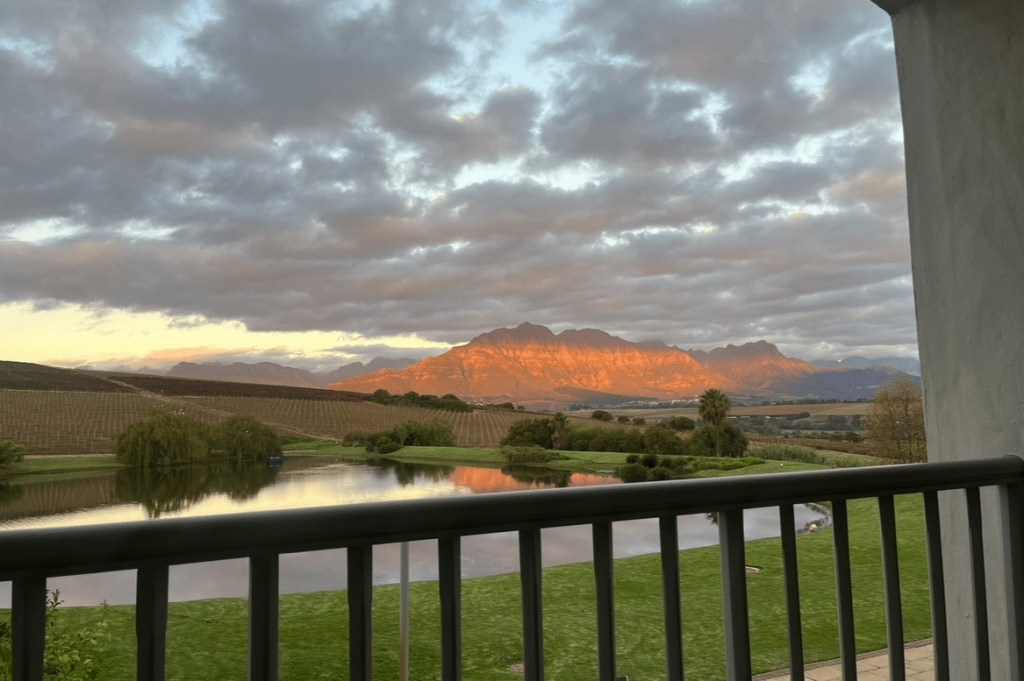
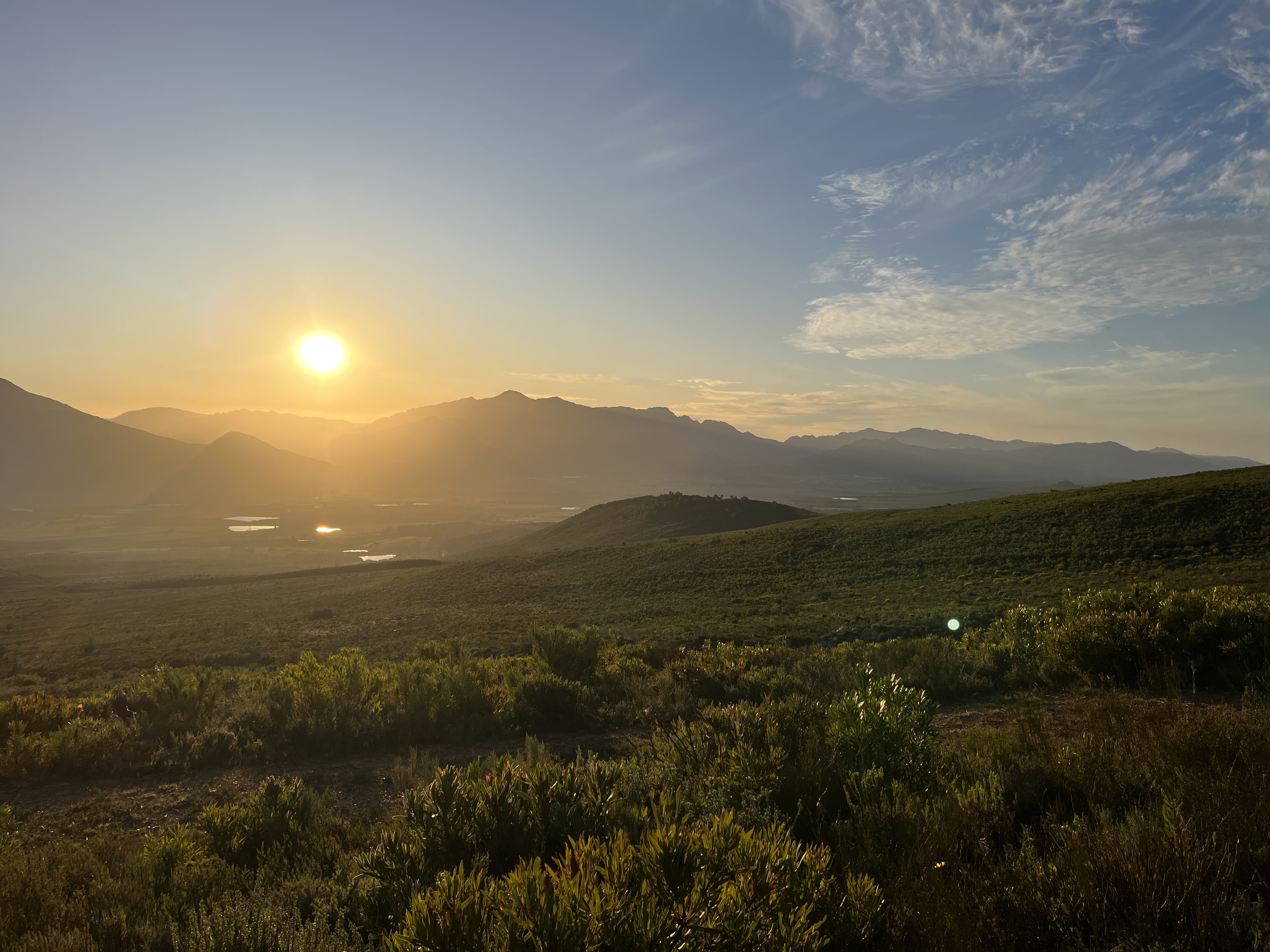
The view from our beautiful room. I grew up at the foot of this mountain range; we know one another well.

Autumn in the winelands is the Western Cape’s best kept secret: fires crackle and fiery-coloured leaves crackle underfoot. Mostly the sun still shines, but softly and politely. You want to be outside all day long and then, when the dusk chill settles, it’s delicious to huddle indoors, wrap yourself up, drink more of that Shiraz and eat hearty, nourishing dishes of lamb and beef and venison on whipped potatoes prepared with an outrageous ratio of butter to starch. These are the days of creamy carbs, of winds chasing slate-grey clouds, of thunderous rain showers and vineyards shining brightly in the last hours of the afternoon; of early nights and early mornings, crisp linen and dark, strong coffee. And if you can spend these hours with a friend or two; folk whose faces are as known to you as your own, in a place that feels safe and familiar even if you’ve never been there before, life becomes imminently gentler.
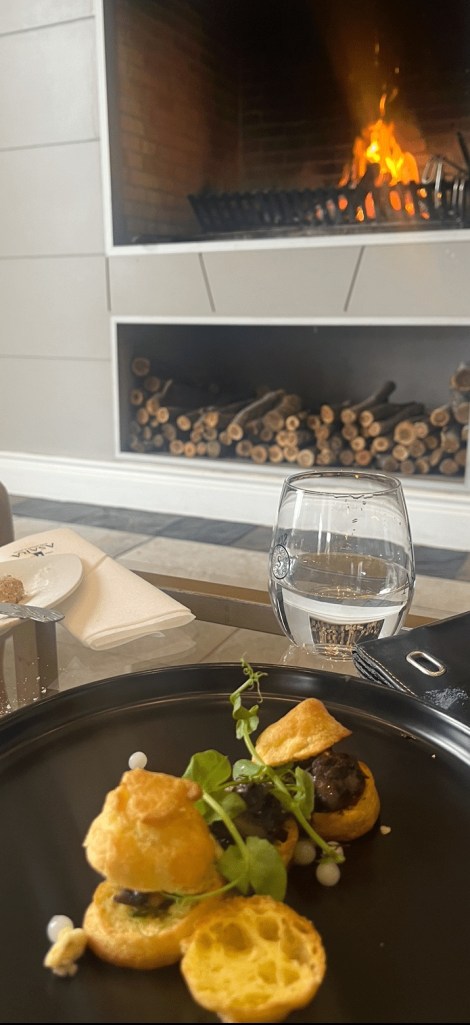
A friendly fire, snails in choux pastry and a velvety Pinotage.

As we age, old friends become rare as jewels: people who knew you when. In this case, the when was me as an awkward 15-year-old in an ugly, maroon uniform boarding the school bus, nervously looking for an empty seat near the back because the front seats were for the misfits which I believed myself to be but didn’t want to be seen as such. No seats to be had. A split second of panic. And then the cool boy, the good looking one people wanted to be friends with, who smokes openly at break and rides horses and looks a bit like Dave Gahan, beckons me to share his seat. He puts his bag on the floor to make space. This small gesture of kindness that happened amongst zillions of gestures in those deeply impressionable and angst-filled years stays with me. That horrible government school run by thick-skulled sadists who did everything to crush the spirits of kids like him and I, creative little humans, visionaries in our own small way. We gave them the middle finger, we did. We poured vodka into the Kool-Aid.

I dibs this table come summer.

Even now, 40 years later, I don’t see him as him, who went on to achieve impressive fame and success in his chosen career, I see him as the older boy on the bus, ever grateful for that life-saving moment. Now we are here to visit with him, mainly, and for a brief respite from the relentlessness of life. We are seated in a tall, serene room on a comfortable couch and plied with cold champagne and pretty cocktails, and just when we’re starting to feel peckish, a polite young man shows up with enormous trays of beautifully articulated finger food: tuna sashimi; lamb on a stick; French onion soup in a thimble. There is beef broth, oysters, prawn tempura, brie melted deliciously in a grape preserve. More champagne later, plates carrying even more delectable things arrive: snails in soft choux pastry; tongue with Dauphine potatoes; peppery spaghetti tossed with cream and chicken sweetbreads. We eat and drink and are merry. L’chaim: to life, love and ourselves.

The water was as cold as it looks but fresh and delicious, and we had the whole place to ourselves.

An old man with beautiful, snow white hair dressed immaculately in a lemon coloured sweater is positioned on a chair in front of the fire. He has either fallen asleep or died. The day is chilly and I want his seat, to watch the flames while we talk. I keep looking back at him, willing the undertakers to come but he sits on for an eternity.

The owner joins us for a chat. He is also a visionary; a straight talking straight man whose wrists are adorned in silver skulls and his manicured fingernails done in a pale pink gelish. I wonder what the farmers make of him. He doesn’t give a fuck. He also adds vodka to the Kool-Aid. He tells us about cigars, his passion, and his other passion, food – meat, hand-reared; homemade butter; bread he bakes himself using his own sourdough culture. It’s softer and lighter than any I’ve eaten. Every animal product consumed on the premises can be traced back to its source. He makes the jam and the marmalade himself from carefully selected organic fruit. Later we walk past a room with a cupboard glowing warmly in the gloomy afternoon. We look closer and see that the walls are huge, lit slabs of pink Himalayan salt curing the hanging meat.

It took me moving abroad to realise how special it is to drink wine in the place where the grapes were grown.

My friend gives us a tour of the premises. We’re a little bit drunk and the high heels of my vintage Michael Kors boots are starting to rankle. His signature black coat flaps in the wind and even as we look out at the Helderberg mountain range, under whose craggy slopes we both grew up, I’m reminded of London in the eighties and Depeche Mode and The Cure and Yazoo, the music of our teenage years, dark smoky dance floors, Benson and Hedges Special Mild. Always trying to escape, break free, buck the system. And we did. We hated those teachers and we let them know it.

My chom and I are very happy when we’re about to be fed.

Now we need to sober up before dinner so we take a dip in the icy pool. I imagine this place in summer: an endless round of rainbow-coloured cocktails, fluffy white towels, luncheons under the trees. ‘A Dutch couple come every year and stay for 49 days,’ I am told. Why 49? I wonder. The hot bath, after the cold pool, burns like acid. The young chef joins us at dinner. My daughter is dating a chef. I worry aloud about the lonely Saturday nights that will come to define her life. We see into the future in ways our children cannot but I have to hold my tongue. She likes him, she is happy. The hotel is launching a new restaurant, a set menu using the animal nose to tail. Wasting nothing, pushing the boundaries of South African cuisine. It includes ambitious dishes like beef heart biltong and liver ice cream. His eyes shine with excitement. I see a young artist, a creator. I express doubts about the ice cream but he assures me it will be delicious. I promise him we’ll come back to try it.
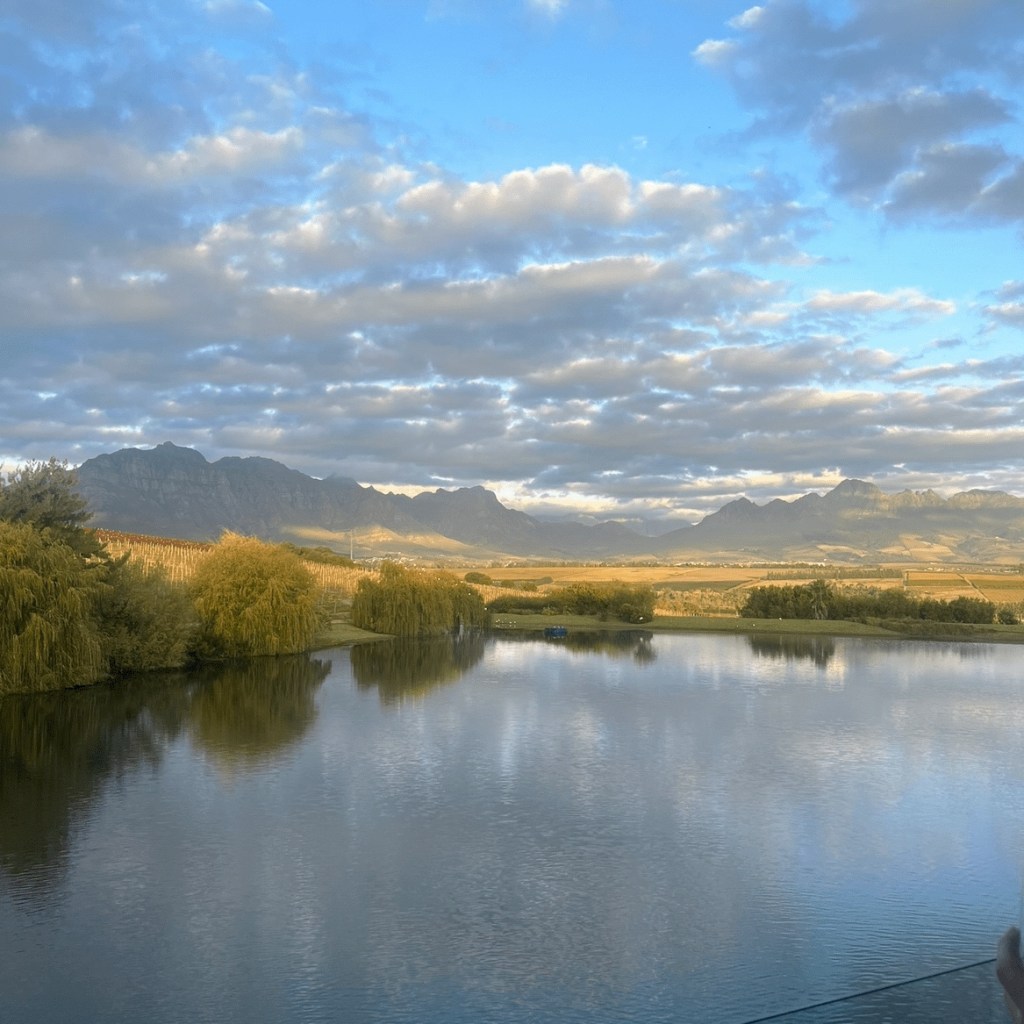
I’ve had meltdowns in worse places.

Later, in our room, I have a meltdown over the largeness of the pillows and the tightness of the sheet. In truth, everything is perfect and you can choose any damn pillow you want but I’m overstimulated, over-wined and need to lie down and sleep. My husband is used to this sort of malarkey and ignores me, as he should. In the morning the air is still and the mountains have changed colour. We are still far too full for breakfast so we eat everything on offer. I have to try the home-cured ham and special recipe marmalade. The Eggs Bennie is perfection, unctuous and velvety and glistening with homemade butter. I greedily eat it all. Barely an hour later they implore us to try the cinnamon buns with champagne and have some of their custom-made burgers but I cannot possibly eat or drink another thing till the following week or at least till we get home. The buns are gifted to us in a takeaway box.

Do love me a hotel breakfast, especially when the meat has been hand-reared and cured right here on the premises.

My husband buys half the wine cellar, pretending it would be rude not to. People appear like magic fairies when it’s time to load the car. They whip our luggage out of our hands as if the very notion of us carrying a thing is beyond their comprehension. I like it here. They get a lot of things really right. In my next life when I’m not a writer maybe I’ll also come for 49 days. We drive down the tree- lined avenue headed home to laundry and a fridge that doesn’t stock itself (wtf). I’ve been listening to this song on repeat called Goodbye Horses. I read somewhere that when you do this, listen to a song over and over again, it’s a sign you might be on the autism spectrum. It would explain why I’ve always felt like an outsider; like I didn’t quite belong. I mean, it doesn’t matter, it’s a label, but sometimes it takes 50-odd years for us to figure out who and what we are and once you know you can be a little bit kinder and more forgiving of yourself and the many mistakes you have made.

Chandeliers in the wine cellar. Obviously.

A grey Sunday on the N2. Smoke hovers over the townships and Table Mountain is obscured by a thick blanket of clouds. Some youths kick a football about. Winter, where life gets more real. A cold front is headed our way, I read, and masses of rain. The townships become lakes but our house is high and dry. It’s a weird place we live in, so little and so much existing side by side, and all of us trying to figure it out. Trying to get by in our various circumstances. I’m grateful for love and I’m grateful for friendships that last a lifetime. No matter who and what we become in the end, deep down we remain 15, awkward kids on a bus hoping for a friendly face and for someone to offer their seat. Goodbye, horses, I’m flying over you. 

A Sense of Place

Wherever I go and whatever I do, this sense of place and belonging. Not everybody, I notice, is as connected to their land of origin. My husband is a nomad, putting down shallow roots wherever he lays his Cape Union Mart hat. I believe he could live anywhere; he’d make a decision and thrive. My roots are more discriminating; they curl up their ends in protest, unwilling to embrace strange, new soil. I lived abroad like a spectre; not really being there, moving slowly as if in a dreamworld, vaguely surprised that people could see me.

Now we live in Green Point close to the stadium where everything, lately, happens. This makes traffic a mare from time to time, like a few weeks ago, the weekend of the Cape Town Marathon coinciding with a rugby event. I woke up to the 7am sounds of a commentator welcoming the day and the athletes. I brewed a cup of strong Swedish coffee and opened the windows wide to see our strip of slate-blue sea. From my bedroom window you could travel, in a straight stripe, to the wild and windswept shores of Robben Island. On clear days I watch its waves crashing.

Then, the opening strands of Juluka’s Impi – of course. Our Zulu warrior song for the warrior scatterlings flying over Table Mountain National Park, tracing the footsteps of everyone’s early ancestors, pounding the tarmac of our city streets, fighting inner demons, fighting themselves to keep running, keep running, you can do it. Our metaphor for life down here: keep running, warrior, you can do it.

Impi! wo ‘nans’ impi iyeza

Obani bengathinta amabhubesi?

(Warrior! the army is coming!

Who here can touch the lions?)

And, I’m home. Johnny Clegg is singing to me from beyond the grave, alive as he’s ever been, flying up over the mountaintops, giving the runners courage, reminding us of our fighter spirit, telling us we belong.

Nothing things become things. Maybe because I was uprooted for so long. A 4pm walk in Green Point park through the alleyway of trees that takes you straight down to the lighthouse (the oldest in South Africa) and the sea. Pale spring sunshine and a slight nip in the air. Winter exiting but not quite out of the building. Three Xhosa nannies with their push-chairs and small charges. They walk slowly, ambling along. Unlike me they meander; now stopping for no apparent reason. Now talking loudly, a hand on a generous hip. I wish I could understand what they were saying but we white people are limited when it comes to language. My friend, Nolo, speaks five languages fluently without thinking anything of it. 

Having grown up during the darkest days of apartheid it always amazes me to see the ease with which South African people mix. There’s a warmth and a friendliness and a willingness to connect, to reach out, to bridge divides. I see it around me all day long. The offer of help, to carry a bag, to give a lift, to donate to a child. Say, Molo, Sisi before you ask for your chicken strips at Spar and you get the biggest smile. Order the samp and beans and you’ve got a friend for life. 

At the heart of us humans lies the most fundamental need of all our of needs and that is for connection to other humans. In the cool, northern parts of Europe this connection has become lost. People are too self-sufficient; the need for one another is obsolete and it has resulted in a deep loneliness. You see it on their faces, especially during the winter months. Sweden is the nation with the highest amount of people living alone, a massive 47% of its 10.4 million population. 

At the end of the working day they let themselves into their (mostly) rented apartments. Nobody is waiting to greet them. No delicious smells emanate from their small kitchens. They stand in the hallway’s semi-darkness and hang their coat on a hook. They walk through the rooms, alone, turning on lights. They warm up their dinner-for-one and eat in front of TV. Advertisements paid for by the state remind Swedish people to say hello to their neighbours. A hundred meters up from our apartment in Malmö is an area of road where people cross to access a small town square and a walking street. The crossing is unusually wide. After wondering about it for years I asked a local why it had been designed that way. To encourage people to interact with each other, was his reply. 

Back in Green Point, going anywhere by car on event days is unthinkable so I decide, if I can’t beat them I’ll join them. The main road is packed with spectators. The first runners, the serious athletes, came in hours ago. These ones are tired, they’ve been running for five hours and the pain and exhaustion is evident on their faces. Many don’t look like athletes and you wonder at the determination, the inner fire that makes them do this, makes them persevere. The training sessions after work, already tired from a long day of traffic and complaints. Getting out of bed early on weekends to meet their friends, to run. I see a husband practically carrying his wife over the last 100 meters. I see a white lady and a black lady somewhere in their sixties, holding hands tightly, willing one other towards the finish line.

A woman on the sidelines is clapping and singing for these amateur runners. Initially I think she’s marathon staff but after a while I realise she’s just a spectator, spurring the competitors on. She sings, here we go, ruh-nuhs, here we go! Only two hundred meters to go! You’ve got such a beautiful weather in Cape Town today, thank the almighty for this beautiful weather! She reads the logos on their vests and calls them by name, fist-bumping those who still have the energy to look up, to lift their arms: Go, SAPS! Thank you SAPS for fighting the creemeenals! Go, Rondebosch Running Club! You can do it, Durbanveeeel!

Tired runners and their families walk the short distance back to their cars. Tonight they’ll make a braai. The aunties and uncles are coming; maybe a neighbour or two. They’ll bring tupperware for barakat so nothing goes to waste. Back to their houses in Mitchell’s Plain. Bloukrantz wood, klippies and coke and a barking dog. Auntie Salwaah has made her famous ‘Rille Gebak’ (spiced doughnuts). There was a special on lamb chops at Food Lover’s. They’ve been marinading all afternoon in shishamyana spice and love. Money is tight; there are no extras. But it’s lekker. It’s oraait. 

That uniquely South African smell of braai drifts across the city’s neighbourhoods, over the vibercrete walls, satellite dishes, guava trees, Toyota Cressidas. Epson Salt for aching muscles. Wyn vir die pyn. Kaptein, Span die Seile is playing somewhere. The other night, on the way back from the jol, my 17-year-old daughter and her friends asked the Uber driver to make a stop at McDonalds. They ended up having a picnic with him outside on the lawn. He wanted a Big Mac Meal. This stuff, the very marrow of South African life day-to-day, this doesn’t make it onto the news, but this is where we really live. Here, with our people.

Going Bosjes

My travel writer friend, Keith Bain, and I going on an adventure (actually, he does this kind of thing every five minutes, but I was pretty excited to get out of the house).

I hadn’t been on a press trip in years. Decades, even. Independent travel for stories, sure, but not the old school kind where you meet in a hotel for drinks and then get driven somewhere on a bus. In the old days (how did the nineties become the old days?) glamorous travel was part of the deal, and made up for the terrible wages we journalists got paid. There was so much money in print media it was nothing to fly to Joburg for lunch. You’d be back by 6pm to go to the next thing. I was sent on a luxury cruise to Australia when I was too young and green to know that my cabin, the size of a modest hotel suite, was huge by maritime standards. Once I stayed at a game lodge on the Zambezi where the bedroom had only three walls. From your bed, you looked out over the coffee-coloured river and fell asleep to the sound of hippos splashing in the shallows. The Victorian bath was outside on the deck, and when you went for breakfast under a giant Frangipani tree somebody walked behind you and raked away your footsteps. 

The Bosjes Kapel (or chapel) is one of the most recognisable architectural feats in SA. Inspired by a psalm, it was designed to create the impression of a bird floating on water. It’s breathtaking, inside and out.

‘When last were you at Bosjes?’ my friend, Keith, asks me as we cruise along the N1, and he’s surprised when I say never, but it’s not surprising. Over the past few years (thanks, in part, to Covid) I’ve discovered that it’s not actually necessary to ever leave my bedroom. Plus, I’ve always had a mental block about traveling beyond hospital bend. Nothing good ever comes of traveling beyond hospital bend (unless it’s to go to cafe Ohana or visit my friend, Philippa). This is especially true lately, with Hitler aka Putin blowing up gas lines all over the show and Europe entering a massive energy crisis. Late at night, just before I turn off the light, I scare the daylights out of myself by asking Google what the chances really are of a third world war. The answers I get are not reassuring. Who woulda thunk South Africa would end up the safer place to be? 

Our game drive up high up into the majestic Waaihoek and Slanghoek mountains. Just look at that light.

Earlier in the week I tried to find out exactly where Bosjes was, but all I could find was the Breedekloof Valley. I didn’t know there was such a thing, but I could see that it wasn’t far from Worcester (which I only just discovered, thanks to David Kramer, is pronounced ‘Worcester’ and not ‘Vorcester’) and I definitely know Worcester because my friend, Leslie, comes from there and there’s a road in that town called de la Bat which makes my other friend and I laugh because it reminds us of a trip we took together to Greece, the details of which can never be divulged. 

By the time we’ve arrived and done a tour of Bosjes’s extraordinary primary school (built by the Bosjes Trust for the children of the farm-workers and which is so modern and sustainable and lovely it makes the modern, lovely schools of Scandinavia look sad), we are veritably perishing of thirst and words. Our intuitive host clocks this and makes a quick itinerary change so that instead of a garden walk we are settled on comfy couches beside a pool David Hockney couldn’t have done better and plied with cold Bosjes rosé and tasty butternut wraps. Since I went freelance I rarely hang out with journalists and it’s a joy being with kin again; folk who understand why the word ‘nestle’ should be banned from every travel piece, ever. Also, journalists drink a lot of wine and anyone who does this is my friend.

So much space in our back garden. And, breathe.

Before dinner we are taken on a game drive up into the Waaihoek and Slanghoek Mountain ranges. The jeep climbs up and up a steep, bumpy road. A pair of giraffe startle at the sound of our vehicle. The sun is low on the horizon and the protea and fynbos have that otherworldly golden glow, like the world is steeped in syrup. Someone spots an albino springbok. It’s springtime, so babies abound. I wonder what animals roamed here before the people came. Probably elephants. Definitely lions. Higher and higher we climb, past pin-cushions and strange rock formations and dams that need replenishing but our rainy season has come and gone. It’s looking to be a dry summer and our guide explains that they’ll have to source water from the Breede river. In this new world we inhabit, water is a scarce resource. 

The guide informs us that a new species of plant was recently discovered right here on these slopes. Of course it was. This is Africa, the wild frontier. There is so much space in our back garden it almost blows your mind. So much sky, so much air, so much room to move. When I lived in Europe I used to feel sometimes like I couldn’t breathe. The sky was too low and the air had lost its sparkle. It’s dark and cold on the drive home and I’m happy I brought the puffer jacket I bought a hundred years ago for a ski trip where I got in such a rage I threw my skis down the slope and sulked for the duration (never let your husband teach you how to ski, it’s very bad for a marriage). Northern Europe is frigid but you never feel cold because you’re always dressed for the weather. In Africa you think it’s going to be hot all the time so you frequently freeze half to death. 

Happy for my puffer jacket. Sad it reminds me of the time I had a tantrum.

Bosje’s beautiful new rooms (the hotel has recently undergone a major renovation) look out into the darkness of the African night, plains and emptiness that curve upwards and become mountains, wild and untouched as they have ever been. They’re stylish, spacious and very inviting; you want to kick off your shoes and hang out; light an atmosfire, pour yourself a large glass of red and look out into that nothingness and wonder, what creatures lurk? What spirits of the veld and mountains roam these desolate stretches? I’m tempted to run a bubble bath in the huge and gorgeous bathroom (these rooms have a separate bathroom and loo which is always a nice touch), but I think of the water thing and also, I know the chef is eagerly waiting to feed us so I join my new friends in the dining room. 

I’ve already made a mess of the room. It was gorgeous before I got there.

There’s something about being in the country that makes me incapable of ordering anything other than lamb, and I even though we are not quite in the Karoo, we are close enough that the lamb chops on the dinner menu are likely to be excellent. They are. The fat is crisp and perfectly rendered, and they’re served simply – just as they should be – with perfect roast potatoes, green beans and warm calamata olives. The creme brulée dessert is topped with a yummy apple compote and some very nice crunchy things I forget to ask about. Back in my room, just as I am settling in to relax and admire its gorgeousness, the lights go out. Ah. Load-shedding, of course, even out here in the sticks. And then within about 5 seconds light is restored. It’s funny how generators have become such a thing. I know all of South Africa is furious, but if it’s any consolation, my friend Leslie (the one from Worcester with a ‘w’) just Whatsapped me a few days ago to say that load-shedding is a possibility for Sweden, too. She would know, she lives there. The world has gone quite mad. 

Karoo lamb. Just another reason not to move to Perth.

In true South African style (we do hospitality exceptionally well) everything at Bosjes is lovely: the pool is gently heated when I take a morning dip; the masseur has thoughtfully lit a fire beside the table because the morning air is chilly; the breakfast mushrooms have been fried in heaps of real butter. The garden walk towards Bosje’s famous chapel (even if you don’t know, the place, you’ll know the chapel) is a beautifully designed mosaic of succulents, Renosterveld, indigenous water plants and fiery coral trees. In the middle of nowhere, all this elegance; all this beauty. Such vision and creativity went into constructing this space. Down here we are good at making something out of nothing. It’s a spirit borne of surviving the harsh, wild bush. Eat or be eaten. Never rest on your laurels. The grand old homestead which dates back to 1790 is a reminder of the ‘can do’ spirit we South Africans are renowned for: let’s make a farm here in the middle of nowhere! Let’s transform this arrid land into a Garden of Eden! And then, let’s build a floating chapel so lovely and unlikely it will make people gasp when they see it. 

In travel writing ‘oasis’ (like ‘nestle’) is an inexcusable cliché, but Bosjes really is that. You step into another world and forget, for a while, that the whole planet has gone ‘bossies*.’ Not here at the foot of the mountains in the land of perpetual sunshine where, when you turn off your bedside light, the silences stretch to forever.

The beautiful, stately Bosjes homestead built in 1790.

Facts:

  • I love my job
  • I’m happy to be in South Africa while the world is imploding
  • Bosjes is the most perfect place imaginable for an intimate wedding/renewal of vows/big birthday celebration/romantic weekend away
  • for the setting, quality and service it’s very affordable
  • It has a well-stocked library, a couple of beautiful shops on the property selling bespoke items (you NEED their dressing-gown) and plenty of excellent Bosjes wine (I recommend drinking it beside the pool)
  • there’s a café in the grounds that serves delicious coffees, pastries, bubbly and lunch-y things so you’re sorted for meals
  • the spa is heavenly
  • the garden is a magical place; spend as much time in it as you can
  • even if you don’t get married there, the chapel will restore your faith in humankind and make you happy to be alive

*crazy

It’s Still Ayoba, Babies

As you will have noticed, I took a long sabbatical away from my blog. I had a few reasons: it’s time-consuming; posts can take me an entire day and I don’t earn any money off it, so paid work has to come first. Then, trolls abound on this thing called the internet and it’s upsetting and exhausting being the recipient of gratuitous viciousness. But most significantly of all – and it’s hard to admit this – I started to get swept up in the bad stuff and the negativity surrounding our country, and I wasn’t sure I agreed with myself anymore. And that was a problem.

One thing about this space is that I’m not answerable to anybody; I write what I believe and I always tell the truth. Or, my truth. Which is why, over the years, people have learnt to trust me and they reach out for an agenda-less version of what life is really like in South Africa. ‘Is it okay to come here to study?’ foreign students ask me. Yes! I tell them, and they come (and sometimes never leave). Or, South Africans come back from Australia and the UK and write to tell me how the blog helped them make their decision and that they’ve never been happier in their lives. 

But loadshedding has been hard on the collective psyche. Covid was a disaster for us economically, never mind the foolishness of some of our lockdown laws. Cyril and his mattress have let us down (where are his words, that Scorpio?) Crime, corruption and unemployment are rampant thanks to our useless government. How to live with all these truisms and maintain a positive outlook without sounding downright silly became a challenge. Over coffee a while back a friend said, ‘you wrote those early blogs nearly a decade ago. Would you say the same things today?’ And I had to honestly answer, no. And answering no made me sad. 

But then I went to Europe on holiday. I get that going to Europe on holiday is the domain of the privileged few, and if I didn’t have a husband whose family and work are based in northern Europe we would certainly not be able to do our annual trek. But I do, and we did. And my word, did it ruk me right in about 14 seconds. It’s so easy to get mired down by the problems this country faces. And I don’t mean to minimise how hard life is for many people. But there are still so many amazingnesses to life down here and we forget them because we are used to them and we think everything must be better in The Overseas because there is less crime. 

But it’s not, my guys. I promise you. Especially now after Covid. They are kakking off for real, just like us. It’s easy to lose perspective and to start envying people in other parts of the world, but a month overseas opened my eyes and changed my mindset (thank G-d). Like the Buddhists say, two people can walk down the same road and have a totally different experience of it. It’s what you choose to see. And often you need to leave for a bit in order to understand how rich and joy-filled and sunny and privileged our lives here still are. 

Yes, many things don’t work but so many things do and we don’t often focus on that part of the narrative. I’m not going to go into a whole story, but I will say that I learnt some important things talking to my friends who live abroad: that the schools in many parts of Europe are struggling to cope with the massive influx of foreign children from war-torn countries who don’t speak the language and are traumatised. Teachers and school staff are trying their best to integrate them, but while they do this, local children – inevitably – get overlooked. A friend’s 8-year-old still couldn’t read. Some schools in downtown Malmö (southern Sweden) have classes where the learners are 100% foreign, usually Arabic. A close friend of mine is a librarian in one of these schools. It is not easy for anyone. Swedish families don’t want to send their kids there because none of the learners speak the language. Teaching these children Swedish takes priority, so everything is slowed down. Native Swedes move away from certain areas for this reason. Just like here. 

The healthcare systems are overburdened and no longer working very well (I’m trying to be fair; many people will tell you they don’t work at all). Friends in Sweden (who already pay a premium in tax) are having to take out private medical insurance at huge expense because you wait so long to see a doctor, even longer to see a specialist and years to get surgery. Trains are overfilled, late or don’t run at all because staff were laid off during Covid and have not been re-hired. It’s tough times out there, not just for us. Europe is fantastic, has lots more money than we do and a buffer to cope with crises like our recent pandemic, but it is not the utopia many South Africans imagine it to be. I love Scandinavia deeply and miss it and look forward to going back each year, but it’s a mistake to believe everything beyond our borders is better. 

The other day outside gym I bumped into a friend I hadn’t seen in some years. He is very negative about South Africa. I understand his reasons. He is a civil servant who finds himself on the wrong side of history. His teenage daughter just did a scholastic exchange in Germany. He wants to move to Germany. ‘It’s so free there,’ he enthused. ‘She can take public transport at night.’ ‘She can,’ I agreed. ‘One can take public transport at night. But then you have to live amongst Germans.’ I have nothing against Germans. My granny was German. I am fully one-quarter German. I love Berlin; it’s one of my all-time favourite cities. I love Rostock and its Christmas market. I play Alphaville in my car.

But what people don’t realise is that when you move to another country, you gain some things but you also lose a lot of things. More things than you understand when you’ve never done it. You are not moving to South Africa without the crime, you are moving to Germany with German weather and German traditions and German rules and German Germanness. Culture shock is real and it’s lonely AF always being the odd one out. Never getting the joke. And I don’t mean to be rude but my goodness, I have visited a few times and not eaten one single good meal in that country. Even the eisbein is shocking. They boil it, for the love of. They do it much better at The Dros in Stellenbosch for a fraction of the price. 

Also, Paris. We were just there. We stayed in a very fashionable, hellishly expensive apartment in Montmartre. To call it compact would be an understatement. The whole thing was about 25 square meters in diameter. You climbed a narrow, frighteningly steep staircase to get to the seventh floor. You climbed into a cupboard to use the toilet. Everything was miniature, like a Barbie house. At 2am on a Monday morning the noise from the street made it impossible to sleep. It was hot (and due to get much hotter in the ensuing months), but if you opened a window you got eaten alive by mosquitoes. Paris is every version of magical; the entire city is like a movie set, but it’s noisy and busy and the food is expensive AF – and, frankly, underwhelming. You get better French food on Bree Street and at my friend, Marlene’s, house. I love Paris. But we live well here. And honestly, the croissants taste the same as anywhere.

Here, you go to Gallow’s Hill to renew your driver’s license and people say salaam and molo, sisi. You might wait a bit, but the people in the queue will be friendly and chatty and share their granny’s chicken masala recipe with you. Or you go to the Labia cinema on a Sunday night with your mom who has a dicky knee and can’t walk far but there’s nowhere close to park so you tell the parking attendant of your situation and three seconds later he’s whipped a couple of cones out the way and is directing you to park on the pavement meters away from your show. I mean. It’s a thing. Try that shit anywhere else, they’ll arrest you. Despite all the stuff we deal with, there is always a friendly word; a ready smile. A joke. A sense of humanity that makes you feel like you’re part of something. You’re with your people. They’re mad and they dress funny, but they’re yours. 

And expensive things are affordable. To get your hair highlighted or your teeth fixed or to buy a nice steak in Paris or Denmark, or order a bottle of wine (or anything) in a restaurant and you’ll pay out your bunghole. Yes, there is good public transport. You’ll wait for your bus in a wet little cubicle with smokers, your nice shoes in a bag because you’ll have to walk a way from the bus stop to your destination. It won’t be cheap. You’ll have at least one stop on the way where you will repeat the process. It will take you a decade to get there. In the end you just stop going out. Or, we did, especially when we had young kids. It’s just too hard. Here, an Uber on a Saturday night costs you R30. Or you drive. There’ll be no traffic and plenty of places to park. A bottle of nice wine costs the same as a glass of shit wine in Sweden. Restaurant food is better and incomparably cheaper. Things in SA are easy and accessible in a way they are just not in Europe (or Australia or the States). We don’t know how good we have it.

I’m sure, after a while, I’m going to get grumpy about Eskom again, but right now I’m so happy to be home it doesn’t even phase me. I light candles, read by the light of a paraffin lamp and spend some time gazing out of my window at the darkness of the African night. Out there, in all those houses and apartment blocks, are people who know who Riaan Cruywagen is and love Marc Lottering and are cross about the fishpaste. You don’t know how precious this until you don’t have it anymore. Your country, your tribe. There is something very comforting about knowing where your home is. Anyway, I’m back. Thanks for waiting.

The Gucci Maid

Is it just me or are these two having a fight?

I don’t know about anyone else, but I would not know how to write 41 quadrillion in numerals if my life depended on it. Even writing it like this in letters causes the demise of several neurons. You would have to put two laptops side by side to fit in all those noughts. If you wrote it on paper it would be even worse. How many noughts can a page take before it spontaneously bursts into flame? Probably about 41 quadrillion. You’d need a whole exam pad to write that figure down. I think I thought a quadrillion was a made up number, like when you’re telling someone how much you spent at Zara. I wasn’t even aware of the story of Tokyo Sexwale when I was headed for – yes – Zara and got a whatsapp from my best friend who is also my chief source of information on this planet. And what she told me was that the above number of monies had somehow gone missing and it was all the ANC’s fault. Only, this was so many monies. I had to read it a few times to let the number settle.

And what she said next – and she has said this before so I’m starting to believe her – is that this is the last straw and she’s leaving and going to be a maid in Sweden because being a maid in Sweden is better than living someplace where R41 quadrillion can randomly go missing. I have to say, I agree. Also, maids in Sweden are paid very well. We paid our Serbian maid more per day than I’ve ever earned in my life. Not to say she wasn’t worth every penny and is absolutely the reason we are all currently here today with our sanity more or less intact. There were many times my gratitude for her existence was a bottomless well, but the time that really stands out was the winter of the kräksjukdom (pronounced ‘krrrekshwookdom’); or in South African English, the winter vomiting disease. 

This is a disease that grips all the children of Sweden at the same time, and also just when their parents’ light deprivation-induced depression is at its bleakest. That is the exact moment when the vomiting of the children begins. Not a word of a lie, it’s a thing. And, grown-ups can catch it. We have many sad and unfortunate occurrences here in South Africa, but children’s winter vomiting disease is thankfully not one of them. On that particular morning (was it morning? Was it night? There is so little sun it’s impossible to tell) I woke up feeling exceedingly vomity, but the worst was yet to come. The worst was that my two very young charges (I think they were one and three at the time) had the vomiting disease even more robustly than I did. Few things are worse when you’re vomity than having other people vomit on you. There was only one thing to do: call Menka. 

Serbian Menka, who started off being our cleaning lady but was rapidly promoted to granny and best friend in the world, was already up and about and headed to her morning Swedish class (her and I went to so many Swedish classes, yet only ever communicated in sign language. I think it was a kind of rebellion). Bless her kind, kind heart, if she didn’t do an about-turn right then and there in the snow and come straight to my house where she cleaned up vomit for hours. To my dying day I will be grateful. I still visit her in Sweden in her small flat (where her entire lounge is taken up by a jumping castle for her granddaughter because she is that kind of wonderful) and we eat sataraš and spinach pie and confide in one another other in sign language.

But I digress.

I got the whatsapp from my friend just as I was walking past the Gucci store, and wouldn’t you know – right there in the window was the perfect maid’s outfit. Coiincidence? I think not. And she could probably even afford it, given her Swedish maid’s rate. If you’re going to be a maid in Sweden, you might as well be fabulous while you’re at it. Be a maid amongst maids; a Gucci maid. And then we started exchanging worrying things on whatsapp like how Zondo Commission Cyril was totally lying to that polite and patient judge (I watch those body language videos on YouTube so I know), and I started to seriously ponder the question: would I rather live amongst thieves or Swedes? I love Swedes, don’t get me wrong; I’m slightly Swedish myself, and I really prefer not to get bludgeoned in the night and have people steal so many quadrillions of rands that we have neither trains nor an airport. Well, we have an airport but there’s nowhere to park anymore and also there are no planes. But that winter. It doesn’t surprise in the least that everyone starts vomiting. 

Then later that day after I’d been in a froth for hours, my husband (and other, possibly more accurate source of information) whatsapps me from Sweden where he’s waiting to get a massage and tells me to calm down, the money was fake. Fake money? Like Monopoly? How many games would it even take to rack up that kind of number? The mind boggles. But I’m happy we don’t have to emigrate anymore because there’s nowhere left after Covid, and anyway the thought of leaving forever gives me vomiting sickness for real. So I guess it’s back to business as usual. 

Who is the Africanest of us all?

Screen Shot 2020-03-18 at 1.34.44 PM.png

When February draws to a close, even while the weather remains hot, something subtle happens to the quality of the light; a nearly imperceptible softening of summer’s white glare. You have to have been here a really long time to notice this tiny shift. My husband has only lived in South Africa for 30 years, so many of its nuances remain lost on him. But hidden somewhere in the strands of our DNA lurks a knowledge that’s been passed on for millenia. It has to do with communing with nature; when the survival of our hunter-gatherer forebears depended on a minute reading of the environment. The days might feel like summer, but autumn is in the air.

Last night I gave myself a sleepless night by reading a Christopher Hope essay on Zimbabwe, in particular about the white people who stayed on after the election. He describes them as somnambulists, daytime sleepers in a country which is, in his words, ‘an eternal afternoon.’ Drugged by sunshine and servants, in a torpor of privilege, they didn’t believe Robert Mugabe when he told them he was going to take away everything they had. They misread the climate, and how much they were loathed. Not happy reading for a white girl living on the Atlantic Seaboard. It’s lazy to draw simple parallels: Zim is Zim and we are here and the countries are not the same. At the same time, one can’t help wonder, as our country is plunged into literal darkness and we reach passively for the candles, are we also sleepwalking into an abyss? And if we are, where the hell will we go? Even if we find ourselves passports, where else would ever be home?

Telling Africans they aren’t African is like telling fifth generation Germans they aren’t really German. ‘You see, there are Germans who are Germaner than you.’ Maybe there are. If genetics is what gives us our identity. I’ve never done that DNA test, but if I did and if I was – for argument’s sake – 80% Khoisan (which is not that far off, actually, as I am one quarter pure Afrikaans, and that lot were vrying with everybody), then would I be African? Or still not? These are the things I think about at 4am. What I do know is that our small colonial hangovers like eating trifle at Christmas do not make us British. For one, we go brown and not pink in the sun and we don’t have vrot teeth. I’ve spent a lot of time pondering what makes us who we are. 

I have a friend who is an animal behaviourist. He grew up in the Transkei, on the beach, in the wild. When we go away on holiday he spends the entire day out on the rocks fishing, gathering mussels, being one with his world. He is as much of this earth, of this continent, as the Nguni cattle he has raised, the fynbos he identifies. He is white and one of the most African people I’ve ever met. Transplant him to Europe and he would wither and die, like a succulent in an English country garden. Send me to northern Europe permanently and I would love my look in a cashmere coat for about 11 seconds before withering and dying, too.

We, who are of this place – who recognise its subtleties and perceive its nuances; who call people sisi and bhuti and understand Kaaps and know exactly how Auntie Washiela from the Bo Kaap sees the world – we don’t transplant easily. A while ago we had family from Denmark stay with us. For two weeks we were tour guides, showing them the dramatic splendour of our coastline, the ridiculous beauty of the wine route. I found myself trying to explain South Africa to them. I got tongue-tied a few times; contradicted myself. It’s a very, very difficult landscape to reduce to simple sentences or, even with time on your hands, adequately explain. I had to simplify everything into soundbites. Sometimes they roared with laughter. Other times they went quiet. Where they come from things are so simple. People are all the same and everyone is fine.

It would be hard to find a more complex mileu with a weirder history than ours. When we’ve been traveling and we arrive at the departures gate at Doha airport for our plane bound for Cape Town I recognise my people immediately. I don’t know what it is that makes us so identifiable, but you can’t miss a room full of South Africans. Badly dressed, chatting to all and sundry, a roomful of mongrels. We are, after all, braks; pavement specials; hybridisations of all that has been. We are the products of centuries of travel to and from this beautiful land; brown faces with blue eyes. White faces with kroes hare. Even my hair minces when it’s humid. Before we were apart we were very much together. The evidence of our togetherness is clear wherever you look. 

We file patiently onto the aircraft. We smile at one another in recognition. Wherever we have been on the planet, now we are here with our tribe ordering the chicken or beef and loving the free drinks. Yussus, check at us larnies. Afrikaans, isiXhosa, Sotho, Kaaps.  I’ve tried to identify what it is that makes an Afrikaans face so recognizable. You see it long before you hear the language. I try to separate the features – is it the jawline? The eyes? The nose? Who knows, it just is. Charlize Theron looks like any girl from Durbanville (yes, we are that gorgeous).

The thing is, I don’t think it matters where our distant ancestors came from. What matters is where we are now. The only things we know for sure is that we are mad and fabulous and resilient AF. Nobody is the same and nobody is fine, but that is our normal. Sometimes, when I get freaked out about Eskom or the EFF or the ganglands or the girls getting raped and murdered I think, are we misreading the climate? Are we daytime sleepers on our loungers on Clifton 4th, and is summer drawing to a chilly close? Many insist it is. I say, I don’t know. We’ve been asking ourselves this question for 600 years. So, while we decide, let’s put on a bit of Mandoza and dance.

This Kak has to Stop

Uyinene Mrwetyana, everybody’s daughter.

These are very dark days for us in South Africa, and it pains me to admit that I have nothing reassuring or funny or uplifting to offer. There is nothing funny or uplifting about femicide and the rape and murder statistics in this country. But I feel the need to say something, anyway, as it’s weighing very heavily on me. It was our 12-year-old daughter, on her phone at breakfast, who told us that Nene’s killer had been identified. As a family gathered around the kitchen counter on an ordinary Tuesday morning we learned the circumstances of her murder. Along with all of South Africa, the details of her disappearance had been a topic of discussion for days. Where could she be? What could have happened? 

On our way to watch The Lion King on Friday evening, my daughter and her best friend ventured their opinions. ‘Maybe she’s just hanging at her boyfriend’s house,’ one of them offered hopefully. ‘Maybe,’ I agreed, trying to assuage their fears, but knowing – as these things go – that the chances of her being found alive were slim to non-existent. And then the truth, the shocking, devastating details of her attack, were announced. I think I couldn’t process the horror right away. I paid bills, bought a bed, did some washing, cooked bobotie, added extravagant amounts of butter and sugar to the yellow rice. 

On Facebook I read the reactions of friends, all reeling, all petrified, many wanting to leave the country. It was in a state of high anxiety that I walked the 500 metres to my yoga class this morning, leaving my phone behind (just in case I was mugged on the way, or worse) and constantly looking over my shoulder. At one point a man with a briefcase walked a few steps ahead of me, and I glared at the back of his head, daring him to turn around, to try anything, just try. The magic of yoga lies less in the softening and strengthening of the limbs than the softening and strengthening of the heart; the remembering of how deeply connected we all are as human beings. It took just a few moments of hearing the soft, mellifluous sounds of my Hindi instructor’s voice guiding us through the Asanas to make big, splashy tears drop down on my mat. Nene was everybody’s daughter. The pain of her rape and death is not relegated to her family and the ones who personally knew her. 

We failed you, Nene. Our beautiful, innocent child. We also failed Meghan Cremer, Hannah Cornelius, the 14-year-old girl whose body was found in a backyard in Heinz Park a few days ago. So many victims; too many to mention by name. According to recent stats, a woman is murdered every three hours in South Africa. Every 3 hours, people. We are failing as a nation. The ANC’s P.R. team issuing a facile, generalised statement making everyone wonder, where is our leader? If ever there was a time we needed comfort and reassurance; to be told that this isn’t okay, that there is a plan in place; that addressing the rampant and growing levels of femicide in this country is high on our government’s agenda, that time is now. Where is uCyril? Playing Candy Crush in the bath?

We are a fatherless nation. But if nothing else I have learned that if you’re going to wait for a man to pour your wine or give you permission to speak you’re going to be mute and mightily thirsty. So, what I can offer is this: there is power and strength in numbers. A short while back we believed ousting Zuma was a lost cause but we showed up to toyi toyi anyway, and what do you know? The old doos went. Before we give up and move en masse to Portugal (they eat a lot of sardines, I’m just saying), let’s find every march we can and show up and shout and scream and make our collective outrage known. 

On 9 August 1956, 20 000 women marched on the Union Buildings in Pretoria in protest against the Pass Laws. It was the biggest march by women this country had ever seen. The women stood silently for 30 minutes and then started singing a protest song, Wathint’Abafazi Wathint’imbokodo! (‘Now you have touched the women, you have struck a rock’). We cannot sit in silence. We can’t live like this, constantly afraid and looking over our shoulders. Petrified to send our daughters out into the world. Always on the alert, in our minds fending off attack. All of you based in SA, find out where the marches are happening in your area and show up. Sing, shout, do whatever it takes to be heard. We learned long ago that ain’t no man gon’ save us. It’s time to make a noise and take matters into our own hands. Let’s make history and make this the biggest gathering of women our country as seen. We owe it to Nene, to Meghan, to our daughters. Not only that, our lives depend on it.

Oysters and Tsotsis

Grand Constance. Napoleon loved this stuff a lot and we totally understand why.

A few months back we went next door to our neighbour, Stu, for dinner. Stu is a dashing, 70-year-old confirmed bachelor with a mop of red hair and a racy red Porsche. His best friend is another handsome bachelor called Mauro, and when Mauro has volunteered to cook and we are lucky enough to crack the nod we are happy folk indeed. Because Mauro is an Italian man like they made them in the old days. He hunts kudu on his farm in Robertson, felling the animal with one expert shot and hanging it for ten days in its own skin. This, he explains in his accented English, makes all the difference to the meat. The kudu fillet he serves off the coals, rare, with a side of hand-rolled gnocchi and a smokey Shiraz melts in your mouth, and has none of that metallic, gamey taste you find in store-bought venison. But wait, there’s more.

Single parent Simon van der Stel looking pretty over it.

Mauro had also made kudu biltong which he traded for crayfish with a guy at the gym and then he’d gone to Atlas trading in Bo Kaap and asked the owner to mix him up the perfect blend of spices for a crayfish curry. If anyone knows how to make the perfect blend of spices for a crayfish curry it’s the owner of Atlas trading. While we threw back delicous wine and partook of this feast, one of the dinner guests entertained us with an extraordinary tale of how, being the wrong colour for the time, he had fled South Africa in the sixties at the age of 15 and sailed alone on a ship to Paris. With barely a penny to his name, some kindly working women took him in and for a time he lived in a brothel, though, in his youthful innocence, he had no idea that the nice ladies who fed and housed him were prostitutes. He assumed all French women wore bright red lipstick and walked around in their underwear.

We thank the Dutch tremendously for bringing WINE to the Cape.

Around 11pm, tummies full and spirits high, we went back home to our children and climbed into our cosy beds and fell asleep with the November south-easterly wind roaring about the city. The wind made such a ruccus that night that we didn’t hear the man in the grey hoodie break open our sliding door with a crowbar and for the next half hour move around inside our home stealing whatever he could find. We slept through it all. We were unharmed. But the what if scenarios as we sat on the couch early next morning looking at each other in disbelief wouldn’t stop running through our minds. We know very well what could have happened. Our children were sleeping metres away from where he prowled around. 

Screen Shot 2018-11-28 at 4.47.11 PM.png
Given the choice, I would take this over perpetual rain and a cross wife in the Netherlands any day.

And this is everyone’s greatest fear. Exactly this. Because in that moment you are utterly defenceless. Worse, you can’t protect your family. You are at the mercy of someone who would likely kill you for a cigarette. I looked out the window and accepted, for the first time, that our security situation was pretty lacking. We didn’t like the idea of electric fencing and the large, custom-made Trellidor we needed was going to be expensive. But I made a few calls, and in true South African style, within 24 hours we were electrified and Trellidoored to within an inch of our lives. Welcome to South Africa. 

It’s very delightful that the folk of Groot Constantia went to such extraordinary lengths to replicate Grand Constance exactly as it was drunk in Napoleon’s day. It’s actually rude not to try it.

The next day I was due to attend the launch of Grand Constance, the wine Groot Constantia made for Napoleon when he was living on St Helena. We both felt a bit weird and shell-shocked after what had happened, but we gathered ourselves and went anyway. Groot Constantia wine estate is breathtakingly beautiful, its undulating vineyards and gentle vistas making you feel like you’ve arrived in another century. In a way, you have. There is something comfortingly timeless about these old manor houses scattered about the Western Cape. The grand rooms resonate with the history of this country. If you listen hard you can almost hear ghostly voices echoing through their corridors, and you feel the traces of a bygone era held fast in the thick, cold walls. 

IMG_6693.jpg
Champagne and oysters, tsotsis and guns. SA is a package deal.

We ate oysters and drank champagne under ancient oak trees before being take on a tour of the homestead. I learned that Emperors and Kings such as Frederick the Great of Prussia and King Louis Phillipe of France bought ‘Constantia Wyn’ at auctions across Europe, so marvelous was the stuff we produced. And continue to. Visit any wine shop in Scandinavia, for example, and South African wines dominate the shelves. This country’s oldest wine farm is so renowned that it appears in Jane Austin’s ‘Sense and Sensibility’ as a cure for a broken heart and is drunk to lift the character’s spirit in Charles Dickens’ novel, ‘The Mystery of Edwin Drood.’ 

Napoleon setting off on his cat to find more Grand Constance.

In truth, we were rather broken hearted that day. As I sipped on the amber, honeycomb-flavoured deliciousness of the 2007 Grand Constance (if it’s good enough for Napoleon…), I pondered the situation of being in love with a country that doesn’t love me back. It’s not that unrequited love is a foreign notion for me. I’ve known it since Sub A when my heart was crushed by a 6-year-old boy called Matthew who spurned my timid advances. It’s just that, well, one can’t help feeling rather down in the dumps nonetheless. 

Still, after a fair amount of ‘tasting’ (I noticed I was the only one quaffing it down, oh dear), my spirits did lift and I felt rather grateful to old Simon Van Der Stel for leaving Holland in 1679 with his knowledge of viticulture and starting this whole business. It can’t have been easy, what with 3000 children in tow and no wife because she’d basically kicked him out and sent him to the farthest place on earth from Holland at that time, the Cape. But clearly he pulled himself towards himself, and I’m sure having all that wine and brandy at his disposal would have helped enormously when someone took off in the night with some of his favourite things. I think we would have understood one another, Simon and I. Not many people know that Governor Simon van der Stel’s mother was the daughter of a freed slave which means that, according to the apartheid government, he would have been called a ‘Coloured’ and relocated to Grassy Park. And lord knows what that would have meant for our current wine situation.

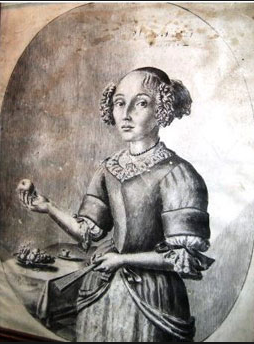
The gorgeous Anna de Koningh trying to decide if the apple is worth the calories.

I also learnt that in 1714 Groot Constantia was owned by a woman of colour, the daughter of a freed slave, Anna de Koningh. Anna was an extremely wealthy woman and fantastically beautiful, to boot. History narrates that she swanned about that homestead in a marvelous array of jewellery and kept no less than 27 slaves, clearly feeling feathers for social reform. Why should a girl iron her own pantaloons? A German traveller by the name of Peter Kolbe wrote a book where he recalls the time Anna saved the life of her friend, Maria de Haese, who tried to drown herself by jumping in the fountain behind the house. The reason for her death wish was the bitter lament that her life had become ‘one of terror on account of the many scandalous acts she daily had to hear and witness.’ Which does rather remind us that the more things change, the more they stay the same. 

Keeping our spirits up while understanding the lady who jumped in the fountain.

There can’t be a South African alive who hasn’t, at some point, wanted to drown themselves by jumping in a fountain. I get the impression that the early inhabitants of that magnificent estate would have agreed that life round these parts can be very wonderful and very terrible. I suppose it’s difficult to have one without the other. Maybe it’s a sort of a package deal: champagne and oysters, tsotsis and guns. We moved back because we love it: the beauty, the lifestyle, the friendliness, the contrasts. The good food, the good wine, the way the light hits Signal Hill at certain times of the afternoon. The noon gun, the call to prayer, Sea Point Main Road in all its grubby glory. And, of course, sitting under the ancient oaks at Jonkershuis contemplating all of life and the choices one makes and then lives with. There’s no such thing as a perfect deal. You find the place your soul has peace and you live with it, good and bad. For all the fountain-drowning moments I’ve never seriously contemplated leaving. Many do, and I get it. But for me… I dunno. It’s just where my heart resides. 

Palesa and the Hooker Boots

Palesa

Like most white people born and raised in South Africa in the seventies and eighties, the only interactions I have with people of colour are in supermarkets, Ubers and on Facebook Marketplace (where, lately, I find myself spending unjustifiable amounts of time browsing for items of footwear I do not need nor have the space to store. But, girls and shoes being a thing that defies logic and explanation, we must accept what we are and get on with it). 

And the interactions I have in these spaces are sometimes dull and pedestrian, and sometimes, for a while at least, make me think about the world we live in and the thoughts we have about the people who populate it. For a while I’ve had a pair of thigh-high, lace-up boots bought on a whim and which have always been that level of tight that only stops hurting after a bottle of Chardonnay and several tequilas. And since I am now old as a stick and not inclined to anaesthetise myself with the same gay abandon as I did in my youth, it made sense on several levels to sell them. 

So, for the first time, I placed my own ad on Facebook Marketplace and waited to see what would happen. What happened initially was nothing, and I wondered if I had marked them too high. But then Friday 5pm rolled around and while people crawled home in rush hour traffic and commuters trawled shopping sites to pass the time, my phone started pinging with women urgently needing a pair of thigh-high, lace-up hooker boots. A notion I fully understand. By Saturday morning I had several eager buyers, indicating that I sold them far too cheaply and am utterly useless as a businesswoman. 

Come Sunday morning my phone was still pinging and I was copying and pasting the same message to scores of hopeful shoe lovers scattered around the city. Then a message came through from someone called Palesa. It was riddled with typos, and all my prejudices kicked in. Because she wasn’t white and living in Claremont and because she wrote ‘ur’ for ‘your’ and because I was sick of copying and pasting I almost didn’t bother to respond. But then manners got the better of me. In seven seconds I got a message back from her requesting my phone number. 

Now I felt a twinge of annoyance. Not only was Palesa making me write things, but I had to also say things with my voice. I sent it anyway. Seven seconds later, my phone rang and Palesa – with such excitement her words tumbled over each other – was telling me how she was hopping in the shower that very second and then making her husband drive her from Goodwood to Green Point so she could purchase the hooker boots which were going to make life worth living. She would be there in under an hour and I was not to leave my house nor dare sell them to anyone else. 

My husband, on his way out the door to the airport, warned me about letting her inside. I rolled my eyes at his paranoia, but his comment made me secretly nervous. Because, you know, you never know. At exactly the alloted time, a little green car with a number plate that said PALESA and driven by an exasperated-looking husband type of person pulled up outside my house. She bounced out the car, bounded up my steps and started praying in a loud voice that the boots would fit. It took a bit of pulling and tugging, but she got them on. ‘Thank you, Lord Jesus!’ she announced to the heavens, and embraced me in a tight hug. ‘You are wonderful! Thank you, God bless you!’ she called out to me as she clambered back into the small, green Palesamobile and, waving and blowing kisses, disappeared from sight.

I stayed where I was on the steps of my big house in a good area, all bolted up and enclosed in expensive Victorian-style railings custom made to keep people out and felt a twinge of sadness. About how small and uncontested my world is. About the way I think about people who are different. About how many kind, warm, generous humans exist that I will never have the joy of knowing. It’s weird how we live. In many ways, nothing down here has changed. Now that the apartness is socio-economic it is no less insidious. 

I wish I had the courage to message Palesa and invite her around for dinner. I know our husbands would have loads in common, and I know for certain she would be somebody who would brighten up my day beyond measure. But I won’t because one doesn’t, and eventually I will forget about her and our heart-warming interaction. That evening I got a message thanking me again, and the next day a third message with a photograph of her standing in her office, smiling from here to heaven, rocking those sexy boots.


Tsek, Tsotsi!


Screen Shot 2018-02-16 at 11.50.30 AM
Did you hear the one about the president who wouldn’t resign?


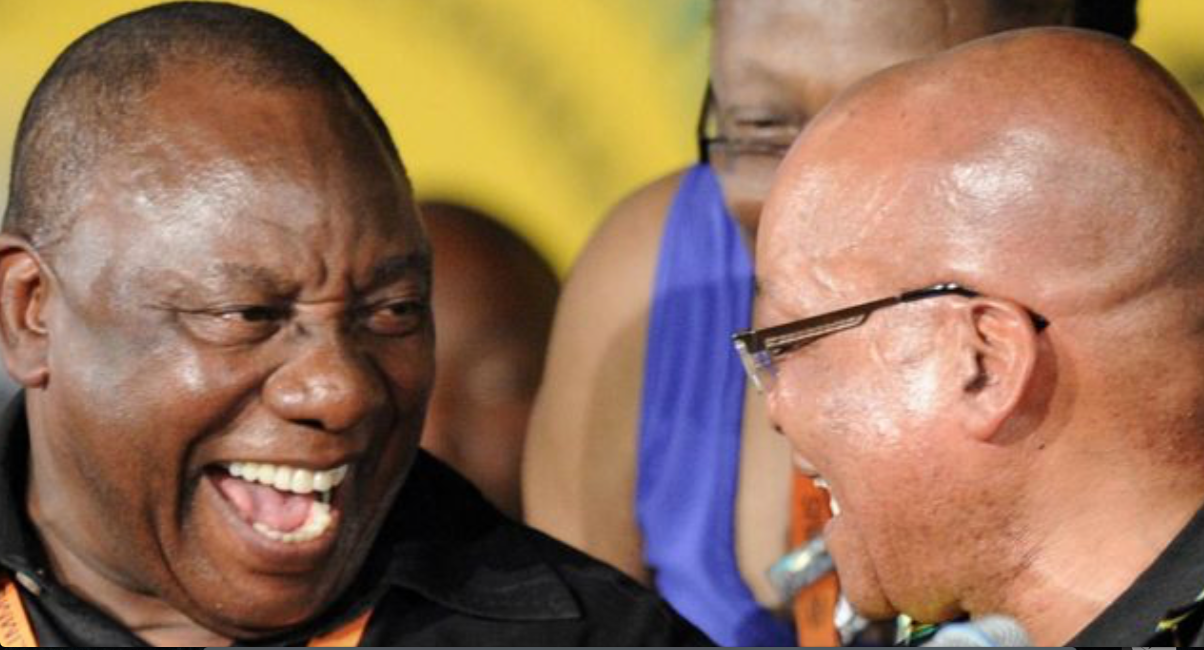
Isn’t it so typical of how things work down here: one minute it’s business as usual and you’re going to bed gatvol because President Zuma is hanging on with the tenacity of a gazonkelnut and whyfor must he resign just because eleventy zillion South Africans are up to here, and next thing it’s morning and you’ve barely bitten into your Bovril toast when you see there’s a party happening on Facebook that you didn’t even know about. And then Cyril is hugging the rabbi’s wife on Sea Point promenade and everyone’s high-fiving everyone at the Spar and the people who’ve just emigrated to Australia are feeling deeply conflicted.

Shem. I’m not going to tell them I told you so because they’re sad enough as it is. And then, the cherry on the cake, there’s the pilot refusing to fly that skelm Atul Gupta out of Lanseria airport and he’s sitting lekker sipping his Vida E, flipping through the in flight magazine wondering why it’s taking so long to take off and did they lose the keys to the plane, only the truth of the matter is he’s going nowhere but onto a poster put up by the Hawks saying Fugitive on the Run. As we speak he’s hiding in his cousin’s cupboard in Lenasia because Jacob is too busy trying to keep Duduzane out of Pollsmoor to answer him on WhatsApp. Yoh, how things can change in a day.

And yet you still have the lady at the gym putting on lotion and watching the news in the changing room at 10am finding something negative to say about South Africa. And I want to take her straightening iron out of her bag and actually just bliksem her with it because yussus, people – this is a good day for us! Can you not see how astonishingly well things have turned out? It’s better than we dared even to dream. Also, by the way, you’re at gym at 10 in the morning, and not because you’re cleaning the toilets. How about a bit of perspective for the amazingness of your life?

A classic South African moment happened a few weeks ago at that same gym when we asked one of the managers if they no longer get the paper delivered in the morning. Because it’s quite nice to distract yourself from the fact you’re drinking coffee instead of doing interval training. And he shrugged apologetically and said, ‘No, I’m afraid not. It’s the government.’ Now, the government can be blamed for many things. Many. But, hard as I’ve thought this through, the fact that there isn’t a Cape Argus for the white people to read while they eat their eggs and avo I cannot trace back to the inefficiency of the ANC. But that’s the manager’s story and he’s sticking to it.

So here’s a thought. Since things are looking pretty peachy for us right now (we even have Thuli back on neighbourhood watch), and – try as some people may – it’s quite hard to put a negative spin on recent political events in South Africa, let’s do a little personal inventory on ourselves and what really motivates the gratuitous grumbling about our country. It doesn’t take a psych degree to work out that much of what we attribute to our environment is a projection of what’s happening in our inner lives. Except honestly assessing why you’re depressed is a lot harder than posting vitriol on social media.

Let’s take a moment to reflect on the knee-jerk way many of us respond when things aren’t going our way. When someone in government does something kak, you hear about it all day. When someone in government does something good, it’s crickets and we post pics of our kids. How about we try to be more fair and a little more balanced in the way we assess what’s going on politically? Jacob Zuma’s governance was a bad time for us. Hendrik Verwoerd’s governance was worse. But we survived both – the former, due in no small part to our robust and extremely hard-working democracy.

We didn’t sit back and wait for things to change, we took to the streets and protested. Many people with placards were scorned and ridiculed for being white and entitled; they showed up anyway. There was more uniformity, more mutual respect and affection at those events than I’ve ever seen anywhere before. Nobody gave a hoot what anybody else looked like or where they came from. We were South Africans – mixed, mad, purposeful, indignant. How dare they try and steal our country from us again? How dare they let us down now after all we have been through as a nation?

Our courts, our journalists, our opposition parties, our whole judicial system worked hard and determinedly to fight the corruption and to prevent the state capture that would have been a tragic ending to a beautiful beginning. We did it. He’s gone. But we can’t rest on our laurels because there is still much to be done. It’s early days. Let’s be positive and generous in the thoughts and intentions we send out into the world. Let’s not wait for this magical government to bring the Argus to the gym. There is only so much one man can do. Now we have seen our strength and exercised our might. Let’s use it in this new era: make friends with ones who are different. Greet people in their own language. Be kind, generous, tolerant, and in your own capacity do whatever you can to make South Africa the kind of place where you want to live.

Right now our house is a building site because we are lucky enough to be able to afford to renovate. There’s a Zulu and a porta loo on our stoep and it’s noisy as hell all day. What the builders don’t know is that we hear almost everything they say. They speak mostly Kaaps. It’s hot as hades up there in the roof and they’re covered in dust and grime. They work really, really hard. Also, they tease each other and laugh a lot. Sometimes I stop and just listen. What they say I can’t even begin to translate into English, but it’s fricking hilarious. The banging drives me mad but the banter makes my day. And I guess that’s a bit of a metaphor for South Africa. Cheers to that, and to us, and to watching SONA this evening with pride instead of dismay. It’s been an extraordinary few days.