Dance – you’re Afrikaans!

Johannes Jacobus Botha as a young man of 26.
My grandpa, Jan Jacobus Botha, as a young man of 26.

I think the two most surprising things I experienced travelling and living ‘overseas’ was that everything was not, in fact, cooler/better/more fabulous than it was in SA (we Saffers suffer from a terrible inferiority complex in that regard), but also how deeply, madly and uncompromisingly South African I became. Before I left the country I had a tenuous, undefined and vaguely apologetic sense of my own heritage. But – and I guess this is identity politics 101 – put me amongst a clan of white-blonde, herring-marinating, super-stylish Scandinavians, and I was one step away from wearing a lion skin to the Vårdcentral and throwing bones for people as my party trick. Since I didn’t own a lion skin, what I did instead was join a South African book group and learn to bake rusks and source a boerewors maker in Copenhagen and phone my mom just to weep when I heard Alicia say, ‘molo, Sisi! Kunjani?’

And the other thing I did, after not doing this thing for many years, was start to speak Afrikaans. Afrikaans – the language of my country, of my childhood, of my history with its uncompromising ‘r’s and it’s guttural ‘g’s that sound like they come from inside the earth, itself. Its verkleiningsvorm that adds ‘tjie’ to small things so that they shrink before your very ears, and its words which are so unique and descriptive that they refuse to be moulded into the clipped, uptight and inflexible rigours of English. Nothing is as crawly as a ‘gogga’; nothing says you’ve hurt yourself like ‘eina!’, and that’s not even touching on the assortment of swear words and abuses which are so colourful they verge on psychedelic.

And, of course, the more ‘Kaaps’ you get, the more evocative and descriptive Afrikaans becomes. And it’s a shame it got associated with all that bad stuff. That a language so vibrant and defiant and home-grown became branded and white-washed and sterilized so that it served the purposes of a few power-hungry old men who loved this country but not its people, and, in the way language constructs reality, was used as a very effective tool of oppression. Which, given its origins – a ‘secret’ language developed by slaves so that they wouldn’t be understood by their tyrannical masters, and also a rebellion against speaking the language of their oppressors – is deeply ironic. Another thing I only discovered recently is that ‘kombuis’ in Dutch signifies a ship’s galley. Which implies that it might not be ‘kitchen Dutch’ as we have always understood, but ‘ship galley Dutch’, which carries its own insidious connotations. And its hybrid of Dutch, Portuguese, Khoi and Malay (with some Xhosa and Zulu influence along the way) makes it magnificently unique and special as languages go.

And while I wasn’t nearly conscious enough at school to understand that Afrikaans was a tool of apartheid, the overt preference the Afrikaans kids got in my dual-medium Somerset West school was enough to distance me from it and all it represented. We English-speaking kids were largely regarded as wayward and traitorous and, despite being as South African as they come, in this country of divisions and apartness, our affiliations were somehow believed to be British. Because Afrikaans was not our home language, we were not ‘true’ South Africans, and I have vivid memories of teachers comparing us negatively to the Afrikaans kids, a censure which hurt me at the time, being a diligent, conscientious student who loved my school and was very proud of my good grades.

Because I suppose, even though we were children and clueless, the Anglo-Boer war with its concentration camps and brutal treatment of the Boers was still fresh in a lot of minds. So that when my maternal grandfather, Jan Jacobus Botha, who grew up poor on a farm in the Eastern Cape, went to school barefoot on horseback and spoke Afrikaans and Xhosa but not one word of English, met and fell in love with Emily Norah Elizabeth Dilley who spoke no Afrikaans, their families were none too pleased. And when, in a real Romeo and Juliet-style saga they married anyway, his family, who lived literally down the road from their home in East London, would sit on their stoep and refuse to greet my granny when she walked past.
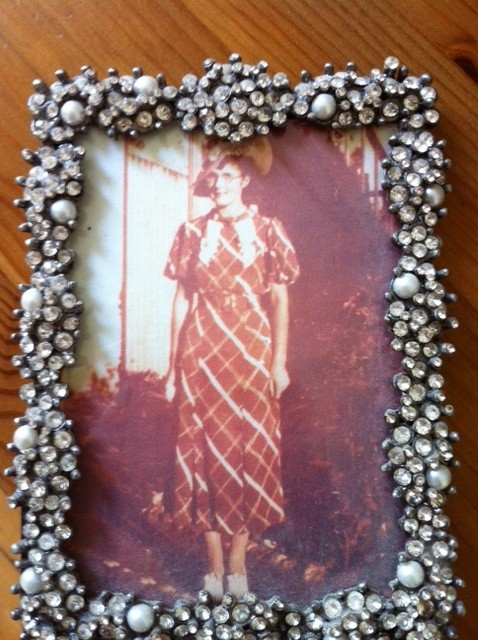
The beautiful Emily Norah Elizabeth Dilly.
My beloved granny, the beautiful Emily Norah Elizabeth Dilley, shortly before she married.

Unfortunately, in those days, Afrikaans was – and still is in some quarters – considered a lesser language, and my granny made it a condition of their marriage that their children would be raised English-speaking. So, while both my parents are bilingual, my accent is bad, and I wish the language hadn’t been allowed to slip away over the generations as it has. But, with growing up, I’ve learnt to love it again and appreciate it and consciously embrace it as an integral part of my heritage. In a strange way I feel like my Afrikaans roots bind me to the soil of this country, and legitimize my living here. Because the Afrikaners were, really, South Africa’s white tribe. I wish I’d been older when my grandpa was alive so that I could have asked him questions about his life back then. And I wish I’d been awake enough to tell him not to speak his accented English to me, but to talk to me in his mother tongue, using the words of his own childhood to paint pictures of the world.

Now I rely on my mother’s memory to keep my ancestors alive, while in my own mind I’ve reclaimed the culture for myself. For me, it has nothing to do with those cross men and their brylcreem who didn’t smile one time in their lives and conjured a political system madder than your wildest imaginings. It’s a connection to this corner of Africa; my soul’s dompas, if you will. The blood of those people who fought and suffered to live freely in this country runs through my veins, too. And to the ones who say I don’t belong here, I answer in my best, accented Afrikaans, ‘fok jou! Gaan vlieg in jou ouma se klein kwassie!’ And I defy anyone to translate that.

I think this is one of the most beautiful songs ever written. It’s by the late Koos du Plessis, and it was used in a TV series when I was growing up, but I don’t remember which one.

Carnivals and Gardens

The Oresund Bridge which takes me home to Malmö and home to Cape Town.
The Oresund Bridge which takes me home to Malmö and back home to Cape Town.

When you live in a country like South Africa, which has experienced – and continues to experience – change on a massive scale and where the disaster zones of many other African countries ruled by liberation governments hang over us like a panga ready to strike us into economic oblivion, conversations about where it’s good to live versus where it’s not so good to live become commonplace. And even more so for those of us who are thinking about leaving or thinking about coming home or have come home already or never want to see South Africa and Mrs Balls chutney again. And these debates go back and forth led by words like ‘lifestyle’ and ‘crime states’ and ‘education’ and ‘future’, and they are discussions which can go on endlessly without ever reaching conclusion because fundamentally they are personal and emotional, and more often than not our decisions are based on instinct and circumstance and what feels right for us versus what doesn’t.

But something I have been thinking about lately, and which is not often taken into account in these conversations – but which I believe to be true – is that different places/countries have a different energy (to be a bit shoo-wow and tie-dyed of a morning) which either resonates with ours or doesn’t. And we’ll insist on being practical and citing ‘facts’ as to why we live here versus there or there versus here but I think it boils down to something else. Like we pick partners and friends who ‘click’ with us, we choose the place we call home in much the same way. I have only lived in South Africa and Sweden, but since it would be hard to find two countries more diametrically opposed, I think they’re pretty good examples to use. I’m negative about Sweden sometimes because I was unhappy there, but I also love the country and larger Scandinavia in the way one does when a place has been your home. You can’t live somewhere for a long time and not have it become a part of you.

And I’m also more critical of it than is fair – out of defensiveness – because so many people are aghast that I left a place where everything is ‘perfect.’ And it is kind of perfect in a lot of important ways, but it wasn’t perfect for me. To employ a metaphor, Sweden is like a magnificently manicured garden full of beautiful flowers. There are water fountains, comfortable places to sit and good things to eat. People speak politely in muted tones and the air smells of freshly brewed coffee. You’ll never get lost because there are clearly demarcated paths, and the garden is ringed with stylishly decorated, very high walls that you’d never be able to scale. You are safe and you are secure. You are also walled in. For some people, the walls are a small price to pay for all that comfort. Why would you need to leave when everything is right there at your fingertips? It’s very nice there; very nice indeed.

South Africa is more like a huge, gaudy amusement park where nobody has checked the safely standards of the equipment in a long time. People climb on the rollercoaster and they feel the sun and the wind on their faces and it fills them with a delicious kind of joy, knowing that an any given moment the little car they’re strapped into could careen off the tracks and go sailing into the ether, taking them with it. But, damn that ride is fun. And it seems to go on forever. And everyone is smiling as they go around and around, and life is uncontained and open-ended and there are no barriers and the possibilities are endless. The amusement park smells of dust and oil and boerie rolls and beer, and clowns fall off barrels and people laugh and it’s colourful and in-your-face and totally unpredictable.

And I can understand why people choose the manicured garden. It’s a great garden, as gardens go. But the amusement park has a wildness which can be quite irresistible. Because you might fall off, but you also might not, and in the interim you are having such a damn good time. And objectively, it’s impossible to say which place is ‘better’. South Africa is awesome for some things, and other places are awesome for others. It’s just about what works for you, and where you feel comfortable and ‘right’. Once, about half a year before we moved back to South Africa, I was given a voucher for my birthday to visit an astrologer/healer. He was an African-American who must have been close to 80, and he’d been living in Sweden for most of his life. From his small, warm apartment in the suburbs he read to me my chart, and then out of the blue (not knowing I was leaving) he said something interesting and surprising. He said, ‘I have to tell you something – if you stay in Sweden you’re going to get sick.’ And I knew exactly what he meant. The country’s energy and I were not a good match.

Now when I go back on holiday I’ve learnt to wear one of those ‘balancing’ bracelets (whether they work or not is anyone’s guess) because, even though I’m really happy to be back and seeing good friends and swimming in the warm sea and enjoying the long days of summer, I experience odd physical symptoms – dizziness, disorientation and a vague sense of not getting enough air. I never feel this way in South Africa. And maybe it’s psychosomatic, but I think it’s something else. It’s the walls and the safety and the lack of spontaneity and madness. I’m just more a clowns and rollercoasters kind of person. And we’re all different like that. And sometimes I envy the garden folk their sense of belonging and wish I shared it because all that tinny carnival music can get noisy when you’re feeling tired, and you’re so busy dodging coloured balls there isn’t much time for reflection. But mostly I love the chaos and the freedom it affords. And that, if the mood takes you, you can fly right up to the sky.

A Moment

The first time I saw him he was standing on Jammie steps with his back to me, broad against the sunlight. He was dressed like Jim Morrisson in a white pirate shirt and a series of leather necklaces. He laughed, and shook out his hair – lustrous long, brown curls that fell well past his angular shoulders. He was rangy in the way only 22-year-old men can be, and it took me some time before I realised he was something of a legend on that campus. He hung out with a posse of impossibly beautiful black girls. Rich, skinny girls with flawless skin and expensive sneakers and straight, white teeth. I’d watch him with them – the easy way they touched him like he wasn’t Jesus, just some guy studying anthropology.

I found out his name was Ben, and that he was foreign and a member of the Mountain Club. And someone told me where he lived and after a while I got a vague sense of his routines so that I knew, more or less, when he’d come sauntering by in his faded jeans and 6 foot 2-ness. And then he’d be gone again, somewhere else, and I was not cool at all nor pretty enough to compensate for my lack of street cred and there was no reason in the world why a guy like him would ever even think of a girl like me. And I didn’t question the order of the world for a second. Even though it seemed like that same order was about to change in a big way. Because, all around us, things were starting to give. In the words of Chinua Achebe, the centre could no longer hold; things were beginning to fall apart.

Sitting in my psychology class one morning beside an Indian girl who wore a different pair of Levis every day (you couldn’t buy them in South Africa due to sanctions against us so you had to go to London or send a friend) and behind a black guy in his thirties who worked the night shift as a petrol attendant and came straight to class in the morning, still wearing his uniform, suddenly we heard a noise and loud voices coming closer. My lecturer stopped lecturing and listened, looking worried. Then, without saying a word, went over to the door of the lecture hall, closed it and locked it.

We all sat very still. The noise increased – it was chanting, and things were being broken. It was the early nineties and the country, so long in apartheid’s stranglehold, was starting to break itself free. A crowd of people appeared. They held pangas and they danced. They smashed windows and kicked in doors. They set parked cars alight. We watched them out the window. Nobody spoke. The riot passed, and the noise died down. Still we waited. Silence. The door was unlocked, and we packed up our notebooks and left the building, the affected boredom we normally took such joy in practicing replaced by a sense of fearful anticipation. We walked past the rows of police vehicles, glancing nervously at the smouldering fires. A policeman waved us along, muttering under his breath.

Everything was happening, yet nothing was happening. We sat up late at night writing overdue papers and lived on popcorn and toast. I struggled to pass Stats. I flew through my English exams. I lugged The Riverside Chaucer up and down steep hills, found out I was a feminist and used the word ‘existential’ as often as I could. It was Cape Town, it was summer and there were parties to go to. And then, one night, there he was. It was a social at the Baxter, and we arrived late after most people had already left. The guy I was with knew him, and before I could even gather myself, he was introducing us and Ben was shaking my hand and smiling and saying hello.

And then, as if on cue, the opening bars of one of my all-time favourite songs, Juluka’s December African Rain started playing. And even then it was an old song, but there is some kind of magic in that music – the drums and the deep voices that sound like they come from inside the earth, itself, and how this Jewish boy from Joburg loved Zulus so much he became one, and back in those days, that was quite a thing. And by doing that, making that stand, he freed us more than we understood at the time. It was almost like everything we had not been allowed to love about Africa was being given back to us. Through his music we became impis; we were warriors; we were children of the land, united against a system so barbaric it made us sick to our stomachs. We were the new generation, and freedom was on its way.

I smiled at him and he smiled at me and we started dancing, me, my friends, the beautiful black girls and him. And then the party was over, so we left to go somewhere else. He got in the front seat of the car and I sat in the back, behind him, my mind reeling at his proximity to me, that he was really right here in the flesh, so impossibly close. And then, as we sped through the dark city streets, young people looking to have fun, the impossible happened. I felt his hand reach behind the seat and look for mine, find it, and enclose it in his long, brown fingers.

And I was so young and naive and taken aback by this gesture, what did I do? I giggled and pulled my hand away. I pulled my hand away. And then I sat in the darkness of the car feeling the heat creep up into my face; thinking, you idiot! You idiot! What did you do that for? And I prayed to the god of stupid young girls that he would just give me second chance. Just reach for my hand again. This time, I promise I won’t pull away. Because I have been in love with you for three years and never, in my wildest dreams, did I imagine you’d even give me the time of day. And I didn’t mean it, I didn’t! I was just taken by surprise. And as we drove on and the seconds ticked by, he sat very still, looking ahead of him – nobody else in the car even aware of this monumental thing that had just failed to happen. And with every streetlight we passed I knew with increasing certainly that I had missed my moment.

We never spoke again after that night. He’d give me a vague hello when we passed each other in the halls, and then I saw him less and less as he moved to another compass. His flat used to be on Rondebosch Main Road, just as you came off the freeway, its big windows facing the flyover. I drive past it once in a while when I’m going that way and I still think of him and that one night and how he’ll never know.

One Small, Happy Story

Here comes the sun, too doo doo doo. Here comes the sun.

So, every Monday late morning I collect Elisabeth from school and take her up the road for her swimming lesson, and today I happened to sit beside one of the dads and we started chatting, and he told me about how he and his partner adopted their little son. Born very early and weighing only 1,6kgs this newborn baby boy was found abandoned in a township and taken to the nearest hospital. Because he was so premature he suffered from cerebral palsy and the verdict was that he would never walk. While many people would balk at the idea of adopting a physically handicapped child, this couple readily took the teeny-tiny baby home and he became the light of their lives and the centre of their universe.

Now he lives in a beautiful house with two extremely devoted parents, speaks Dutch and English and goes to Europe once a year on holiday, and – what’s more – he walks just fine. He is so robust and healthy-looking you would never guess he was once hanging onto life by a thread. It’s hard to imagine what his life would have been like if he had not been adopted but, like his dad says, he probably wouldn’t have walked. And there’s not really any point to this story other than that it’s an example of how liberal and awesome our constitution in South Africa is – that a gay couple is allowed to adopt and love a child. And, it’s testimony to the kind of good, selfless people there are among us. And this one small, happy story has made me feel good about the world all day.

Who’s Afraid of the Big, Black Township? Khayelitsha For Beginners.

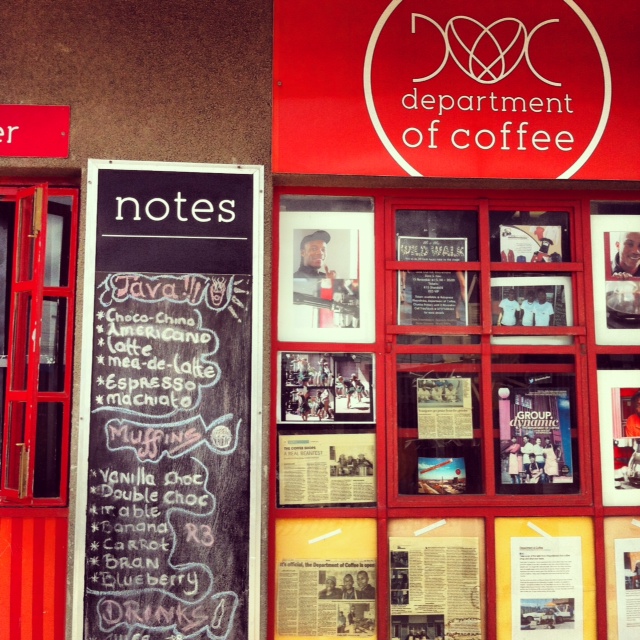
One of the best damn coffees in town.

So, shortly after writing my Ubuntu piece (and how synchronicity works) I met an old friend, Pippa, for lunch who has been working in Khayelitsha for the past 8 years. She talked about how white South Africans (myself included) have no idea of what this place on our doorstep actually is about, or what happens there, and offered to take me in with her one day for some much-needed enlightenment, and today was that day. And it didn’t take me long to realise what a one-dimensional view most of us have of this sprawling suburb, seeing only the rows of shacks which line the n2.

This hospital could be anywhere in Europe.
The new Khayelitsha hospital is so fancy it could be anywhere in Europe.

In truth, Khayelitsha is home to nearly a million people, and while it certainly has its quota of informal dwellings, the suburb itself is divided into suburbs, some every bit as middle class as Kenilworth. It has schools, a mall, a gym, a large college and a brand new, modern hospital. It also has spaza shops, hairdressing salons, panel-beaters and cash stores, and even on an arb Wednesday morning there were women braaing meat, washing clothes, walking babies, chatting to their buddies. There is a cool, laid-back vibrancy about this place and ja, it’s shabby and ja, the soil is of such poor quality very few trees manage to grow, but it has industry, an energy and a sense of community that made me wonder who the poor people in this country really are.

Pre-R's learning a dance for their upcoming graduation ceremony.
Grade R’s learning a dance for their upcoming graduation ceremony.

And I’m not romanticising poverty. The reason why Pippa is there is because she started a project called ‘Home From Home’ (www.homefromhome.org.za) which provides housing to children who have been rescued from circumstances of physical and/or sexual abuse or who, for whatever reason, have lost their parents and their homes. ‘Home From Home’ has 32 houses with six children and a surrogate mother in each. We visited some of these houses which, while they are modest and everything in them is second-hand, are homely, safe spaces which provide these kids with stability, family life, nourishing food, warm beds and place to call home. And the surrogate moms work hard and the kids don’t have a lot but, despite their circumstances, they are happy and thriving and have great hope and plans for their future, and it’s a beautiful thing to see.

Surrogate mom, Beaulah, with her assistant, Sandile
Surrogate mom, Beaulah (on the right), with her assistant, Sandile

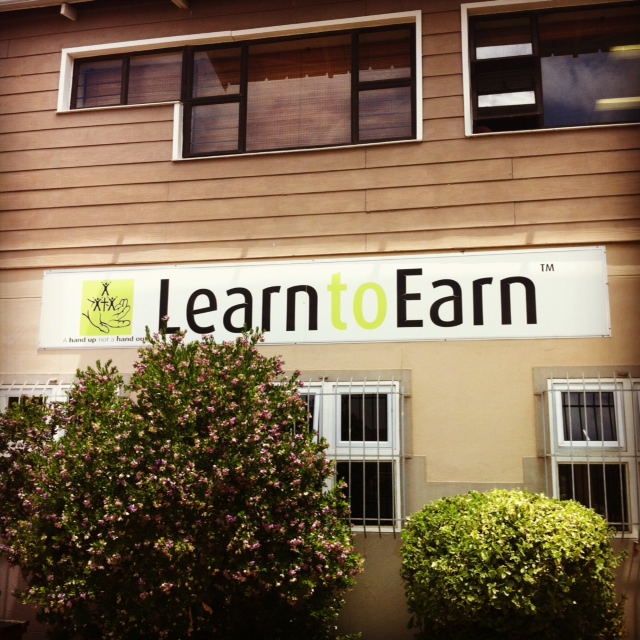
We also visited a very cool place called ‘Learn to Earn’ which teaches its students a variety of skills such as sewing, baking, carpentry and office management which makes them employable and empowers them to start small businesses and support themselves. And the people running this place are so dedicated and passionate it’s humbling to witness. And I thought to myself as I talked to staff how careful we must be of dehumanising these ‘off limits’ zones. Just go visiting on a Friday which is braai day (of course) and when a hard working week ends with a much-deserved cold beer; where Saturday is for kuiering, shopping and getting your hair done, and Sunday the enormous church with its very (very) long service is filled to capacity with singing, dancing worshippers. The ‘other’ is much less other than we imagine.

Where adults of all ages are able to learn a trade.

And sure, it’s sad – there’s a ten-year-old little boy who keeps running away in search of his parents who are missing somewhere in the Eastern Cape and obviously don’t give a hoot about their child but, being little, he still tries to find them. And some of the tiny ones whose faces lit up when we entered the room and gave us huge smiles and waves and thumbs-up ‘sharp-sharp’s – it’s heartbreaking imagining anyone abandoning these gorgeous little creatures. But it’s not depressing, it’s uplifting and encouraging seeing the amazing work being done there. ‘Home From Home’ hires a clever, dedicated young social worker who makes herself completely accessible to these kids and helps them transition and process some of the stuff they’ve had to deal with.

And what a huge wake up call and reminder that we must damn well stop whining already. We live incredible lives in an incredible place and we need to stop blaming and pointing fingers; it’s time to pull up our sleeves and, like Gandhi said, be the change we want to see. It’s not that hard – there are so many opportunities available for reaching out and changing things. Today was proof of that.

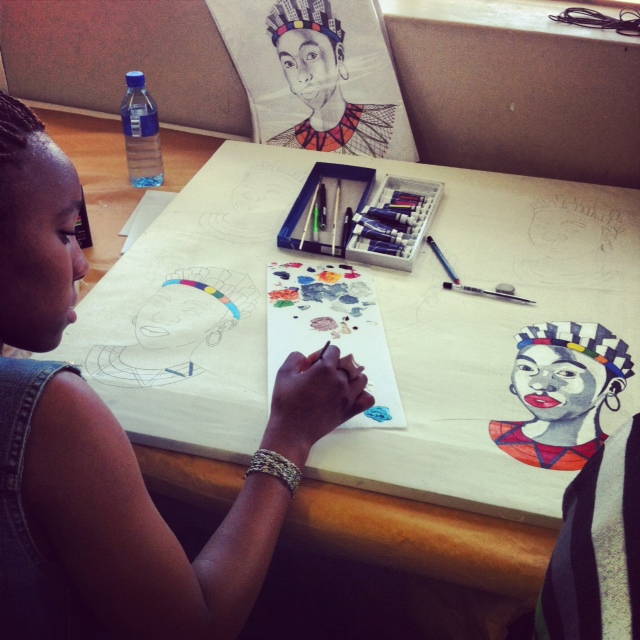
A talented graphic art student at 'Learn to Earn.'
A talented graphic art student at ‘Learn to Earn.’

Pippa told us how often she gets warned by white South Africans that she shouldn’t go into Khayelitsha; that it’s not safe for a woman. And these are sentiments a lot of us have been led to believe (I think it was that Amy Biehl story nobody can get over) but, in reality, it’s just a place like any other. Everybody we encountered was friendly and approachable. I left my leather jacket in the car when we went inside homes, and I didn’t feel frightened or wary for a second. We stopped at a coffee shop which did fabulous muffins and a latte that would put Vida E to shame. Nearby an old woman running a stall was dancing away to some music that only she could hear. The wind blew, and a young woman held onto her skirt. We drank our coffees and headed back towards the mountain, and it was a day which gave a lot of food for thought.

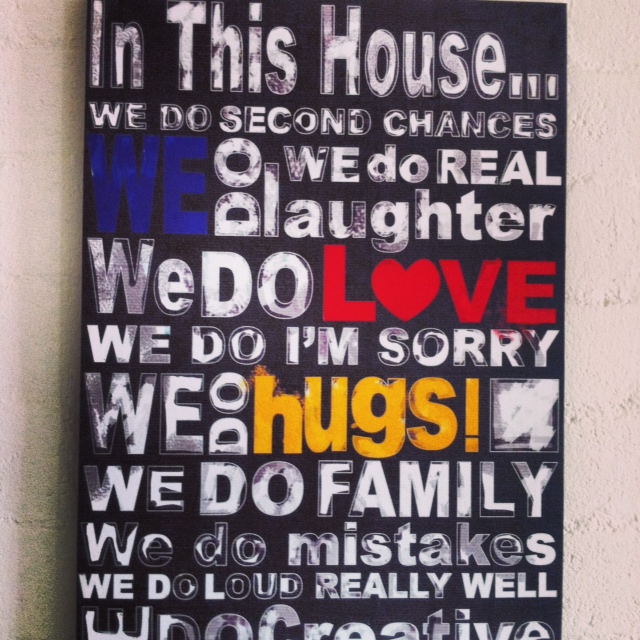
The ethos of Home From Home.
The ethos of ‘Home From Home’.

South Africa Explained in One Short Video Clip

So, this morning I found myself tripping over my words and racking my brain trying to answer the probing, insightful questions posed to me by a friend who lives in Denmark in response to my story about white people and Ubuntu. She is British, has a Jamaican mom and a Scottish dad, and is married to an African American, and understandably struggles to understand this place I live in and blog about. I used words like culture and tradition and segregation and poverty, but none of them managed to encapsulate the layers of living that happen here – the energy or the feeling or the zeitgeist, if you will.

And it struck me what an immensely complicated place this is to encapsulate in words – how many levels of experience, ways of being and how much diversity there actually is, and while you can theorise and explain our sad, fractured history, none of these descriptions really do the country justice. Because, while it sounds hideous in black and white (and it was every part of that), somehow we rise above it. Then, as synchronicity works, my friend Faldelah sent me a video on Facebook, and once I had recovered from doing the ugly cry I thought, yes. This is it. This is South Africa in a nutshell, and the reason why so many of us can never, ever leave. Only watch this clip if (unlike me) you’re wearing waterproof mascara.

http://www.flixxy.com/shopping-centre-flash-mob-south-africa.htm

On Stupid White People and Ubuntu

So, last night at the Spur (two burgers for the price of one, and all) my husband and I are in the middle of an enthralling married people conversation about what screens to put up on the sides of our new deck when a good-looking young black guy in an expensive shirt comes over and sits down at our table. We look up in surprise and say hello and he says hello back. ‘How are you doing?’ I ask him. He says, ‘I’ve seen better days.’ I think (being a stupid white South African with no conception of Ubuntu) ‘oh no – here it comes. He lost his job and his wallet was stolen and he just needs R20 to get home. Or worse – he ordered the full size portion of ribs and now he wants us to pay.’ I wait. He says, ‘my friends are late.’ I say (with no small measure of relief), ‘ja, that’s Capetonians for you.’ He laughs, takes out his new Samsung and checks his facebook updates, while we self-consciously resume our conversation until it’s time to go.

And it was one of those weird South African moments which illustrate how little understanding we have of one another’s cultures and ways. For we whiteys, joining someone else’s table would be unthinkable unless it was preceded by an explanation: ‘my friends are late and there aren’t any empty tables. Would you mind if I joined you for a while?’ Clearly, for him, such an explanation was unnecessary. Of course he can join us. He is a human being and we are human beings. And I was mortified with shame at having assumed what I did. But that’s how little we ‘get’ each other. And it reminded me of an incident a few years back when our nanny and cleaner (yes, the now infamous Nosipho) invited us to attend her birthday party on a Sunday afternoon in Khayelitsha. While we white folk know very well where Khayelitsha is because we drive past it en route to the winelands (irony intended) I honestly couldn’t think of one single white person who had ever been there.

So, I asked around: ‘have you ever been to Khayelitsha, and is it okay for four blonde chicks to go visiting a friend on a Sunday?’ The resounding response from white people was no, and don’t be mad, while black people ummed and aahed and said it’s probably okay if you know where you’re going, but don’t get lost. Don’t get lost? I get lost in the city bowl. Anyhow. I knew that it meant the world to Nosipho that we showed up on her special day and that she had already told all her buddies we’d be coming, so on that given Sunday I piled myself, my mom and my two little girls into our Toyota Tazz and off we went. You can imagine what we looked like with our deer-in-the-headlight eyes crawling along narrow, dusty roads with not a street sign in sight behind groups of (what I imagined to be) tsotsis who turned around slowly and watched us as we passed. In my mind we were already newspaper headlines when we pulled up at a Spaza shop and phoned Nosipho to come rescue us.

We were actually closer than we thought, and her grandson appeared and showed us the way to her house. It was already full to capacity with friends and neighbours, some of whom had come to see the crazy madams for themselves. It was an extraordinary afternoon, and one I will never forget. As Nosipho was a hardened feminist and had less than no time for the men of the world, the house was filled with women of all ages, dressed to the nines for the party of the year. Not being Xhosa speakers, we were handicapped and could only contribute so much to the conversations, but we were received with grace, respect and wholehearted acceptance as we joined the table and partook of a feast of fried chicken and stewed meat and salads and drinks followed by every dessert imaginable.

And the women sang, song after song, their voices rising up in perfect harmony – proud women, poor women who had seen heartache and suffering beyond our wildest imaginings. They sang their pain, their tragedies and their hope while we sat there, stupefied, trying to fight back our tears. Being Women’s Day, the 9th of August, that place we found ourselves on a sunny Sunday afternoon somewhere in a South African township couldn’t have been more fitting. And another thing that amazed us was the gifts. Some of these women hadn’t worked for a long time and relied on the handouts of neighbours for their survival, yet the generosity of what they gave to Nosipho – Woolworths vouchers worth R500, expensive towels and linen, imported beauty products – made us feel ashamed of the relative cheapness of what we, the rich ones, had bought for her.

And then, as the afternoon started to wind down, we were taken on a tour of the neighbourhood. Her friends wanted to show us the homes of which they were so proud. There must have been thirty people, at least, forming a procession up the road being followed by children, curious hangers-on and stray dogs. And then, once we had seen the houses of her guests, we started on the other houses. Nosipho didn’t even knock, just marched straight in, followed by her entourage. People were cooking, watching soccer, taking a nap, and they all got up, said their greetings and offered us something to drink or eat. Nobody seemed annoyed or put out in the slightest. And I thought to myself, imagine this in Clifton or Camps Bay – a troop of people letting themselves into other people’s homes and being received warmly and offered tea.

It was an amazing day and it taught me a thing or two and I wish we did stuff like that more – moved out of our comfort zones and tried to understand the different people who make up this country. Because until we do we’re going to be stuck and never move on from the past. As we drove home towards Table Mountain with the sun in our eyes I felt nothing but gratitude for that experience, and for the gift of being a South African and the opportunities for growth and learning that this astonishing country presents. If only we would be better at taking them.

A Day in the Life of a South African Maid

“I wake up at 4:30am because Catherine and Stuart (not their real names) like me to serve them their tea in bed in the morning, and it takes a long time to get from Khayelitsha to Camps Bay. The first thing I do when I wake up is take a bath and get dressed. Then, I get my older children up, make them oats for breakfast and get them dressed. My son, who is 11, takes the baby, who is one-and-a-half to crèche by taxi in the morning. My other daughter helps me feed and dress her before she walks to school with her friend. I have to leave my house at 5:30am to make sure I am at work by 7:30am when they wake up. Sometimes there is traffic or strikes or the trains aren’t running properly, and I get late. I have been late twice already, and if I’m late a third time Catherine is going to give me a written warning.

When I get to work I change out of my clothes and into my uniform. The first thing I do is wash my hands, put the kettle on and get the tea tray ready. Once they have their tea and rusks in bed, I go and wake the boy. I look after two kids, a boy of three and girl who is six months. The baby will be with the night nurse. Then the night nurse goes home. I get the boy up and make him breakfast. He likes French toast and rooibos tea in the morning. He is a good boy. I give the baby porridge and dress her. Stuart goes to work and Catherine goes to the gym. While she is gone I make her bed, pick up her clothes and shoes from the floor (she is messy, that one) and put everything away. I put the baby on my back when I clean the house. Sometimes it’s hard because the boy wants me to play with him, but if the house isn’t tidy when Catherine comes home she gets cross. I am not allowed to put TV on for him because she wants me to only play with him. So that is difficult.

In the morning we go to the park. Catherine likes us to get out so that she can have some peace and quiet. I pack some food for the kids. There is a park close by, and we play there. I have a friend who goes to the same park, so we meet each other. Sometimes I worry about my girl. She doesn’t like the crèche, she misses me. She cries in the night and wants me. It’s a long day for her to be without her mother. I took her there when she was one month old because I had to go back to work. I couldn’t breastfeed her anymore. She was always sick and I think it is because I couldn’t breastfeed her. It is a long time for a baby to be without her mother, but I must work. My husband earns R3500 a month. It is not enough for us to live.

When we get home Catherine likes me to make her a salad. She won’t eat bread because she’s on a diet. Only fish and chicken every day, but she is too, too thin. Then I make lunch for the kids and we sit together in the garden and eat. In the afternoon when I put the boy down for his sleep I put the baby on my back so she can sleep and I do the ironing. Then I start with supper. I used to work in a restaurant so I know how to cook. Stuart wants to eat meat every night. I make steak or a stew or I cook chicken and vegetables. I bath the kids at 5pm. At 5:30pm I must leave to catch my bus, but sometimes Catherine asks me to iron the dress she wants to wear if she is going out. Then I get home very late. It takes me two hours to get home. My kids are already home. I leave the key with the neighbour and they let themselves into the house and do their homework. My son fetches the baby at crèche after he finishes school. I cook supper and I am very tired.

My husband comes home at 7 o clock. At the end of the month the money is finished. Then we only eat pap and vegetables. Together we earn R7000, but most of that is for school fees and food and transport. Transport is very expensive, I must give my son R20 a day and my bus costs R150 per week. My husband works on a Saturday too, so Sundays we are all together. We go to church in the morning and then we eat meat for lunch. We only eat meat on a Sunday. I am lucky for my job, and my husband is lucky. There are lots of people who are not working. Then I try to do everything right. I tidy the cupboards and I wash the curtains. Catherine gives me old toys and clothes. We are also lucky that we have our own house, but in the winter the roof leaks and the kids get sick because it is always wet. There is water on the floor and our shoes and clothes are wet. It is very cold in our house in the winter. I am looking for an old washing machine because it is difficult washing all the clothes by hand. When I get home from work I wash. It is difficult to make the clothes get dry in the winter.

I have good kids, but my girl struggles at school. Her teacher wants her to have extra lessons, but it costs money and we don’t have money. If my kids are sick it is a problem because if I don’t go to work Catherine gets very cross. If the baby has a fever she is not allowed to go to crèche. Then my son must stay home from school and take care of her. I am worried then because he is only a boy of 11. It is not so easy, no. I have a good job. They give me paid leave at Christmas, two weeks. My family is in the Eastern Cape. It is very expensive to take the whole family so every three years we take the bus to see my parents for Christmas. They are old now. I don’t know if I will see my parents again before they die.”

As told to me by Florence, 36.

The Trouble with Maids

There can be no relationship in the world that is trickier to navigate than that between a white South African and her black maid*. Without a doubt it is our comeuppance for apartheid, and if for one second we’d like to forget about those bad old days of segregated park benches, Precious, with her Pick n Pay overalls, is there to remind us that the past is not quite as far away as we’d like to pretend. After years alone in Sweden a large, non-self-cleaning apartment with an infant and a toddler and no family anywhere near while my husband clocked ten hour days at work, the thought of moving back to South Africa and having hired help was a joy the headiness of which I could barely fathom. Things like going to the supermarket without negotiating a huge, double pram through a blizzard and then dealing with two hot, furious children in snowsuits in the 25-degree celcius store – never mind being able to work uninterrupted and squeeze in the odd yoga class – sounded like luxuries beyond comprehension.

But, having been away from the country long enough to forget that there is a system in place and that things work a certain way I was completely unprepared for the reality of hiring someone who is, essentially, a serf with a bad attitude (wait – hear me out), and how the slave/madam relationship works down here. Enter Nosipho (yes, she of the samp-and-beans). Nosipho was amazing with my kids – amazing – as in, she would host tea parties on top of the jungle gym and build forts out of blankets in the garden, make fires in winter, fry vetkoek and, within a month (Leo that she was) she was besties with all the maids in the neighbourhood, and her and the girls had a rip-roaring social life. She was clever and ambitious and, despite unimaginable disadvantages, had done pretty well for herself.

But, Nosipho was pissed off. For good reason – her mother was a sangoma who was more interested in pursuing her career than caring for her young daughter, and as a result she was placed in compromising situations. Despite being a strict mother her eldest daughter succumbed to tik addiction and lived on the street, abandoning her baby son with Nosipho who was left to raise him. For this proud woman who, on a miniscule salary, had managed to buy her own house and furnish it very nicely, her daughter was a terrible embarrassment. But, strictly speaking, none of this was my problem. She had a good deal with me – short working hours; a generous wage (well – in South African terms); time off when she needed it and lots of extras, like a big grocery shop of treats for her and her family on a Friday. I was always buying stationary for a relative; taking somebody to the optometrist; fetching and carrying a cousin’s child who had missed the transport home from school. She needed a couch, she got it; her geyser blew, we had it fixed. Her brother died – we paid for the funeral. It was never-ending.

But, there was the small issue of my ancestors having destroyed the lives of her ancestors, and none of this made either of us feel any better. In fact, it made things worse. You know the psychology of charity? The recipients get resentful as hell, and this happened with us. She’d come into work in a filthy mood and throw her bag down on the chair. I’d tip-toe around her and try to stay out of her way (not easy when you work from home). Of course, as an employer, what I should have done was say, ‘listen, lady, whatever’s bugging you – leave it at home. You’re here to work; get on with it or get out.’ Instead, I’d make us a pot of tea and fetch a plate of Melissa’s rusks and invite her to sit down at the table and tell me what the problem was. Was it something I had done? Was she upset about something work-related? She’d dunk her rusks and glower at me while I shivered in fear and thanked her profusely for the great job she was doing, never mentioning the fact that she left work every day reeking of my Prada perfume and with three loo rolls and all the sugar siphoned in a jar in her leopard print bag.

See, while we sat in awkward silence, me obsequious and her, vengeful, invisible assegais flew over our heads; Verwoerd in his droning voice assured everyone that blacks would be ‘separate but equal’; my school fees were free while her mother had to find the money to pay. The weight of our shared history was too extreme be lifted by the elaborate lunches I would prepare for the four of us to sit down together and eat until I realized why she was always ‘cleaning the bathroom’ when the food was ready. She didn’t want to sit and eat with me, but she didn’t know how to tell me. It just wasn’t the way things were done down here.

Eventually when she let me down severely by not coming back from her Christmas holiday on the allotted day and ignored her phone and my thirteen messages which meant I couldn’t show up at my job I put on my big girl panties and told her she’d better be back by the next day or that was that. She didn’t show up the next day; instead she went to the CCMA and reported me for unfair dismissal. She didn’t have a case so nothing came of that, and I was happy not to have that bad energy in my house, but it was a big shock and a learning experience for me. I was devastated, and mourned the end of our relationship for a long time. I had made the fatal mistake of thinking, because we were in each other’s company all day and talked often and were involved with one another’s families, that we were friends. We were not friends. I was her boss and, because of my own issues, I managed our working relationship poorly. And I take full responsibility for that. But it’s not easy either, given the status quo.

This past Friday night we shrieked with laughter as my gay friends, Bruce and Nicolaas, told stories of their maid, Dorothy**, who is very religious and hates Nicolaas so much she won’t even say hello when she shows up for work. She also leaves them rude, demanding notes and conducts her faith healing business during work hours from their phone account. Another friend of mine comes home to find her bathroom smelling of bubble-bath and her bed, warm. Apparently when Xoliswa is done with the ironing she enjoys a hot soak and a small nap. And, honestly, she probably deserves it. A colleague’s maid, Mavis, comes into work in the morning, makes herself tea and six slices of toast and watches Judge Judy for an hour before she starts with the vacuuming.

And the reason why nobody complains and our relationships get confused is because we know very well what a good deal we are getting. We have people do all our dirty work all day and pay them barely enough to survive. And because everyone else does it we pretend it’s okay. We say things to each other like, ‘R4000 a month is a lot for them. They live on very little.’ Really? Do ‘they’ have any choice? Last time I checked groceries and school fees and petrol cost the same for everybody, irrespective of their race or job or socio-economic position (and this is not a white-people-being-bad-to-black-people thing, the wage for domestic help is the same, whatever racial group happens to be hiring).

Anyhow. I don’t hire anybody full-time anymore. You can’t have a heart and not get personally involved with the people who are virtually living in your home, and it’s just too hard and complicated. I don’t have the mettle to draw boundaries and be tough with individuals whose lives are insurmountably difficult while mine is one long exercise in privilege. I have a char once a week, and the rest of the time I do my own dirty work. And maybe I’m denying somebody deserving a job, but at least this way my sanity remains intact. Eish, it’s a helluva thing.

*I know this term is not politically correct, but I’m going to use it anyway because ‘domestic worker’ just doesn’t work and ‘housekeeper’ is pretentious.

** Since this article was written Dorothy fired Bruce and Nicolaas. If anyone needs faith healing, drop me a line and I’ll get you her number.

On National Braai Day

The guy on the right is a photo bomber. It was Oupa Bekker, on the left, whom I was surreptitiously trying to capture.

There are a number of things a city slicker can learn at a potjiekos competition smack in the middle of the small Karoo – that ‘Suurings’ (those little yellow flowers with the sour stems we used to eat as kids) go very nicely in a waterblommetjie bredie; that creamy, cheesy, bacon pasta is outrageously good done over the coals, and Oupa Bekker, whom Herman Charles Bosman immortalized in his famous short stories, is alive and well and living somewhere near Montagu. Not only Oupa Bekker, but Gysbert van Tonder, At Naude and a whole host of beloved Groot Marico farmers showed up at the Makiti Montagu Heritage Potjiekos competition and put away scary amounts of Klippies and coke while they sat in the sun, stoked their fires and made pots of succulent springbok (shot by themselves, naturally) cooked with locally dried peaches; chicken and smoked pork, and seafood stew packed with perlemoen to be eaten with bread baked on the coals. There’s not a lot you can tell these men about cooking meat over a fire.

This was the first year the town of Montagu hosted the event, and I don’t remember when last I had so much fun. For R50 you got a very nice (read: large) wine glass, a packet of olives and entry into the tasting tent where wine makers and their reps were only too happy to fill your glass three times with your tipple of choice (mine was the caramel-liest Chenin Blanc I’ve ever tasted) while you swanned around the food tables helping yourself to hunks of ciabatta dunked in olive oil and dukkah, chilli and mint haloumi fresh off the grill, and olives flavoured, chopped and prepared every way you can imagine. While a lady from Brackenfell with very red hair sang eighties covers, we wandered around the marquees, wine bottles in hand, offering cooking tips to the beefy, good-natured farmer-chefs who have no doubt been preparing kudu and making potjie since before we were born.

What’s more, once the judges had announced the winner (the waterblommetjie bredie with Suurings), we took the liberty of traipsing around with our plates, tasting some of the amazing dishes that were rustled up that afternoon, and in the warmth and friendliness that was evinced between competitors and their families in the heat and dust of a Sunday afternoon somewhere in the semi-dessert I felt some sort of pang of something; a nostalgia and a sadness around what was and what will never be. You take one look at these oversized men with their enormous limbs and sunburnt faces from years of outdoor toil and you know that they are what they are. Alone on their vast tracts of land under a huge blue sky, our not-so-new South Africa has little bearing on their lives. Whether I agree with their views or not, I understand how they think. Like the real Oupa Bekker, they are relics of another time and place.

And for better or for worse, this afternoon of potjiekos and boeremusiek is what Heritage Day means for a lot of people living in South Africa. For others, it means a well-deserved day off work, and a bus ride to a stadium where there will be beer and braaied meat and speeches and songs and vuvuzelas. Muslim families will take their soft drinks and home-made samoosas and pies and daaltjies to the Green Point park where they will rest and chat and absorb the sun while their children climb on the jungle-gyms and run across the grassy expanses. We, white liberal(ish) intellectuals will gather on a deck in a trendy part of town and enjoy good wine and fancy salads and expensive cuts of meat. And that’s how this country is. In my hugely sentimental and highly unlikely fantasy version of South Africa, where there was no segregation – legislated or otherwise – we South Africans would be a bunch of brown people who spoke a combined Xhosa-Afrikaans-English dialect and shared a unique, hybridized culture which consisted of elements of all of us, and race would be irrelevant and assets shared.

Instead, we have our ‘pockets’ and our clans and our ways, and there is about as much chance of the vuvuzela folk showing up to make a skaapboud potjie as there is of the Karoo farmers heading to a stadium to dance and toyi toyi and sing. And I don’t imagine this will be changing anytime soon. Which is why most of us distance ourselves from the word ‘Heritage’ and any notion of oneness that this might connote and re-name it National Braai Day, as some folks suggested we do a few years back. Because in spite of centuries of living separately and having no national culture to speak of, what we can agree on in no uncertain terms is that we South Africans are partial to meat cooked outdoors over the coals. And maybe, for now, that will have to do.

Belia's brother-in-law, Ben, pushed the boundaries with this chicken, smoked pork and chorizo extravaganza. It didn't win, but it should have.
Our friend, Ben, pushed the boundaries with his chicken, smoked pork and chorizo extravaganza. It didn’t win, but it should have. Here, Belia and I pretending to have made it ourselves.