Enchanting Asara

Such a pretty entrance. Also, the second you park someone comes out to greet you and carry your luggage.

When you walk in and they’re waiting with a warm towel to wipe your handies after the travails of your journey from the big city 40 mins away and also they hand you a glass of Shiraz (at 11am) you know you’re in the right place. Asara means hope and you do, indeed, feel more hopeful than you have in a while when they usher you into your suite with its comfy lounge, bathroom the size of a conference centre and balcony with pink mountain views and manicured lawns for days. Not to mention a glowing David Hockney-esque pool resplendent in cobalt blue which you share with a solitary Hadeda while the sun hunkers down for the night.
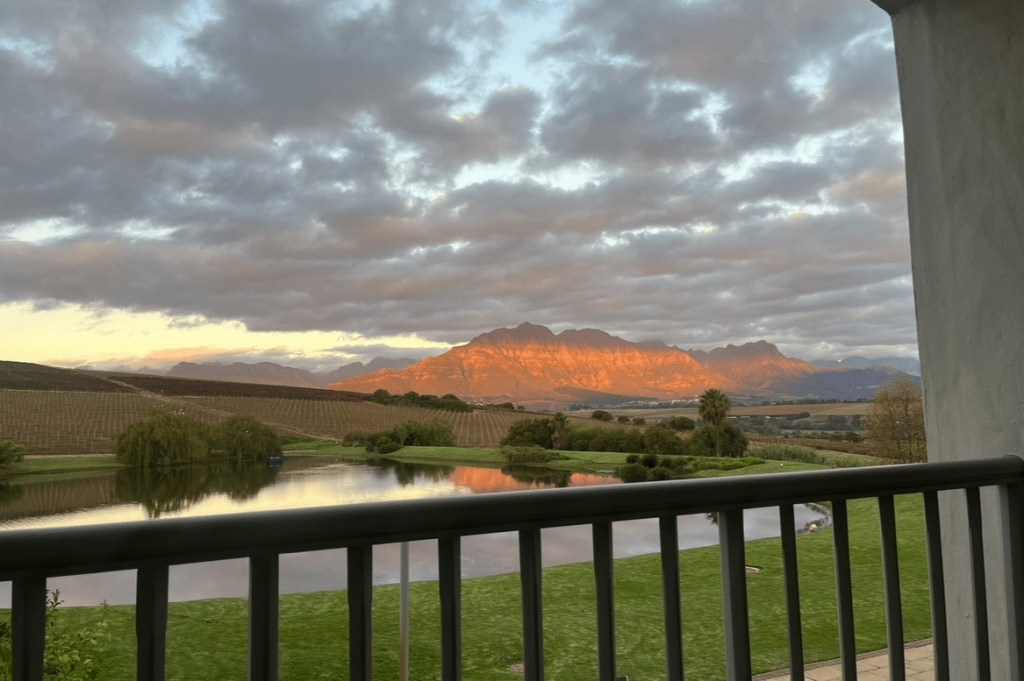
The view from our beautiful room. I grew up at the foot of this mountain range; we know one another well.

Autumn in the winelands is the Western Cape’s best kept secret: fires crackle and fiery-coloured leaves crackle underfoot. Mostly the sun still shines, but softly and politely. You want to be outside all day long and then, when the dusk chill settles, it’s delicious to huddle indoors, wrap yourself up, drink more of that Shiraz and eat hearty, nourishing dishes of lamb and beef and venison on whipped potatoes prepared with an outrageous ratio of butter to starch. These are the days of creamy carbs, of winds chasing slate-grey clouds, of thunderous rain showers and vineyards shining brightly in the last hours of the afternoon; of early nights and early mornings, crisp linen and dark, strong coffee. And if you can spend these hours with a friend or two; folk whose faces are as known to you as your own, in a place that feels safe and familiar even if you’ve never been there before, life becomes imminently gentler.
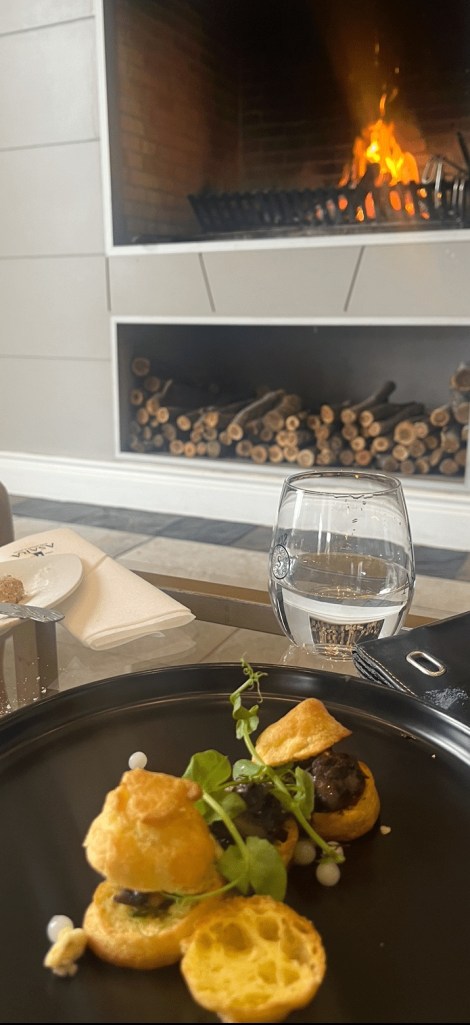
A friendly fire, snails in choux pastry and a velvety Pinotage.

As we age, old friends become rare as jewels: people who knew you when. In this case, the when was me as an awkward 15-year-old in an ugly, maroon uniform boarding the school bus, nervously looking for an empty seat near the back because the front seats were for the misfits which I believed myself to be but didn’t want to be seen as such. No seats to be had. A split second of panic. And then the cool boy, the good looking one people wanted to be friends with, who smokes openly at break and rides horses and looks a bit like Dave Gahan, beckons me to share his seat. He puts his bag on the floor to make space. This small gesture of kindness that happened amongst zillions of gestures in those deeply impressionable and angst-filled years stays with me. That horrible government school run by thick-skulled sadists who did everything to crush the spirits of kids like him and I, creative little humans, visionaries in our own small way. We gave them the middle finger, we did. We poured vodka into the Kool-Aid.

I dibs this table come summer.

Even now, 40 years later, I don’t see him as him, who went on to achieve impressive fame and success in his chosen career, I see him as the older boy on the bus, ever grateful for that life-saving moment. Now we are here to visit with him, mainly, and for a brief respite from the relentlessness of life. We are seated in a tall, serene room on a comfortable couch and plied with cold champagne and pretty cocktails, and just when we’re starting to feel peckish, a polite young man shows up with enormous trays of beautifully articulated finger food: tuna sashimi; lamb on a stick; French onion soup in a thimble. There is beef broth, oysters, prawn tempura, brie melted deliciously in a grape preserve. More champagne later, plates carrying even more delectable things arrive: snails in soft choux pastry; tongue with Dauphine potatoes; peppery spaghetti tossed with cream and chicken sweetbreads. We eat and drink and are merry. L’chaim: to life, love and ourselves.

The water was as cold as it looks but fresh and delicious, and we had the whole place to ourselves.

An old man with beautiful, snow white hair dressed immaculately in a lemon coloured sweater is positioned on a chair in front of the fire. He has either fallen asleep or died. The day is chilly and I want his seat, to watch the flames while we talk. I keep looking back at him, willing the undertakers to come but he sits on for an eternity.

The owner joins us for a chat. He is also a visionary; a straight talking straight man whose wrists are adorned in silver skulls and his manicured fingernails done in a pale pink gelish. I wonder what the farmers make of him. He doesn’t give a fuck. He also adds vodka to the Kool-Aid. He tells us about cigars, his passion, and his other passion, food – meat, hand-reared; homemade butter; bread he bakes himself using his own sourdough culture. It’s softer and lighter than any I’ve eaten. Every animal product consumed on the premises can be traced back to its source. He makes the jam and the marmalade himself from carefully selected organic fruit. Later we walk past a room with a cupboard glowing warmly in the gloomy afternoon. We look closer and see that the walls are huge, lit slabs of pink Himalayan salt curing the hanging meat.

It took me moving abroad to realise how special it is to drink wine in the place where the grapes were grown.

My friend gives us a tour of the premises. We’re a little bit drunk and the high heels of my vintage Michael Kors boots are starting to rankle. His signature black coat flaps in the wind and even as we look out at the Helderberg mountain range, under whose craggy slopes we both grew up, I’m reminded of London in the eighties and Depeche Mode and The Cure and Yazoo, the music of our teenage years, dark smoky dance floors, Benson and Hedges Special Mild. Always trying to escape, break free, buck the system. And we did. We hated those teachers and we let them know it.

My chom and I are very happy when we’re about to be fed.

Now we need to sober up before dinner so we take a dip in the icy pool. I imagine this place in summer: an endless round of rainbow-coloured cocktails, fluffy white towels, luncheons under the trees. ‘A Dutch couple come every year and stay for 49 days,’ I am told. Why 49? I wonder. The hot bath, after the cold pool, burns like acid. The young chef joins us at dinner. My daughter is dating a chef. I worry aloud about the lonely Saturday nights that will come to define her life. We see into the future in ways our children cannot but I have to hold my tongue. She likes him, she is happy. The hotel is launching a new restaurant, a set menu using the animal nose to tail. Wasting nothing, pushing the boundaries of South African cuisine. It includes ambitious dishes like beef heart biltong and liver ice cream. His eyes shine with excitement. I see a young artist, a creator. I express doubts about the ice cream but he assures me it will be delicious. I promise him we’ll come back to try it.
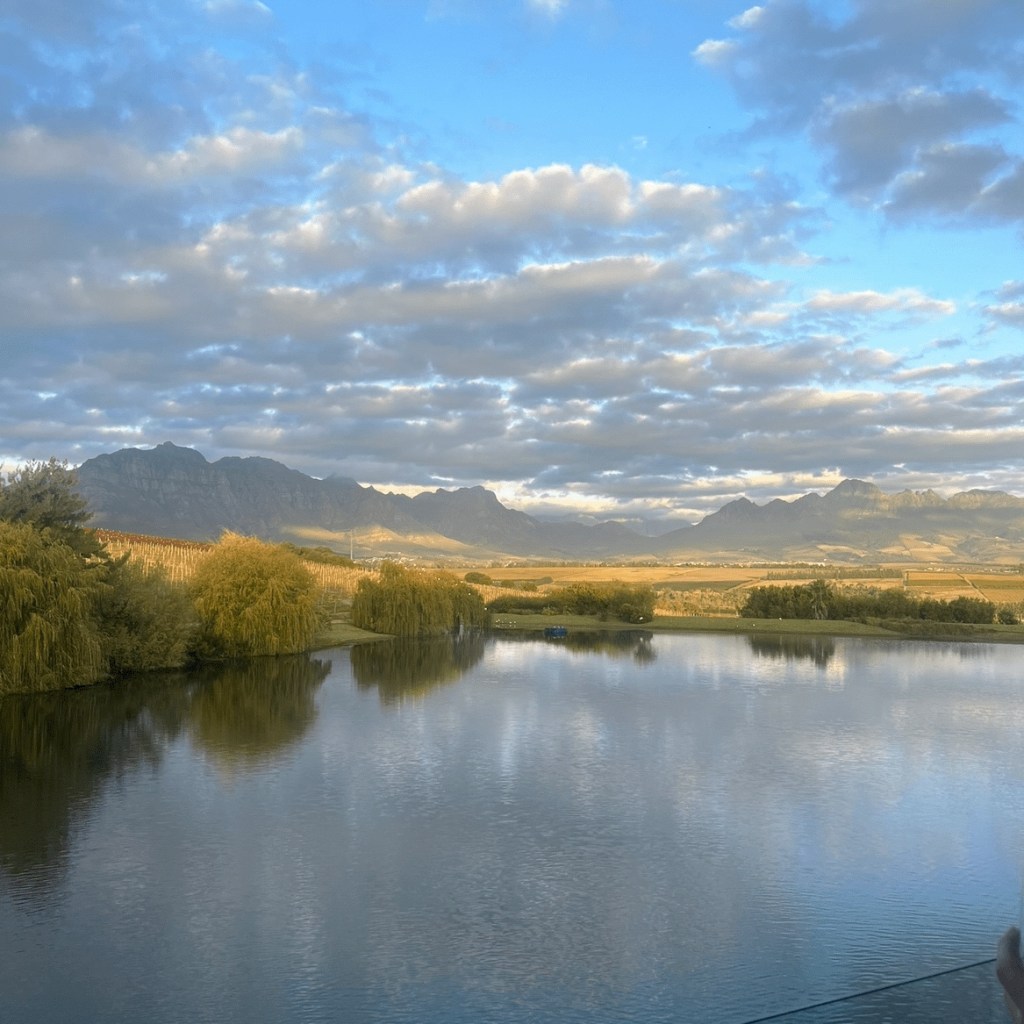
I’ve had meltdowns in worse places.

Later, in our room, I have a meltdown over the largeness of the pillows and the tightness of the sheet. In truth, everything is perfect and you can choose any damn pillow you want but I’m overstimulated, over-wined and need to lie down and sleep. My husband is used to this sort of malarkey and ignores me, as he should. In the morning the air is still and the mountains have changed colour. We are still far too full for breakfast so we eat everything on offer. I have to try the home-cured ham and special recipe marmalade. The Eggs Bennie is perfection, unctuous and velvety and glistening with homemade butter. I greedily eat it all. Barely an hour later they implore us to try the cinnamon buns with champagne and have some of their custom-made burgers but I cannot possibly eat or drink another thing till the following week or at least till we get home. The buns are gifted to us in a takeaway box.

Do love me a hotel breakfast, especially when the meat has been hand-reared and cured right here on the premises.

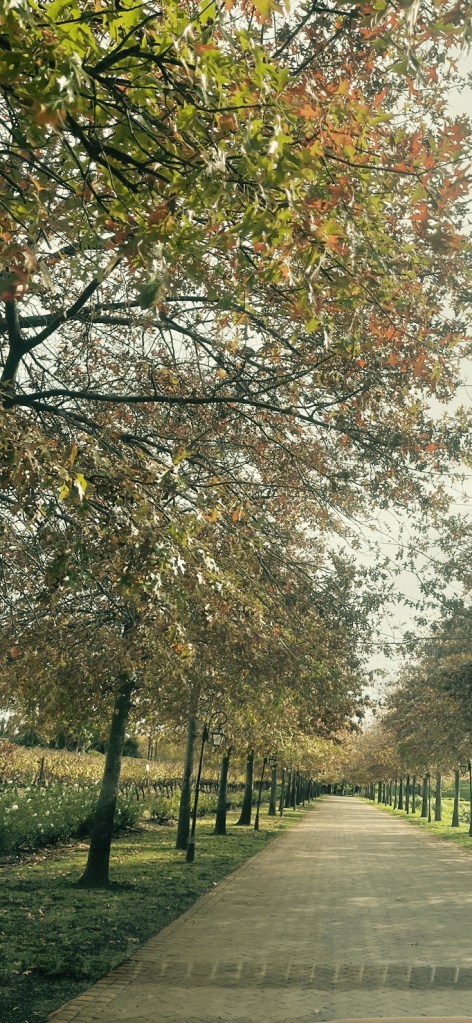
My husband buys half the wine cellar, pretending it would be rude not to. People appear like magic fairies when it’s time to load the car. They whip our luggage out of our hands as if the very notion of us carrying a thing is beyond their comprehension. I like it here. They get a lot of things really right. In my next life when I’m not a writer maybe I’ll also come for 49 days. We drive down the tree- lined avenue headed home to laundry and a fridge that doesn’t stock itself (wtf). I’ve been listening to this song on repeat called Goodbye Horses. I read somewhere that when you do this, listen to a song over and over again, it’s a sign you might be on the autism spectrum. It would explain why I’ve always felt like an outsider; like I didn’t quite belong. I mean, it doesn’t matter, it’s a label, but sometimes it takes 50-odd years for us to figure out who and what we are and once you know you can be a little bit kinder and more forgiving of yourself and the many mistakes you have made.

Chandeliers in the wine cellar. Obviously.

A grey Sunday on the N2. Smoke hovers over the townships and Table Mountain is obscured by a thick blanket of clouds. Some youths kick a football about. Winter, where life gets more real. A cold front is headed our way, I read, and masses of rain. The townships become lakes but our house is high and dry. It’s a weird place we live in, so little and so much existing side by side, and all of us trying to figure it out. Trying to get by in our various circumstances. I’m grateful for love and I’m grateful for friendships that last a lifetime. No matter who and what we become in the end, deep down we remain 15, awkward kids on a bus hoping for a friendly face and for someone to offer their seat. Goodbye, horses, I’m flying over you. 

A Sense of Place

Wherever I go and whatever I do, this sense of place and belonging. Not everybody, I notice, is as connected to their land of origin. My husband is a nomad, putting down shallow roots wherever he lays his Cape Union Mart hat. I believe he could live anywhere; he’d make a decision and thrive. My roots are more discriminating; they curl up their ends in protest, unwilling to embrace strange, new soil. I lived abroad like a spectre; not really being there, moving slowly as if in a dreamworld, vaguely surprised that people could see me.

Now we live in Green Point close to the stadium where everything, lately, happens. This makes traffic a mare from time to time, like a few weeks ago, the weekend of the Cape Town Marathon coinciding with a rugby event. I woke up to the 7am sounds of a commentator welcoming the day and the athletes. I brewed a cup of strong Swedish coffee and opened the windows wide to see our strip of slate-blue sea. From my bedroom window you could travel, in a straight stripe, to the wild and windswept shores of Robben Island. On clear days I watch its waves crashing.

Then, the opening strands of Juluka’s Impi – of course. Our Zulu warrior song for the warrior scatterlings flying over Table Mountain National Park, tracing the footsteps of everyone’s early ancestors, pounding the tarmac of our city streets, fighting inner demons, fighting themselves to keep running, keep running, you can do it. Our metaphor for life down here: keep running, warrior, you can do it.

Impi! wo ‘nans’ impi iyeza

Obani bengathinta amabhubesi?

(Warrior! the army is coming!

Who here can touch the lions?)

And, I’m home. Johnny Clegg is singing to me from beyond the grave, alive as he’s ever been, flying up over the mountaintops, giving the runners courage, reminding us of our fighter spirit, telling us we belong.

Nothing things become things. Maybe because I was uprooted for so long. A 4pm walk in Green Point park through the alleyway of trees that takes you straight down to the lighthouse (the oldest in South Africa) and the sea. Pale spring sunshine and a slight nip in the air. Winter exiting but not quite out of the building. Three Xhosa nannies with their push-chairs and small charges. They walk slowly, ambling along. Unlike me they meander; now stopping for no apparent reason. Now talking loudly, a hand on a generous hip. I wish I could understand what they were saying but we white people are limited when it comes to language. My friend, Nolo, speaks five languages fluently without thinking anything of it. 

Having grown up during the darkest days of apartheid it always amazes me to see the ease with which South African people mix. There’s a warmth and a friendliness and a willingness to connect, to reach out, to bridge divides. I see it around me all day long. The offer of help, to carry a bag, to give a lift, to donate to a child. Say, Molo, Sisi before you ask for your chicken strips at Spar and you get the biggest smile. Order the samp and beans and you’ve got a friend for life. 

At the heart of us humans lies the most fundamental need of all our of needs and that is for connection to other humans. In the cool, northern parts of Europe this connection has become lost. People are too self-sufficient; the need for one another is obsolete and it has resulted in a deep loneliness. You see it on their faces, especially during the winter months. Sweden is the nation with the highest amount of people living alone, a massive 47% of its 10.4 million population. 

At the end of the working day they let themselves into their (mostly) rented apartments. Nobody is waiting to greet them. No delicious smells emanate from their small kitchens. They stand in the hallway’s semi-darkness and hang their coat on a hook. They walk through the rooms, alone, turning on lights. They warm up their dinner-for-one and eat in front of TV. Advertisements paid for by the state remind Swedish people to say hello to their neighbours. A hundred meters up from our apartment in Malmö is an area of road where people cross to access a small town square and a walking street. The crossing is unusually wide. After wondering about it for years I asked a local why it had been designed that way. To encourage people to interact with each other, was his reply. 

Back in Green Point, going anywhere by car on event days is unthinkable so I decide, if I can’t beat them I’ll join them. The main road is packed with spectators. The first runners, the serious athletes, came in hours ago. These ones are tired, they’ve been running for five hours and the pain and exhaustion is evident on their faces. Many don’t look like athletes and you wonder at the determination, the inner fire that makes them do this, makes them persevere. The training sessions after work, already tired from a long day of traffic and complaints. Getting out of bed early on weekends to meet their friends, to run. I see a husband practically carrying his wife over the last 100 meters. I see a white lady and a black lady somewhere in their sixties, holding hands tightly, willing one other towards the finish line.

A woman on the sidelines is clapping and singing for these amateur runners. Initially I think she’s marathon staff but after a while I realise she’s just a spectator, spurring the competitors on. She sings, here we go, ruh-nuhs, here we go! Only two hundred meters to go! You’ve got such a beautiful weather in Cape Town today, thank the almighty for this beautiful weather! She reads the logos on their vests and calls them by name, fist-bumping those who still have the energy to look up, to lift their arms: Go, SAPS! Thank you SAPS for fighting the creemeenals! Go, Rondebosch Running Club! You can do it, Durbanveeeel!

Tired runners and their families walk the short distance back to their cars. Tonight they’ll make a braai. The aunties and uncles are coming; maybe a neighbour or two. They’ll bring tupperware for barakat so nothing goes to waste. Back to their houses in Mitchell’s Plain. Bloukrantz wood, klippies and coke and a barking dog. Auntie Salwaah has made her famous ‘Rille Gebak’ (spiced doughnuts). There was a special on lamb chops at Food Lover’s. They’ve been marinading all afternoon in shishamyana spice and love. Money is tight; there are no extras. But it’s lekker. It’s oraait. 

That uniquely South African smell of braai drifts across the city’s neighbourhoods, over the vibercrete walls, satellite dishes, guava trees, Toyota Cressidas. Epson Salt for aching muscles. Wyn vir die pyn. Kaptein, Span die Seile is playing somewhere. The other night, on the way back from the jol, my 17-year-old daughter and her friends asked the Uber driver to make a stop at McDonalds. They ended up having a picnic with him outside on the lawn. He wanted a Big Mac Meal. This stuff, the very marrow of South African life day-to-day, this doesn’t make it onto the news, but this is where we really live. Here, with our people.

Going Bosjes

My travel writer friend, Keith Bain, and I going on an adventure (actually, he does this kind of thing every five minutes, but I was pretty excited to get out of the house).

I hadn’t been on a press trip in years. Decades, even. Independent travel for stories, sure, but not the old school kind where you meet in a hotel for drinks and then get driven somewhere on a bus. In the old days (how did the nineties become the old days?) glamorous travel was part of the deal, and made up for the terrible wages we journalists got paid. There was so much money in print media it was nothing to fly to Joburg for lunch. You’d be back by 6pm to go to the next thing. I was sent on a luxury cruise to Australia when I was too young and green to know that my cabin, the size of a modest hotel suite, was huge by maritime standards. Once I stayed at a game lodge on the Zambezi where the bedroom had only three walls. From your bed, you looked out over the coffee-coloured river and fell asleep to the sound of hippos splashing in the shallows. The Victorian bath was outside on the deck, and when you went for breakfast under a giant Frangipani tree somebody walked behind you and raked away your footsteps. 

The Bosjes Kapel (or chapel) is one of the most recognisable architectural feats in SA. Inspired by a psalm, it was designed to create the impression of a bird floating on water. It’s breathtaking, inside and out.

‘When last were you at Bosjes?’ my friend, Keith, asks me as we cruise along the N1, and he’s surprised when I say never, but it’s not surprising. Over the past few years (thanks, in part, to Covid) I’ve discovered that it’s not actually necessary to ever leave my bedroom. Plus, I’ve always had a mental block about traveling beyond hospital bend. Nothing good ever comes of traveling beyond hospital bend (unless it’s to go to cafe Ohana or visit my friend, Philippa). This is especially true lately, with Hitler aka Putin blowing up gas lines all over the show and Europe entering a massive energy crisis. Late at night, just before I turn off the light, I scare the daylights out of myself by asking Google what the chances really are of a third world war. The answers I get are not reassuring. Who woulda thunk South Africa would end up the safer place to be? 

Our game drive up high up into the majestic Waaihoek and Slanghoek mountains. Just look at that light.

Earlier in the week I tried to find out exactly where Bosjes was, but all I could find was the Breedekloof Valley. I didn’t know there was such a thing, but I could see that it wasn’t far from Worcester (which I only just discovered, thanks to David Kramer, is pronounced ‘Worcester’ and not ‘Vorcester’) and I definitely know Worcester because my friend, Leslie, comes from there and there’s a road in that town called de la Bat which makes my other friend and I laugh because it reminds us of a trip we took together to Greece, the details of which can never be divulged. 

By the time we’ve arrived and done a tour of Bosjes’s extraordinary primary school (built by the Bosjes Trust for the children of the farm-workers and which is so modern and sustainable and lovely it makes the modern, lovely schools of Scandinavia look sad), we are veritably perishing of thirst and words. Our intuitive host clocks this and makes a quick itinerary change so that instead of a garden walk we are settled on comfy couches beside a pool David Hockney couldn’t have done better and plied with cold Bosjes rosé and tasty butternut wraps. Since I went freelance I rarely hang out with journalists and it’s a joy being with kin again; folk who understand why the word ‘nestle’ should be banned from every travel piece, ever. Also, journalists drink a lot of wine and anyone who does this is my friend.

So much space in our back garden. And, breathe.

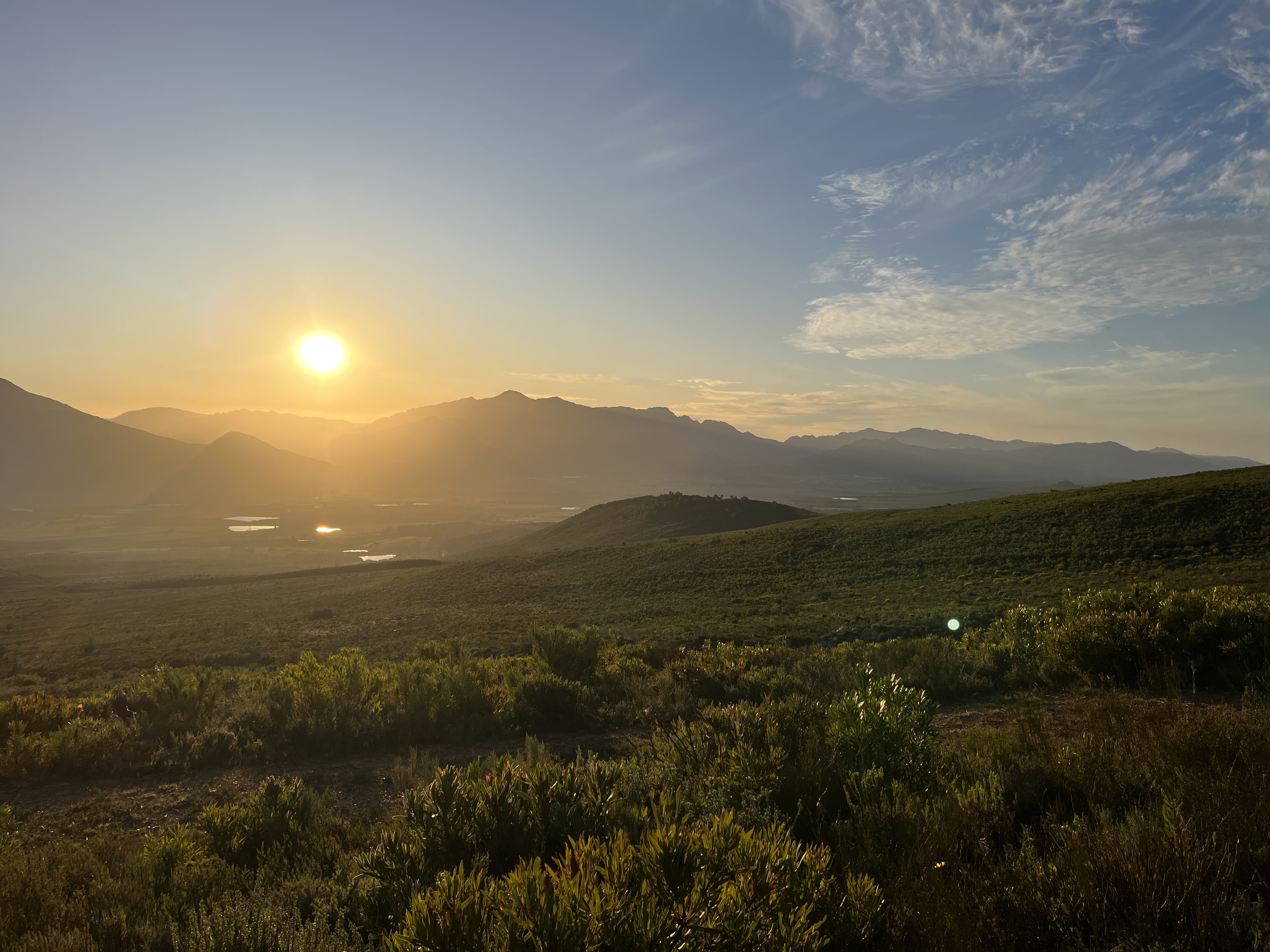
Before dinner we are taken on a game drive up into the Waaihoek and Slanghoek Mountain ranges. The jeep climbs up and up a steep, bumpy road. A pair of giraffe startle at the sound of our vehicle. The sun is low on the horizon and the protea and fynbos have that otherworldly golden glow, like the world is steeped in syrup. Someone spots an albino springbok. It’s springtime, so babies abound. I wonder what animals roamed here before the people came. Probably elephants. Definitely lions. Higher and higher we climb, past pin-cushions and strange rock formations and dams that need replenishing but our rainy season has come and gone. It’s looking to be a dry summer and our guide explains that they’ll have to source water from the Breede river. In this new world we inhabit, water is a scarce resource. 

The guide informs us that a new species of plant was recently discovered right here on these slopes. Of course it was. This is Africa, the wild frontier. There is so much space in our back garden it almost blows your mind. So much sky, so much air, so much room to move. When I lived in Europe I used to feel sometimes like I couldn’t breathe. The sky was too low and the air had lost its sparkle. It’s dark and cold on the drive home and I’m happy I brought the puffer jacket I bought a hundred years ago for a ski trip where I got in such a rage I threw my skis down the slope and sulked for the duration (never let your husband teach you how to ski, it’s very bad for a marriage). Northern Europe is frigid but you never feel cold because you’re always dressed for the weather. In Africa you think it’s going to be hot all the time so you frequently freeze half to death. 

Happy for my puffer jacket. Sad it reminds me of the time I had a tantrum.

Bosje’s beautiful new rooms (the hotel has recently undergone a major renovation) look out into the darkness of the African night, plains and emptiness that curve upwards and become mountains, wild and untouched as they have ever been. They’re stylish, spacious and very inviting; you want to kick off your shoes and hang out; light an atmosfire, pour yourself a large glass of red and look out into that nothingness and wonder, what creatures lurk? What spirits of the veld and mountains roam these desolate stretches? I’m tempted to run a bubble bath in the huge and gorgeous bathroom (these rooms have a separate bathroom and loo which is always a nice touch), but I think of the water thing and also, I know the chef is eagerly waiting to feed us so I join my new friends in the dining room. 

I’ve already made a mess of the room. It was gorgeous before I got there.

There’s something about being in the country that makes me incapable of ordering anything other than lamb, and I even though we are not quite in the Karoo, we are close enough that the lamb chops on the dinner menu are likely to be excellent. They are. The fat is crisp and perfectly rendered, and they’re served simply – just as they should be – with perfect roast potatoes, green beans and warm calamata olives. The creme brulée dessert is topped with a yummy apple compote and some very nice crunchy things I forget to ask about. Back in my room, just as I am settling in to relax and admire its gorgeousness, the lights go out. Ah. Load-shedding, of course, even out here in the sticks. And then within about 5 seconds light is restored. It’s funny how generators have become such a thing. I know all of South Africa is furious, but if it’s any consolation, my friend Leslie (the one from Worcester with a ‘w’) just Whatsapped me a few days ago to say that load-shedding is a possibility for Sweden, too. She would know, she lives there. The world has gone quite mad. 

Karoo lamb. Just another reason not to move to Perth.

In true South African style (we do hospitality exceptionally well) everything at Bosjes is lovely: the pool is gently heated when I take a morning dip; the masseur has thoughtfully lit a fire beside the table because the morning air is chilly; the breakfast mushrooms have been fried in heaps of real butter. The garden walk towards Bosje’s famous chapel (even if you don’t know, the place, you’ll know the chapel) is a beautifully designed mosaic of succulents, Renosterveld, indigenous water plants and fiery coral trees. In the middle of nowhere, all this elegance; all this beauty. Such vision and creativity went into constructing this space. Down here we are good at making something out of nothing. It’s a spirit borne of surviving the harsh, wild bush. Eat or be eaten. Never rest on your laurels. The grand old homestead which dates back to 1790 is a reminder of the ‘can do’ spirit we South Africans are renowned for: let’s make a farm here in the middle of nowhere! Let’s transform this arrid land into a Garden of Eden! And then, let’s build a floating chapel so lovely and unlikely it will make people gasp when they see it. 

In travel writing ‘oasis’ (like ‘nestle’) is an inexcusable cliché, but Bosjes really is that. You step into another world and forget, for a while, that the whole planet has gone ‘bossies*.’ Not here at the foot of the mountains in the land of perpetual sunshine where, when you turn off your bedside light, the silences stretch to forever.

The beautiful, stately Bosjes homestead built in 1790.

Facts:

  • I love my job
  • I’m happy to be in South Africa while the world is imploding
  • Bosjes is the most perfect place imaginable for an intimate wedding/renewal of vows/big birthday celebration/romantic weekend away
  • for the setting, quality and service it’s very affordable
  • It has a well-stocked library, a couple of beautiful shops on the property selling bespoke items (you NEED their dressing-gown) and plenty of excellent Bosjes wine (I recommend drinking it beside the pool)
  • there’s a café in the grounds that serves delicious coffees, pastries, bubbly and lunch-y things so you’re sorted for meals
  • the spa is heavenly
  • the garden is a magical place; spend as much time in it as you can
  • even if you don’t get married there, the chapel will restore your faith in humankind and make you happy to be alive

*crazy

The Unbearable Lightness of Sweden

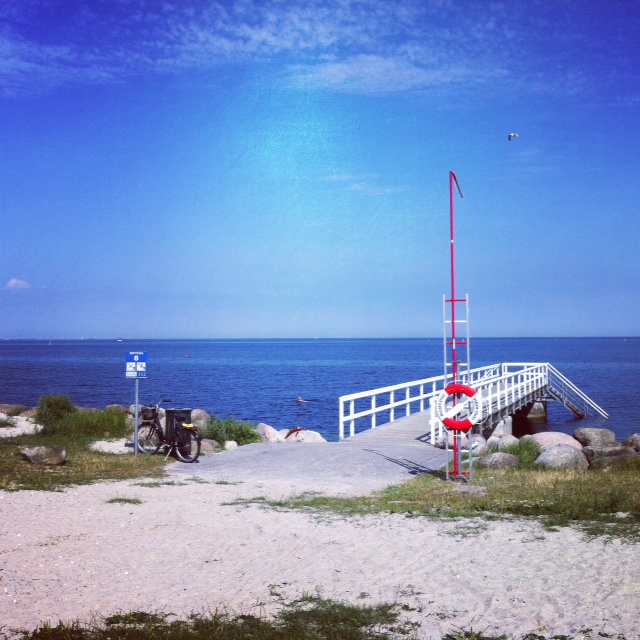
pic of sweden sea

One of the more interesting lessons I learned about living abroad is that, no matter what your experience of the country in question, it claims a portion of your soul and becomes a part of who you are so that, when I don’t make it back to northern Europe for a few years, I start longing for things I never knew I loved – the smell of snow moments before its dry flakes appear in the sky; a sun that’s too lazy to move from the horizon but instead waits distractedly for clouds to hide its face; forests so thickly green they retain centuries of rain. And as we cross the Öresund Bridge from Denmark into Southern Sweden it doesn’t feel like coming home, exactly, but the feeling is one of warmth and familiarity; kind of like putting on a favourite sweater or a thick, comfortable pair of socks. And driving through familiar suburbs I remember days and moments and feelings and a time where I was lost and had to look for myself in foreign-sounding parks and on streets and squares where my feet clocked endless miles as I walked in search of direction and meaning in a city I’d never heard of until, by chance, I found myself living there with a man who had somehow become my husband and children who – bizarrely – belonged to me.

And on this recent trip to midsummer Malmö I was made aware of something else, too – how lightly people live in this stylish, wealthy part of the planet. In a place where everybody has everything one is allowed the luxury of believing human beings to be inherently kind and inherently good. The world up there is gentle, and while it’s not without its problems, life makes sense and justice – for the most part – is a concrete, dependable concept. Behind triple-glazed windows its citizens are shielded from some of the harsher realities of the world; facts of life we South Africans are not at liberty to ignore because they knock on the windows of our cars while we wait for the lights to change and huddle under blankets in doorways through the wet Cape winter. And – especially as I grow older, less certain and more acutely aware of the contingency of life and how, at any moment, everything I love could be taken from me – I understand the seductiveness and the temptation of leaving this school of hard knocks with its illogicality and relentless sunshine to merge, instead, with the soft greyness of Europe or elsewhere; to live in a place which cares for its people; where you aren’t looking over your shoulder all the time and it’s not always a pleasant surprise that your car is where you left it.

I understand in a way I didn’t before why people make this choice, and in a way I envy their ability to leave and put Africa behind them because, God knows, there are places to spend your days that are easier on the psyche. Where not everything is political; where at any given moment you are not wondering when the house of cards will come crashing down; justifying your (obviously sado-masochistic) decision to return when you could have left for good. And as I swam in Sweden’s warm, clean ocean where the scariest thing I might encounter is a pair of beautifully groomed swans and cycled through greenly manicured parks where the flowers are changed along with the season I wondered to myself why I couldn’t find peace in the wonderful peacefulness of this place; why – like so many others have done – I couldn’t surrender to its beauty and grace but had to fight so hard to return to a country I have no right to love as much as I do, nor will ever love me back.

And – truth be told – I didn’t want to go back to South Africa this time. I loved the summer sun, hotter than I’ve ever felt it; not like the burning spear sun of Africa, but like a thick, warm blanket, both delicious and a little too heavy; I reveled in the long, sultry, champagne and salmon-filled evenings and the sophistication of the supermarkets and the cleanliness and how courteously people drive and how you can cycle everywhere and how good the water tastes and that soon it’ll be time for the annual round of crayfish parties and for picking mushrooms in the forest and the trees in the parks will be set alight with the colours of autumn. And yet I continued to experience a sense of mutedness; like swimming underwater or walking through thick fog. A feeling – for better or worse – of being somehow removed from reality. Like the ‘real’ world was happening elsewhere, on some other part of the globe. High Level Road as you drive towards Sea Point. And I suppose this is why – as much as those climes charm me – as I gazed out of the aeroplane window and saw the blue of the African sky and the ugly façade of Cape Town International Airport I felt unexpected tears prickling my eyes and, from nowhere, a sob rising in my chest. And for this reason, I guess, I am destined to stay here on this ship as it veers, off-course, into scarily unchartered waters and hope, like the rest of my kind, that somebody, somewhere will save us.