Gaaning Aan About isiXhosa Again

A few weeks ago I went to the Baxter theatre to see a play someone who reads my blog urged me to go and see called Death of a Colonialist. It’s about a white history teacher in Grahamstown who gets a little obsessed with the Xhosas and the frontier wars and whose teaching methods, as a result, get more and more unconventional until he’s removing his shirt and covering his face and torso with red ochre like the warriors used to do before going into battle and – to the bemusement of his pupils – emulating battle scenes in the classroom. And the play is multilayered and has many themes – white voices and their relevance in the present day, the role power plays in our recordings of ‘history’, the deep love for a country which isn’t, by rights, ours and the emigration of young South Africa people. And it’s a very apt piece of theatre as it addresses so many issues we’re dealing with right now, and I related to many of the demons the protagonist was battling.

As we entered the auditorium this music was playing, Xhosa songs sung by men with deep voices, a magical sound resonant of the earth and the red sand and green fields and rivers and the overarching African sky. It was a sound less like people and more like ancient and forever, and again I started to think of this language issue because – like we saw in the case of Afrikaans and how this new, malleable language was modified and used as a weapon of power and oppression – the words we speak and the way we speak them are what ultimately constructs our reality and defines our world. And what I don’t get is why, in 2014, 20 years of democracy later, my daughter in Grade Four is instructed in Afrikaans three times a week and in isiXhosa, one. And I love that she’s learning Afrikaans, but one isiXhosa lesson a week is just not going to cut it. She’s not going to master this language beyond the sad, inadequate molos and usaphilas I was taught at my apartheid regime school back in the year dot.

And I don’t understand this decision by the Education Department because – if you’re going to call South Africa your home – isn’t that language actually the most important one to know? Because can we ever really attain equality with people when they are consistently having to compromise and speak to us in broken, accented English while ours is all proper and hootah hooh when the least we could do is meet them half way and speak crappy isiXhosa back? Implicit in these interactions we conduct in our mother tongue while the people we’re speaking to have to struggle and use bad grammar are assumptions and something very much like arrogance. And if we were all – and I include myself totally – were that committed to change in this country, to integration, to real egalitarianism, wouldn’t learning Xhosa be the very least we could do?

Because language isn’t just about words – it’s about concepts and ideas and ways of interpreting the world. In many ways it holds the key to who people are inside. Language unlocks belief systems and unveils truths about how reality is perceived. As those of us who speak Afrikaans know, it’s impossible translating this language into English, especially in its orginal Kaaps form. It just won’t bend the right way. While you could spit on Denmark from Sweden, the different way Danish and Swedish have developed tells you a lot about the people you’re dealing with. In Denmark, for example, the fact that there is no word for ‘please’ is an important clue that these folk are direct, no-nonsense types who like to call a spade a spade.

When you speak to a Swede, by contrast, not only will they say please (‘snälla’) and thank you very much (tack så mycket) a lot, their sentences are peppered with the word ‘käns’ (pronounced shence) which means ‘feel’. Being generally more sensitive than their cousins across the ocean, for Swedes feelings are paramount, and you’ll hear a lot of ‘I feel…’ or ‘how did that feel?’ in conversation, whereas in Danish the equivalent word doesn’t exist. In that language, instead of a ‘käns’ there are words for ‘I think’ and words for ‘I believe’ – which tells you they’re less interested in the emotional aspect of things.

And – like most of us lazy, swak white South Africans – I don’t know isiXhosa so I can’t use examples from that language, but by the way many Xhosa people speak English and Afrikaans you can hear there are vast differences and from that infer that a lot is getting lost in translation. And while I love the sound of this language and have a read a little bit about how complex and nuanced it is, and sometimes when I drive I practice the different clicks to myself and think it’s big fun to say, ‘hayi suga wena’ and ‘jonga!’, I don’t google Xhosa lessons in Cape Town and go and sign up and learn how to speak it like I should. And I don’t know why I don’t. Laziness and intertia, I suppose. But I think it really would make a difference.

I couldn’t find the exact song on YouTube (it’s called ‘Nontokasi’), but this has a similar sound.

Café Mischu in Sea Point

cafe mischu sign

It’s harder than you might think, living in this cool city, coming up with cool places to go for coffee which you’ll also want to blog about, so when my friend, Craig, suggested Mischu in Sea Point, I thought, hurrah, yes. Mischu is opposite the Spar, and the reason he likes going there – other than the great coffee – is that he says it’s funny watching women have conversations when their faces don’t move. And while on the day we were there I didn’t spot any of those and I really liked the way they’ve done it up and it’s the kind of place you can definitely hang out with your Americano and watch the world go by, it got me thinking about this whole botox thing and why I have such a problem with it.

And it’s not because I’m not vain or don’t care about getting old and ugly. I care about it much, and I spend ages in the mirror worrying that my teeth aren’t white enough and that my sun spots will eventually take over my entire face and I’ll look like an alien and I hate when I gain weight and my clothes cling. And in the interests of vanity I bleach said teeth and I eat salad when I want pasta and wear BB cream every single day while pretending I’m au natural, but there is just something about the botox thing that makes my toes curl.

It’s like I have these two opposing forces where the one is super invested in looking good at any cost, while the other says ‘fuck that for a lark. I’m a woman, not a girl. I’m amazing just as I am, and I don’t have to buy into that twisted conception of what female adults are supposed to look like. I don’t have to be skinny and hairless to be accepted, and I certainly don’t have to look like I’m 25 in order to have value in this world.’

And while I’m incredibly fond of the vacuous, shallow version of myself and have the bags and shoes to prove it, it’s the other voice that I pay attention to because she feels closer to the real me. Because I am more than the sum of my parts, and I can hold my own intellectually and in spaces that would have scared the daylights out of me when I was in my twenties. I might have had fewer crow’s feet, but I was also rather dof and uninteresting by virtue of not having done very much. Your average 20-year-old has a lot of living to do before they make interesting dinner companions and, honestly, I value having seen some things in my life and having an opinion very much more than I do looking perfect in the mirror.

And fuck knows, when you get to 40 you’ve seen some things. I’ve had my heart smashed more times than I care to count; I’ve given birth twice without so much as an aspirin to help a girl through (what was I thinking, right?); I’ve held sick, feverish babies through the night and got up at the same time the next morning to do the other things that needed to be done. I’ve made a life for myself in a far away, cold country and endured the relentless heartache of being away from my home and my tribe. I’ve written things that have made people laugh out loud, and things that have made people so furious they wanted to lynch me. I’ve made good choices and terrible choices, and I’m not more special than anyone else, I’m just alive in the world, as we all are, and getting on with this journey I’ve picked out for myself.

And to deny my face the lessons I’ve learned – to pay somebody money to inject poison into my head so that when I’m really, really happy or really, really sad you’d never know – feels like a travesty. Worse, it feels like betrayal to myself, because I have earned these lines, every single one. These lines are living. These lines are what I have lived and the things I have seen and done. They are drinking wine late into the night and talking with my husband about what matters. They are shouting in rage when he doesn’t get a thing about me and I can’t believe how hard it is being married. They are the terror that he won’t get off the plane and I’ll lose the love of my life because he is the coolest human being I have ever known, and they are shrieking with laughter when my maddest friend picks up her phone and talks in the same funny voice that used to have me sent outside the classroom in Std 7 for my uncontrollable hysteria.

They are worrying that my children are safe; sadness that my dad doesn’t feel good about his life; hoping my mom gets home safely when she works late at night. They are consoling our daughters when their daddy goes overseas every month for work, the angst that I might have offended a friend and the secret 3am fear that I’ll never write that book. Maybe it isn’t as ‘beautiful’ as the smooth, blank faces you see on younger women, but to me its beauty lies in something else – in its naturalness and its grace and the message it sends to my daughters about what really matters in life. And it’s not whether their mother has a wrinkle-free forehead. It’s not the hope that people look at me and go, ‘wow, she looks great! How does she do it?’ And I never think that, anyway, when I see someone who’s had work. I feel pity and a kind of sadness for what she thinks she has to be to be loved and to feel okay in the world.

And maybe I’ll change my mind in 10 years when the passage of time really starts marching across my face, but honestly I don’t think so. I think that other me will nip that thought right in the bud. Because the kind of beauty that comes of knowing who you are and what you have to offer doesn’t exist at the end of a needle. Anyhow. I think I got off track. Café Mischu does kiff coffee. My wrinkles and I will be back.

The service is warm and friendly, and the coffee is goo-ood.

How the Contraceptive Pill Made Me Crazier Than a Rabid Iguana

Me, just crazier.
Me, just crazier.

I guess I should have seen it as a warning from the universe when I told one of my best girlfriends that I was going back on the contraceptive pill and she said, wow, that pill makes me insaaaane. And this from a gentle, chilled out little Piscean who is about as not insane as they come. But instead of thinking, ja, insane could be a problem, I confidently assured her – as I myself had been assured – that this new generation of birth control pills is totally different from its predecessors of 20 years ago, and even if the ones from the olden days disagreed with you for whatever reason, these new low-dose numbers were a veritable stroll in the park, hormonally speaking.

So, as I swallowed that first small, pink tablet and sat on the couch waiting to have a thrombosis (the side effect they do remember to warn you about), the idea of going bat crazy was the last thing on my mind. Since they said it took seven days to be effective, I waited, and while waiting I monitored myself and how I was feeling – just in case – and up to day six, everything was pretty hunky dory. But then came day seven. This was also my daughter’s seventh birthday and, since I’m not good on not-enough sleep and as we were having friends arrive to stay that same day and it was going to be busy and hectic I asked her, the night before, to pleeeease try to wait till 6am before she woke us up.

But, she is seven and her birthday is the biggest event of her year, and 6am is a long time to wait when you’re that young, so it was still dark when her and her sister snuck into our rooms and announced that the gift opening was about to begin. Normally I would be a little grumpy but pull myself together, make a strong pot of coffee and get immersed in the excitement of her big day. Instead, I was a thundercloud. Rage doesn’t even describe the blackness of my mood. My family watched in surprise and bewilderment as I thumped about, furiously blowing up balloons, angrily icing the cake, going on a tidying rampage and then crapping on my husband for something he did six weeks ago. And still (duh) I didn’t put two and two together.

It took all the way till the following day, as I sat sobbing in the front seat of the car on the way to my favorite beach in the world on a perfect-weather Sunday morning where we were going to boogie board, play bat and ball and have coffee with Cremora and slap chips for breakfast (I mean, does life get any better?) for me to go, okay, hang on a dang moment – what the fuck is going on here? And then the penny started to drop as I realised I recognized this feeling – this odd, prickly and difficult-to-describe kind of malaise where you feel like you don’t belong in your skin and even though nothing different is going on you are madly on edge as, at a speed that stuns even you, wild anger gives way to tears and sorrow and sadness.

Because this is how I felt for most of my twenties on a triphasic pill which had me, towards the end of the month, wanting to rip my own hair out in chunks. And nobody presented emotional disturbances as even the vaguest possible side effect, so how was I to know it wasn’t just my personality? And I can be mad, don’t get me wrong, but my mad and I go back a long way and we are very well-acquainted. I know what it’s about and what triggers it (thank you, clever therapists), and for the most part – give or take the odd irrational moment (which generally happens when I’m tired and hungry) it doesn’t make itself known very often anymore. And my madness definitely doesn’t involve indiscriminate rage and absolutely definitely never ever does it involve depression. I get sad like everyone else, but my sadness is about something. For the most part I’m cheerful and resilient and upbeat.

That person crying in the car on Sunday morning? That was not me at all. And it’s just kind of weird that no-one warns you about this side effect. In fact, I was assured it was all psychological (a friend’s gynae told her her lack of libido since taking the pill was psychological, too. No, it isn’t, stjoepid!) The second I got home from the beach I went online, and I was astonished at the amount of information and stories shared by women who had exactly the same thing happen to them – going from (relatively) normal and together to stark raving lunatics, and the longer they took the pill, the worse their symptoms became. And they all describe it in the same way: they feel like they’re ‘going crazy.’ Then I read about how women on the birth control pill show activity in different areas of their brains to women not on the pill and how, in fact, studies indicate that they make different choices in partners than their non-pill-taking counterparts, foregoing thrill-seeking, adventurous men for quieter, more stable types.

Which tells you that it is, in fact, having an effect on us, and given the complex nature of the endocrine system and how much the pill changes the way women’s bodies work the surprising thing would be if it didn’t do anything weird. And I’m not saying it has this effect on all women or that you should stop taking it if it’s working for you. I have several friends who take the pill very happily and love it. But I also have a handful who won’t touch it with a barge pole for the same reasons as me. I stopped right away, and today is the first day I’m really feeling 100% myself. And I think this potential symptom should be presented as a real possibility and not swept under the rug by medical people who don’t believe it/think it’s exaggerated/haven’t encountered it personally because this type of meltdown, when you’re not prepared for it, is actually really pretty scary and horrible. And life for us chicks is weird enough as it is.

So, if nothing out of the ordinary is going on in your life, but your recent switch to the pill has people removing their children to a safe place when they see you coming you might want to consider that it’s not working that well for you. We’re all different, and some of us are more sensitive to hormonal changes than others. That’s just the way it is. You know your body – listen to it. If it’s not good, stop and find another way. The convenience just isn’t worth it.

Dance – you’re Afrikaans!

Johannes Jacobus Botha as a young man of 26.
My grandpa, Jan Jacobus Botha, as a young man of 26.

I think the two most surprising things I experienced travelling and living ‘overseas’ was that everything was not, in fact, cooler/better/more fabulous than it was in SA (we Saffers suffer from a terrible inferiority complex in that regard), but also how deeply, madly and uncompromisingly South African I became. Before I left the country I had a tenuous, undefined and vaguely apologetic sense of my own heritage. But – and I guess this is identity politics 101 – put me amongst a clan of white-blonde, herring-marinating, super-stylish Scandinavians, and I was one step away from wearing a lion skin to the Vårdcentral and throwing bones for people as my party trick. Since I didn’t own a lion skin, what I did instead was join a South African book group and learn to bake rusks and source a boerewors maker in Copenhagen and phone my mom just to weep when I heard Alicia say, ‘molo, Sisi! Kunjani?’

And the other thing I did, after not doing this thing for many years, was start to speak Afrikaans. Afrikaans – the language of my country, of my childhood, of my history with its uncompromising ‘r’s and it’s guttural ‘g’s that sound like they come from inside the earth, itself. Its verkleiningsvorm that adds ‘tjie’ to small things so that they shrink before your very ears, and its words which are so unique and descriptive that they refuse to be moulded into the clipped, uptight and inflexible rigours of English. Nothing is as crawly as a ‘gogga’; nothing says you’ve hurt yourself like ‘eina!’, and that’s not even touching on the assortment of swear words and abuses which are so colourful they verge on psychedelic.

And, of course, the more ‘Kaaps’ you get, the more evocative and descriptive Afrikaans becomes. And it’s a shame it got associated with all that bad stuff. That a language so vibrant and defiant and home-grown became branded and white-washed and sterilized so that it served the purposes of a few power-hungry old men who loved this country but not its people, and, in the way language constructs reality, was used as a very effective tool of oppression. Which, given its origins – a ‘secret’ language developed by slaves so that they wouldn’t be understood by their tyrannical masters, and also a rebellion against speaking the language of their oppressors – is deeply ironic. Another thing I only discovered recently is that ‘kombuis’ in Dutch signifies a ship’s galley. Which implies that it might not be ‘kitchen Dutch’ as we have always understood, but ‘ship galley Dutch’, which carries its own insidious connotations. And its hybrid of Dutch, Portuguese, Khoi and Malay (with some Xhosa and Zulu influence along the way) makes it magnificently unique and special as languages go.

And while I wasn’t nearly conscious enough at school to understand that Afrikaans was a tool of apartheid, the overt preference the Afrikaans kids got in my dual-medium Somerset West school was enough to distance me from it and all it represented. We English-speaking kids were largely regarded as wayward and traitorous and, despite being as South African as they come, in this country of divisions and apartness, our affiliations were somehow believed to be British. Because Afrikaans was not our home language, we were not ‘true’ South Africans, and I have vivid memories of teachers comparing us negatively to the Afrikaans kids, a censure which hurt me at the time, being a diligent, conscientious student who loved my school and was very proud of my good grades.

Because I suppose, even though we were children and clueless, the Anglo-Boer war with its concentration camps and brutal treatment of the Boers was still fresh in a lot of minds. So that when my maternal grandfather, Jan Jacobus Botha, who grew up poor on a farm in the Eastern Cape, went to school barefoot on horseback and spoke Afrikaans and Xhosa but not one word of English, met and fell in love with Emily Norah Elizabeth Dilley who spoke no Afrikaans, their families were none too pleased. And when, in a real Romeo and Juliet-style saga they married anyway, his family, who lived literally down the road from their home in East London, would sit on their stoep and refuse to greet my granny when she walked past.

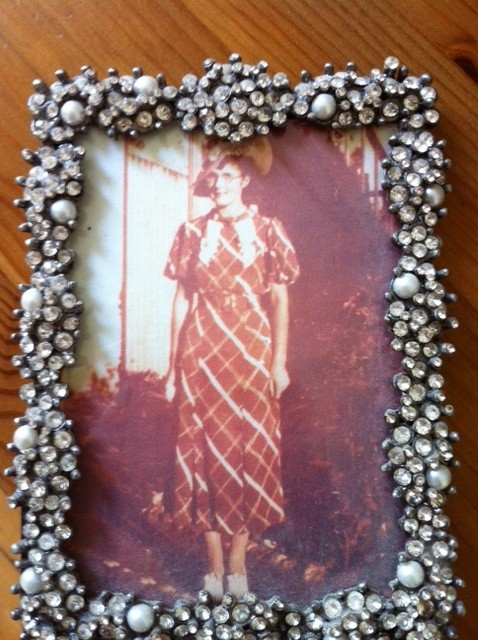
The beautiful Emily Norah Elizabeth Dilly.
My beloved granny, the beautiful Emily Norah Elizabeth Dilley, shortly before she married.

Unfortunately, in those days, Afrikaans was – and still is in some quarters – considered a lesser language, and my granny made it a condition of their marriage that their children would be raised English-speaking. So, while both my parents are bilingual, my accent is bad, and I wish the language hadn’t been allowed to slip away over the generations as it has. But, with growing up, I’ve learnt to love it again and appreciate it and consciously embrace it as an integral part of my heritage. In a strange way I feel like my Afrikaans roots bind me to the soil of this country, and legitimize my living here. Because the Afrikaners were, really, South Africa’s white tribe. I wish I’d been older when my grandpa was alive so that I could have asked him questions about his life back then. And I wish I’d been awake enough to tell him not to speak his accented English to me, but to talk to me in his mother tongue, using the words of his own childhood to paint pictures of the world.

Now I rely on my mother’s memory to keep my ancestors alive, while in my own mind I’ve reclaimed the culture for myself. For me, it has nothing to do with those cross men and their brylcreem who didn’t smile one time in their lives and conjured a political system madder than your wildest imaginings. It’s a connection to this corner of Africa; my soul’s dompas, if you will. The blood of those people who fought and suffered to live freely in this country runs through my veins, too. And to the ones who say I don’t belong here, I answer in my best, accented Afrikaans, ‘fok jou! Gaan vlieg in jou ouma se klein kwassie!’ And I defy anyone to translate that.

I think this is one of the most beautiful songs ever written. It’s by the late Koos du Plessis, and it was used in a TV series when I was growing up, but I don’t remember which one.

Beleza on Upper Kloof

Beleza interior Love the retro interior. And the outside-y section is great, too.

This morning’s coffee arrangement with my mom was a little bit different because it was preceded by a meeting at Elisabeth’s school where one of the moms has initiated a project whereby available parents have been asked to provide assisted reading to some kids who come from homes where their caregivers don’t/can’t read and are at risk of falling through the cracks of an education system which isn’t really equipped to provide this type of individual attention. And while I like to think of myself as terribly committed to this country, the shameful truth is that I do zip diddly in terms of offering my time/skills/money to any of the many worthwhile causes around while there are so many people who do so much. It’s a very nice idea, this. It’s just 15 minutes per child per week, directly after drop off and, as was explained, this brief time spent alone with an adult is often the only time these kids will get in the week.

Having grown up in a home where I was read to constantly it’s hard to imagine a childhood without books and words. But that’s the reality for a lot of South African children. And it will cost me nothing and is the absolute least I can do given the amazingness of every part of my life in this country, and it’s horrible that I’ve never done anything like this before, and that I’m only doing it because it’s really easy and I know that it will turn out to be at least as rewarding for me – who has no clue, really, about how some people in this country live. So, we will each have a child allocated to us, and once a week we’ll bring books from home or choose them from the school library and read together and learn the words and talk about the stories. And I should do much, much more than this, but it’s something and it’s a start.

On the way to coffee afterwards, my mom – who is awesome with kids, and has offered her time, too – was already planning little treats to bring along for after their session and that’s a nice idea, too. To give your reading buddy a little sticker or a sucker because – and I know this from my own kids – these small tokens celebrating their achievements mean the absolute world to them. By the time the meeting was over we were both hungry, and I remembered seeing a sign at the bottom of Upper Kloof advertising cheapie breakfasts, so that’s where we headed. Turns out the place we’ve been driving past (across from Rafiki’s at the big set of traffic lights) is called Beleza (http://belezarestaurant.co.za), and it’s awesome and I can’t believe I’ve never been there.

Beleza is a café/restaurant/vintage clothes store, and the interior is stylish and retro and one of those Cape Town spots that you walk into and think, sheesh, this city is cool. Since today is such a magnificent day we decided to sit outside and watch the world go by. After a perfectly tasty bacon and eggs breakfast (for R19, if you please) and very good coffee (they won an award in 2011 for best coffee in town, fyi) we browsed around inside, and while I’m not really a big vintage clothing kind of person, they have some nice stuff – sunglasses, accessories and a pair of funky 60s-style sandals I might have bought were they in my size. It’s one of the few vintage stores I’ve been into where I thought, Oh, I’ll be back. And it’s just quite a delightful concept – gathering your girlfriends for a few drinks and bite to eat, and picking up a cute frock or throw or bracelet while you’re at it. And I’m sure it’s fab in the evening, too. So, I’m excited about next Tuesday where I strongly suspect that, while I might be helping a child to read, the one who will be doing the real learning will be me.

The vintage clothing store. They often have sales - check their website for the next one.
The vintage clothing store. They often have sales – check their website for the next one.
As my friend, Stef, says, there is no reason not to be fabulous.

Raddest Plakkies in the Universe

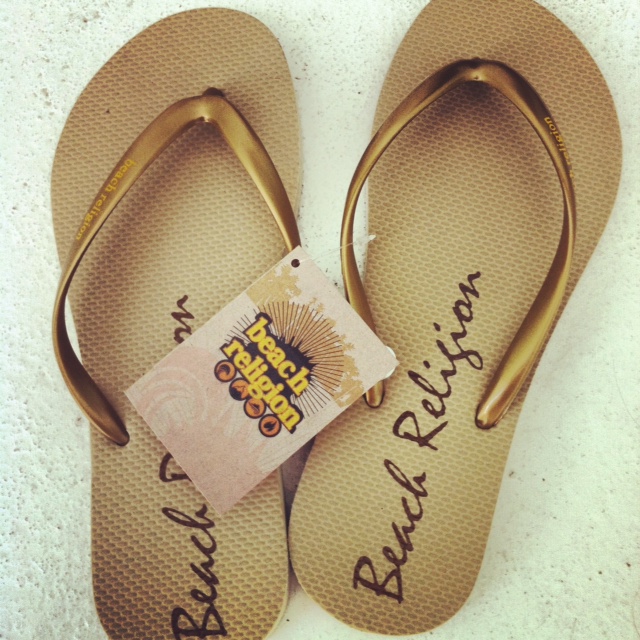
The gold ones for girls, but they come in lots of styles and colours.

If we South Africans had a national shoe it would, without contest, be the plakkie (or the slip slop or the flip flop – whichever word you prefer) – they’re cool, comfy, easy-to-wear and when you buy the larny metallic ones you can take them straight from the beach to the bar and still look fabulous. And, to this end, my sweet and gorgeous friend, Mike Cloete, is making plakkies that are, truly, very awesome to wear. And I know because he gave me a pair which I wear ALL THE TIME. Not only are they much (much) cheaper than a certain brand which begins with a ‘huh’, they’re excellent quality, very pretty, and best of all – they’re made in SA.

80% of all Beach Religion footwear is locally produced, which means Mike’s company is creating jobs for a lot of people, developing and utilising local skills, and wouldn’t you know, he’s just sent a consignment of shoes to Italy – land of Prada, Dolce and Gabbana and all manner of fabulous footwear – which means his shoes are bladdy well made. He’s also got a very fun, interactive thing going where you can design your own slip slop before each season, but mostly I just think it’s cool when quality stuff is made down here, and supporting local business helps us all. For info on how to purchase the raddest plakkies in the universe check out http://www.beachreligion.com. (And you don’t want to not be rad).

Mikey and his beautiful boys, Jacques and Dominic.

Carnivals and Gardens

The Oresund Bridge which takes me home to Malmö and home to Cape Town.
The Oresund Bridge which takes me home to Malmö and back home to Cape Town.

When you live in a country like South Africa, which has experienced – and continues to experience – change on a massive scale and where the disaster zones of many other African countries ruled by liberation governments hang over us like a panga ready to strike us into economic oblivion, conversations about where it’s good to live versus where it’s not so good to live become commonplace. And even more so for those of us who are thinking about leaving or thinking about coming home or have come home already or never want to see South Africa and Mrs Balls chutney again. And these debates go back and forth led by words like ‘lifestyle’ and ‘crime states’ and ‘education’ and ‘future’, and they are discussions which can go on endlessly without ever reaching conclusion because fundamentally they are personal and emotional, and more often than not our decisions are based on instinct and circumstance and what feels right for us versus what doesn’t.

But something I have been thinking about lately, and which is not often taken into account in these conversations – but which I believe to be true – is that different places/countries have a different energy (to be a bit shoo-wow and tie-dyed of a morning) which either resonates with ours or doesn’t. And we’ll insist on being practical and citing ‘facts’ as to why we live here versus there or there versus here but I think it boils down to something else. Like we pick partners and friends who ‘click’ with us, we choose the place we call home in much the same way. I have only lived in South Africa and Sweden, but since it would be hard to find two countries more diametrically opposed, I think they’re pretty good examples to use. I’m negative about Sweden sometimes because I was unhappy there, but I also love the country and larger Scandinavia in the way one does when a place has been your home. You can’t live somewhere for a long time and not have it become a part of you.

And I’m also more critical of it than is fair – out of defensiveness – because so many people are aghast that I left a place where everything is ‘perfect.’ And it is kind of perfect in a lot of important ways, but it wasn’t perfect for me. To employ a metaphor, Sweden is like a magnificently manicured garden full of beautiful flowers. There are water fountains, comfortable places to sit and good things to eat. People speak politely in muted tones and the air smells of freshly brewed coffee. You’ll never get lost because there are clearly demarcated paths, and the garden is ringed with stylishly decorated, very high walls that you’d never be able to scale. You are safe and you are secure. You are also walled in. For some people, the walls are a small price to pay for all that comfort. Why would you need to leave when everything is right there at your fingertips? It’s very nice there; very nice indeed.

South Africa is more like a huge, gaudy amusement park where nobody has checked the safely standards of the equipment in a long time. People climb on the rollercoaster and they feel the sun and the wind on their faces and it fills them with a delicious kind of joy, knowing that an any given moment the little car they’re strapped into could careen off the tracks and go sailing into the ether, taking them with it. But, damn that ride is fun. And it seems to go on forever. And everyone is smiling as they go around and around, and life is uncontained and open-ended and there are no barriers and the possibilities are endless. The amusement park smells of dust and oil and boerie rolls and beer, and clowns fall off barrels and people laugh and it’s colourful and in-your-face and totally unpredictable.

And I can understand why people choose the manicured garden. It’s a great garden, as gardens go. But the amusement park has a wildness which can be quite irresistible. Because you might fall off, but you also might not, and in the interim you are having such a damn good time. And objectively, it’s impossible to say which place is ‘better’. South Africa is awesome for some things, and other places are awesome for others. It’s just about what works for you, and where you feel comfortable and ‘right’. Once, about half a year before we moved back to South Africa, I was given a voucher for my birthday to visit an astrologer/healer. He was an African-American who must have been close to 80, and he’d been living in Sweden for most of his life. From his small, warm apartment in the suburbs he read to me my chart, and then out of the blue (not knowing I was leaving) he said something interesting and surprising. He said, ‘I have to tell you something – if you stay in Sweden you’re going to get sick.’ And I knew exactly what he meant. The country’s energy and I were not a good match.

Now when I go back on holiday I’ve learnt to wear one of those ‘balancing’ bracelets (whether they work or not is anyone’s guess) because, even though I’m really happy to be back and seeing good friends and swimming in the warm sea and enjoying the long days of summer, I experience odd physical symptoms – dizziness, disorientation and a vague sense of not getting enough air. I never feel this way in South Africa. And maybe it’s psychosomatic, but I think it’s something else. It’s the walls and the safety and the lack of spontaneity and madness. I’m just more a clowns and rollercoasters kind of person. And we’re all different like that. And sometimes I envy the garden folk their sense of belonging and wish I shared it because all that tinny carnival music can get noisy when you’re feeling tired, and you’re so busy dodging coloured balls there isn’t much time for reflection. But mostly I love the chaos and the freedom it affords. And that, if the mood takes you, you can fly right up to the sky.

Cafe Mozart, Church Street

Cafe mozart sign

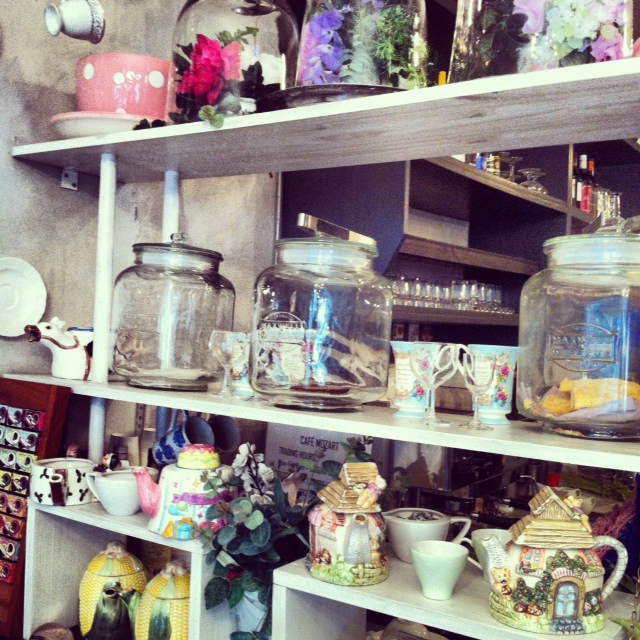
So, me and Aunty Lorraine’s next Kiff Coffee stop was Cafe Mozart in Church Street which, as locals know, is something of an institution, having been around more or less since P.W. Botha. I never visited in the olden days so I don’t know how much it’s changed, but it’s quite blinged up now, with lots of fake roses adorning its small picket fence (which unsuccessfully keeps out buskers), and fun brick-a-brac-y things lining its walls. It’s totally unpretentious, and sometimes you’re just in the mood for unpretentious. And what’s cool about this cafe is that it’s located on a pedestrian street lined with antique stores and stalls where the same people since I worked on Greenmarket Square in 1992 arrive to arrange their hodgepodge of treasures on probably the same blue velvet cloths. It looks like they still haven’t sold anything.

fake flowers

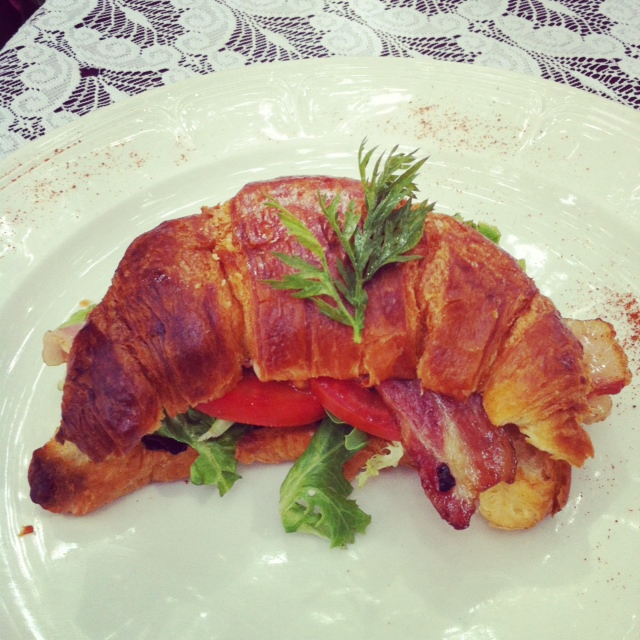
Since we’d both had breakfast and it’s just wrong not to eat, we decided to share a toasted croissant with bacon, lettuce and tomato. It was so yum we had to have another, and the coffee was pretty good, too. Not that I’m an expert, as I’ve explained. My friend, Alison, and I had lunch there not too long ago and they do a very cool and madly inexpensive buffet. For R42 you get a glass of wine, soup with home-made bread, a full buffet (which that day included lamb stew, cauliflower bake, lasagne and several salads) and dessert. It’s a good deal whichever way you look at it.

Sometimes you just don't mess with a good thing, and a BLT is one of those things.
Sometimes you just don’t mess with a good thing, and a BLT is one of those things.

bric a brac

My mom and I laughed about how, as a child, I hated tomato (I still kind of do unless it’s on a BLT croissant or in a pasta sauce or they’re teeny and exceptionally sweet) and every time we were in a restaurant I’d take my tomato off my burger and every time my mom would ask me if she could have it and for some reason – knowing full well I wasn’t going to eat it myself – I’d say no. I have no idea what that was about, but just about every time we’re in a restaurant now she reminds me of that betrayal. I guess I’ll never live it down. That, and the time I ate dagga cookies on the afternoon of my 16th birthday and, in my deeply stoned state, had to sit at the dinner table with my parents’ best (quite posh) friends and eat a roast dinner, trying to stay on my chair and not completely die of hysterics when my best friend and partner in crime forewent the roast potatoes and lamb and gravy and only dished herself peas which she then found quite impossible to keep on her fork. It was a long dinner (sorry, mom, you cooked good food. I hope I’m still seeing you next week after reading this).

cafe mozart blackboard

After a second cup of coffee we wandered around Greenmarket Square which is quite boring and same-y now, but we did watch a woman demonstrate 13 ways to wear a cardigan which was pretty impressive. And it was made of bamboo, what’s more. And then we congratulated ourselves on coming up with such a fun and clever tradition as regular coffee meetings. Talking in real life – as opposed to all this cyber stuff – is really very lovely.

Steal His Photograph!

You know you have your finger on the pulse of the city not at all when it takes a Danish friend who has been in town for all of five minutes to tell you about one of the coolest endeavours Cape Town has ever been involved with. Creative Mornings (http://creativemornings.com) is part of a programme happening across the globe where a bunch of interesting cities from Berlin to Melbourne to San Francisco host a morning talk on the same day, in the same time slot covering a range of design/innovation/art/living in the world-related topics.

Last month’s theme, for example, was bravery, and the speaker was a young guy who decided to raise money by travelling alone through the Amazon jungle and ended up getting shot and surviving through the kindness of strangers. While not too many of us will kayak through a jungle, the point of the talk was human efficacy – how we must remember to be mindful; to ask questions; to think for ourselves; to say no when we don’t agree with what we’re being told.

Because bravery and courage are resources we need every day in a world which can be pretty hostile and more than a little bit scary. And, we tend to forget that one human being can, in fact, make a pretty big difference if we put our minds to it. It was a cool talk, and it’s especially applicable to anyone who has decided to take a path slightly less travelled, and use their skills and gifts and creativity to forge their own way in the world. Which isn’t always easy.

After the talk a bunch of us went up the road to a coffee shop in Rose Street, including a Finnish guy called Lukas Renlund who is totally going out on a limb by doing something incredibly interesting with social media. Lukas is a very successful fashion photographer (though that title doesn’t do his art justice) in Copenhagen who wanted to find ways of getting his work noticed by a wider audience. So, he decided to start a project called ‘Steal My Photograph’ where he travels to cities like London and Barcelona and encourages people to literally steal his art in exchange for the person in question taking a pic of where the artwork is hanging in their homes and posting it on his Facebook page.

And while it might seem mad – giving art away – this is how social media has changed the way we think, act and market ourselves. It’s not about thinking out of the box – there is simply no box anymore. Anyway, his work is amazing, and I loved the energy and enthusiasm with which he approaches his craft – and life. The world is wide open and, particularly here where the creative and entrepreneurial spirit is so strong, anything is possible.

It was really cool to hear all these Scandinavians raving about how innovative South Africans are; how cutting-edge our design is and how impressed they are by the way we think. Who knew? If you’re in town and you can, get to Creative Mornings. It’s a very worthwhile way of spending a few hours on a Friday. You’ll learn stuff, be inspired and are sure to make at least one interesting connection over coffee afterwards. Here are the videos Lukas made of ‘Steal My Photograph’ in Barcelona and Copenhagen. He has the good sense to be staying in Cape Town for a while. Check out his Facebook page for info on how to steal his photograph: https://www.facebook.com/Lukas.Renlund.Photographer

A Moment

The first time I saw him he was standing on Jammie steps with his back to me, broad against the sunlight. He was dressed like Jim Morrisson in a white pirate shirt and a series of leather necklaces. He laughed, and shook out his hair – lustrous long, brown curls that fell well past his angular shoulders. He was rangy in the way only 22-year-old men can be, and it took me some time before I realised he was something of a legend on that campus. He hung out with a posse of impossibly beautiful black girls. Rich, skinny girls with flawless skin and expensive sneakers and straight, white teeth. I’d watch him with them – the easy way they touched him like he wasn’t Jesus, just some guy studying anthropology.

I found out his name was Ben, and that he was foreign and a member of the Mountain Club. And someone told me where he lived and after a while I got a vague sense of his routines so that I knew, more or less, when he’d come sauntering by in his faded jeans and 6 foot 2-ness. And then he’d be gone again, somewhere else, and I was not cool at all nor pretty enough to compensate for my lack of street cred and there was no reason in the world why a guy like him would ever even think of a girl like me. And I didn’t question the order of the world for a second. Even though it seemed like that same order was about to change in a big way. Because, all around us, things were starting to give. In the words of Chinua Achebe, the centre could no longer hold; things were beginning to fall apart.

Sitting in my psychology class one morning beside an Indian girl who wore a different pair of Levis every day (you couldn’t buy them in South Africa due to sanctions against us so you had to go to London or send a friend) and behind a black guy in his thirties who worked the night shift as a petrol attendant and came straight to class in the morning, still wearing his uniform, suddenly we heard a noise and loud voices coming closer. My lecturer stopped lecturing and listened, looking worried. Then, without saying a word, went over to the door of the lecture hall, closed it and locked it.

We all sat very still. The noise increased – it was chanting, and things were being broken. It was the early nineties and the country, so long in apartheid’s stranglehold, was starting to break itself free. A crowd of people appeared. They held pangas and they danced. They smashed windows and kicked in doors. They set parked cars alight. We watched them out the window. Nobody spoke. The riot passed, and the noise died down. Still we waited. Silence. The door was unlocked, and we packed up our notebooks and left the building, the affected boredom we normally took such joy in practicing replaced by a sense of fearful anticipation. We walked past the rows of police vehicles, glancing nervously at the smouldering fires. A policeman waved us along, muttering under his breath.

Everything was happening, yet nothing was happening. We sat up late at night writing overdue papers and lived on popcorn and toast. I struggled to pass Stats. I flew through my English exams. I lugged The Riverside Chaucer up and down steep hills, found out I was a feminist and used the word ‘existential’ as often as I could. It was Cape Town, it was summer and there were parties to go to. And then, one night, there he was. It was a social at the Baxter, and we arrived late after most people had already left. The guy I was with knew him, and before I could even gather myself, he was introducing us and Ben was shaking my hand and smiling and saying hello.

And then, as if on cue, the opening bars of one of my all-time favourite songs, Juluka’s December African Rain started playing. And even then it was an old song, but there is some kind of magic in that music – the drums and the deep voices that sound like they come from inside the earth, itself, and how this Jewish boy from Joburg loved Zulus so much he became one, and back in those days, that was quite a thing. And by doing that, making that stand, he freed us more than we understood at the time. It was almost like everything we had not been allowed to love about Africa was being given back to us. Through his music we became impis; we were warriors; we were children of the land, united against a system so barbaric it made us sick to our stomachs. We were the new generation, and freedom was on its way.

I smiled at him and he smiled at me and we started dancing, me, my friends, the beautiful black girls and him. And then the party was over, so we left to go somewhere else. He got in the front seat of the car and I sat in the back, behind him, my mind reeling at his proximity to me, that he was really right here in the flesh, so impossibly close. And then, as we sped through the dark city streets, young people looking to have fun, the impossible happened. I felt his hand reach behind the seat and look for mine, find it, and enclose it in his long, brown fingers.

And I was so young and naive and taken aback by this gesture, what did I do? I giggled and pulled my hand away. I pulled my hand away. And then I sat in the darkness of the car feeling the heat creep up into my face; thinking, you idiot! You idiot! What did you do that for? And I prayed to the god of stupid young girls that he would just give me second chance. Just reach for my hand again. This time, I promise I won’t pull away. Because I have been in love with you for three years and never, in my wildest dreams, did I imagine you’d even give me the time of day. And I didn’t mean it, I didn’t! I was just taken by surprise. And as we drove on and the seconds ticked by, he sat very still, looking ahead of him – nobody else in the car even aware of this monumental thing that had just failed to happen. And with every streetlight we passed I knew with increasing certainly that I had missed my moment.

We never spoke again after that night. He’d give me a vague hello when we passed each other in the halls, and then I saw him less and less as he moved to another compass. His flat used to be on Rondebosch Main Road, just as you came off the freeway, its big windows facing the flyover. I drive past it once in a while when I’m going that way and I still think of him and that one night and how he’ll never know.